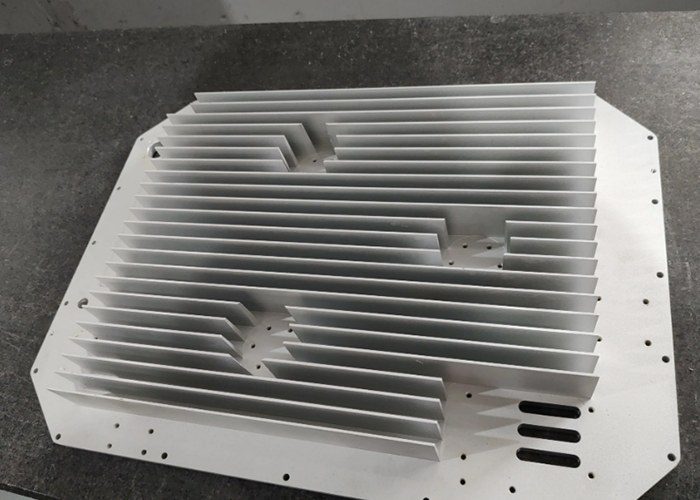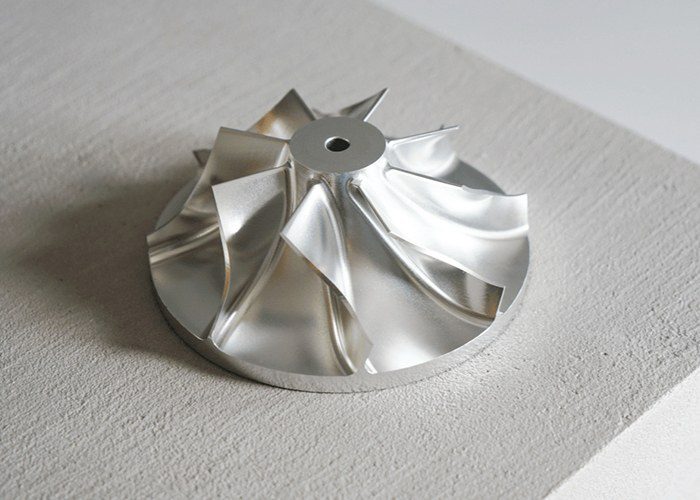
In the rapidly evolving landscape of robotics manufacturing, CNC milling has emerged as an indispensable process for producing the high-precision components that bring machines to life. From industrial six-axis arms and collaborative cobots to surgical assistants and humanoid platforms, every robotic system depends on mechanically precise parts that can withstand continuous dynamic loads while maintaining micron-level accuracy. While additive manufacturing has gained attention for prototyping and certain applications, CNC machining remains the gold standard for mission-critical robotic components that demand superior strength, durability, and tight tolerances.
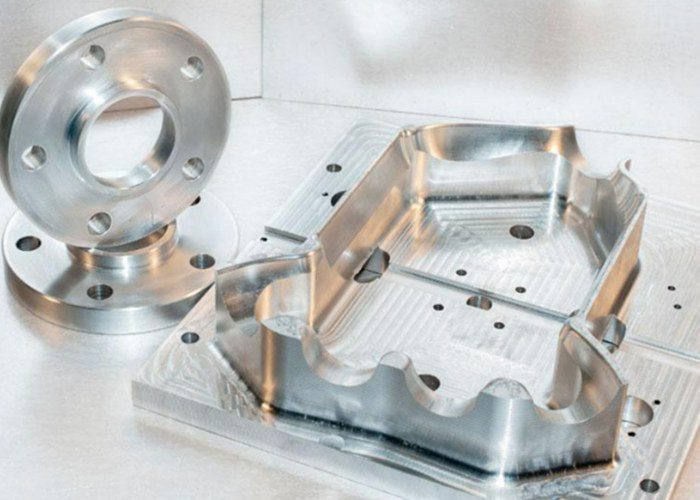
The Precision Imperative in Robotics
The fundamental challenge in robotics manufacturing lies in the cumulative effect of dimensional accuracy across a kinematic chain. Consider a six-degree-of-freedom industrial arm: each joint contributes a small positional error that is amplified geometrically by the lever arm of downstream links. A bearing seat bored just 0.01 mm off-center at joint 1 can translate into a positioning error exceeding 0.1 mm at the end-effector—ten times the ISO 9283 repeatability specification for class-1 precision robots. This amplification effect explains why robotics CNC specifications are typically three to five times tighter than equivalent industrial machinery tolerances. Leading manufacturers routinely achieve tolerances of ±0.005 mm on critical features such as bearing seats, flange perpendicularity, and gear mesh interfaces, with some advanced applications reaching ±0.002 mm in surgical robotics components.
Materials and Multi-Axis Capabilities
The material palette for CNC-milled robotic parts is diverse and demanding. Aluminum alloys—particularly 6061-T6 and 7075-T6—dominate structural applications due to their exceptional strength-to-weight ratios, enabling lightweight yet rigid arm links, frames, and joint housings. Titanium alloys are specified for high-stress components such as hip and leg structures in humanoid robots, where aerospace-grade quality and surface finishes of Ra ≤ 0.2 µm are required for accurate force measurement on strain gauges. Stainless steel and hardened alloys find use in transmission components, reducer housings, and harmonic drive interfaces that must endure continuous precision machining cycles.
Modern 5-axis CNC milling centers have revolutionized robotic component manufacturing by enabling complex geometries to be completed in a single setup, eliminating repositioning errors and achieving sub-10-micron tolerances critical for motion control systems. Unlike traditional 3-axis machining, which moves only along X, Y, and Z axes, simultaneous 5-axis machining adds two rotational axes, allowing the creation of intricate spatial contours, angled bores, and deep thin-walled pockets that would be impossible through conventional methods. This capability is particularly valuable for producing collaborative robot joint housings, which require lightweight yet rigid structures that can withstand continuous dynamic loads while maintaining positional accuracy.
From Joint Housings to End-Effectors
The range of CNC-milled robotic parts is extensive and specialized. Joint housings and motion components demand tight tolerances on roundness and concentricity, with rigid solid carbide end mills ensuring stable machining performance across interrupted cutting conditions. Servo motor mounts require precise flatness, parallelism, and bore concentricity to ensure consistent torque transmission and minimize vibration in high-speed automation cycles—even a 0.1 mm offset can introduce cumulative positioning errors across a robot arm. Reducer and transmission components, including RV reducer housings and harmonic drive parts, present challenges of high hardness materials and continuous precision machining, addressed through wear-resistant end mills with advanced coatings.
End-effectors and gripper bodies represent another critical application area. CNC milling enables the rapid production of custom gripper fingers, vacuum cup manifolds, and tool-change flanges in materials ranging from engineering plastics to hardened steel, supporting quick changeover in flexible manufacturing cells. For autonomous mobile robots navigating warehouse floors, CNC-milled aluminum and titanium chassis components balance structural stiffness with minimal weight, while precision-drilled sensor mounting plates allow integration of LiDAR, ultrasonic, and camera systems with exact angular and positional relationships that directly impact navigation accuracy.
The Humanoid Robotics Frontier
The push toward human-like robotic performance has elevated precision requirements to unprecedented levels. In one notable project, CRP Meccanica manufactured complex structural components for next-generation humanoid platforms using a hybrid approach combining DMLS, 5-axis CNC milling, EDM, and lapping. Thin-walled aluminum 3D-printed parts with wall thicknesses down to 1.5 mm required custom support jigs to prevent vibration and warping during post-processing, achieving dimensional precision within ±0.01 mm. Precision actuator interfaces in 7075-T6 aluminum demanded tolerances of ±5 µm across deep bores, achieved through a combination of precision boring, multi-axis adaptive machining, and final lapping. The resulting fully integrated hybrid assemblies maintained total assembly precision of ±0.01 mm, ensuring drop-in compatibility with the robot’s structural architecture.
Future Trends and Technological Convergence
The intersection of artificial intelligence, advanced materials, and digital manufacturing is reshaping what CNC hardware parts can achieve in robotics. Machine learning algorithms now generate optimized toolpath programming that reduces cycle times by up to 35% and automatically adapts to material inconsistencies, enabling lights-out machining for high-volume automation component production. Digital twin integration allows real-time simulation of machining operations before cutting begins, drastically reducing scrap rates. Integrated with IIoT platforms, in-process measurement systems relay real-time dimensional data to CNC controllers, driving adaptive machining that dynamically adjusts tool offsets and upholds rigorous statistical process control throughout the entire production run.
Siemens’ Sinumerik Machine Tool Robot represents a quantum leap in precision, offering up to 300 percent better path accuracy and 20 to 40 percent productivity increases compared to conventional industrial robots. This technology unites robotic dexterity with the exacting accuracy of CNC machining, enabling high-fidelity trajectory performance on challenging workpieces, including hardened steel.
As the global robotics market continues its unprecedented expansion—with projections exceeding $43 billion by 2030—the demand for CNC-milled robotic parts will only intensify. From collaborative robots working alongside humans to surgical systems saving lives, CNC milling remains the essential manufacturing process that transforms engineering designs into tangible, high-performance reality.