
In the vast ecosystem of modern manufacturing, few components are as universally essential as the mechanical shaft. From the smallest electric motor to the largest industrial turbine, shafts are the silent workhorses that transmit power, motion, and torque across every mechanical system imaginable. Today, the production of these critical components has been revolutionized by Computer Numerical Control (CNC) machining—a technology that has transformed shaft manufacturing from an art dependent on human skill into a precise science driven by digital intelligence.
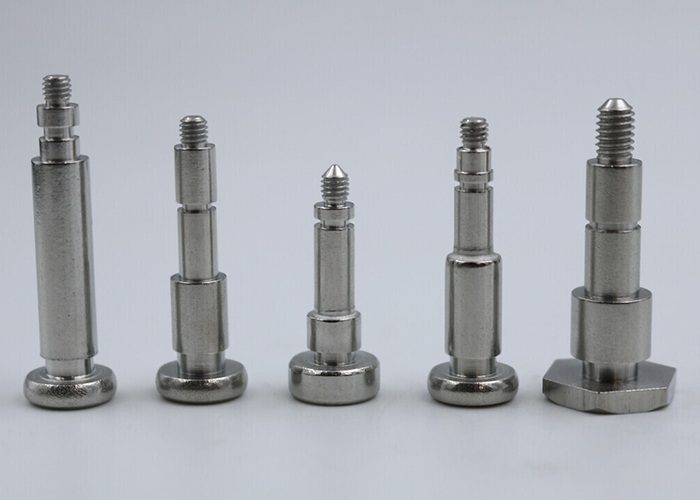
Understanding CNC Shaft Machining
CNC shaft machining is a subtractive manufacturing process that uses computer-controlled machine tools to produce precision cylindrical components. The process begins with a solid block or bar of material—typically metal—which is secured in a CNC lathe. The workpiece rotates at controlled speeds while stationary cutting tools remove material according to digitally programmed instructions. This fundamental principle, known as CNC turning, is ideally suited for producing rotationally symmetrical parts such as shafts, where dimensional balance and concentricity are essential.
The sophistication of modern CNC equipment extends far beyond basic turning. Multi-axis machines can perform turning, milling, drilling, and finishing operations in a single setup, dramatically reducing production time and eliminating the errors associated with multiple handling. Advanced machine components—including servo-driven motion systems and real-time monitoring sensors—ensure consistent stability and dimensional accuracy throughout the entire machining cycle.
The Manufacturing Process
The journey from raw material to finished shaft follows a carefully orchestrated sequence. It begins with design and programming, where engineers create a detailed computer-aided design (CAD) model of the shaft, which is then converted into machine-readable instructions using computer-aided manufacturing (CAM) software. Material selection follows—a critical decision that directly impacts the shaft’s performance, durability, and cost.
Common materials for CNC-machined shafts include carbon steel for general-purpose applications, alloy steel for high-torque requirements, stainless steel for corrosion resistance, aluminum alloys for lightweight designs, and titanium for demanding aerospace and medical applications where strength-to-weight ratio is paramount.
With the machine set up and tools installed, the turning operation commences. The workpiece rotates at high speeds while cutting tools follow programmed paths, removing material to create the desired shape. This stage progresses through several turning steps, beginning with rough turning to establish the primary shape, then advancing through semi-finishing and finish turning to achieve exact dimensions and the desired surface quality. For shafts requiring exceptional precision, grinding may follow to achieve tolerances as tight as ±0.001mm and surface finishes below Ra 0.4μm.
Applications Across Industries
The versatility of CNC-machined shafts makes them indispensable across virtually every industrial sector. In the automotive industry, they form the backbone of engine systems, transmissions, and chassis—from crankshafts and camshafts to drive shafts and gear shafts. The aerospace sector relies on CNC-machined shafts for turbine components, landing gear mechanisms, and flight control systems, where precision and reliability are matters of safety.
In industrial machinery, shafts serve as the critical link for power transmission—driving motors, pumps, compressors, and conveyor belts alike. The medical device industry utilizes precision-machined shafts in surgical instruments, orthopedic implants, and diagnostic equipment. Even robotics and automation systems—the driving forces behind Industry 4.0—rely on high-precision shafts for their articulated movements and positioning accuracy.
Quality Control and Precision
The exceptional precision achievable through CNC machining is one of its defining advantages. Modern CNC equipment can maintain dimensional tolerances within ±0.0005 inches (±0.0127 mm) and concentricity within 0.001 inches TIR (Total Indicator Runout). Such levels of accuracy are verified through rigorous quality control protocols that typically include 100% inspection using Coordinate Measuring Machines (CMM), runout checks, and balance control in accordance with ISO standards.
Quality control extends beyond dimensional verification. Hardness testing confirms proper heat treatment, surface roughness measurements validate finish quality, and specialized inspections—such as ultrasonic testing for internal defects or magnetic particle inspection for surface cracks—ensure the integrity of critical components.
Industry Trends and Future Outlook
The CNC machining industry is experiencing robust growth, with the global market for precision shaft components projected to expand at an annual rate exceeding 10% over the next five years. This growth is fueled by increasing demand across automotive, aerospace, and industrial sectors, coupled with the rising need for high-precision, durable, and customizable components.
As the industry moves toward Industry 4.0, greater emphasis is being placed on automation, customization, and digital integration. Advanced CNC machining solutions are enabling faster turnaround times, higher quality products, and innovative designs tailored to evolving market needs. The integration of artificial intelligence, real-time process monitoring, and predictive maintenance is further enhancing productivity and reducing waste.
Conclusion
CNC machining has fundamentally transformed the production of shaft parts, delivering levels of precision, consistency, and efficiency that were unimaginable just a generation ago. From the raw material to the finished component, every step of the process is guided by digital precision—ensuring that the shafts powering our machines, vehicles, and technologies meet the demanding standards of modern industry. As technology continues to advance, CNC machining will undoubtedly remain at the forefront of precision manufacturing, driving innovation and enabling the next generation of mechanical systems.


