
Amid the relentless transformation of contemporary manufacturing, precision and efficiency remain non-negotiable imperatives. Among the various CNC machining technologies available today, 4-axis CNC machining has emerged as a powerful middle-ground solution that bridges the gap between basic 3-axis milling and the high-cost complexity of 5-axis systems. This article explores the capabilities, advantages, applications, and value proposition of 4-axis CNC machining services, offering a comprehensive overview for engineers, product designers, and manufacturing professionals seeking to optimize their production processes.
Understanding 4-Axis CNC Machining
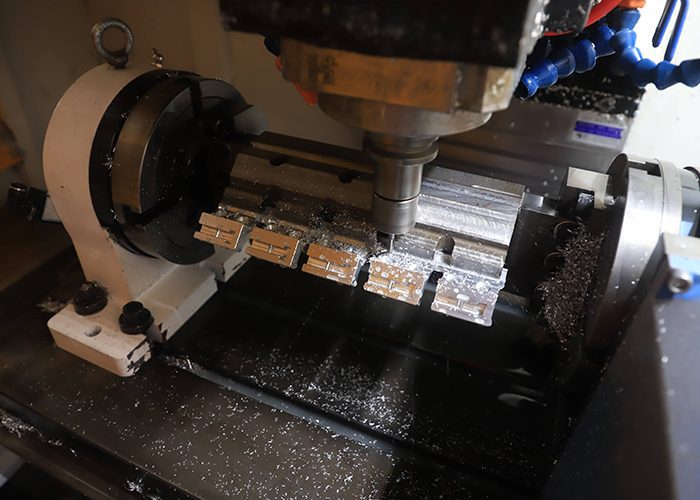
4-axis CNC machining is a multi-axis manufacturing process that builds upon the traditional three linear axes—X (left-right), Y (front-back), and Z (up-down)—by adding a rotational axis, typically designated as the A-axis, which rotates around the X-axis. This fourth degree of freedom allows the workpiece to be rotated incrementally or continuously during the machining process, enabling the cutting tool to access multiple faces and cylindrical surfaces of a part without manual repositioning.
The technology operates in two primary modes: indexed (3+1) machining, where the part rotates to a fixed position and then mills in three axes, and continuous 4-axis machining, where rotation and linear motion occur simultaneously for helical and cam-profile work. This dual-mode capability makes 4-axis machining exceptionally versatile for a wide range of part geometries.
The Strategic Advantage: 4-Axis vs. 3-Axis and 5-Axis
To fully appreciate the value of 4-axis CNC machining, it is essential to understand where it fits within the spectrum of CNC capabilities. Traditional 3-axis machining moves the cutting tool in X, Y, and Z directions while the workpiece remains fixed. To machine a second face, the part must be removed, repositioned, re-clamped, and re-indicated—each step introducing potential positioning errors and consuming valuable setup time. This becomes particularly problematic for parts with features on multiple sides, where accumulated tolerance stack-up can compromise dimensional accuracy.
4-axis machining solves this problem by keeping the part in a single controlled setup while using rotary indexing to access multiple faces. The result is fewer setups, improved feature-to-feature alignment, reduced tolerance stack-up, and enhanced repeatability. In the words of an industry veteran, “Every re-clamping operation injects a fresh positioning error. Individually, it might be microscopic—but across tight tolerances, those microscopic errors compound into critical failures.
Compared to 5-axis machining, 4-axis offers a practical and cost-effective alternative. While 5-axis systems provide additional rotational movement for highly complex contours, they come with significantly higher costs, more complex programming requirements, and increased risk of tool collision. For parts that require indexed rather than continuous multi-axis motion, or where geometry does not involve compound angles, 4-axis machining often delivers superior value without unnecessary complexity or expense.
Key Benefits of 4-Axis CNC Machining Services
The advantages of 4-axis CNC machining translate directly into tangible benefits for manufacturers:
Precision and Accuracy: The additional rotational axis allows for better control of the machining process, enhancing overall precision to meet stringent manufacturing requirements. Typical positioning accuracy can reach ±0.005mm with repeatability of ±0.003mm, making it suitable for industries where dimensional integrity is critical.
Efficiency and Productivity: By enabling continuous machining from different angles without manual workpiece adjustment, 4-axis machining significantly reduces production time. The elimination of multiple setups not only speeds up cycle times but also reduces machine downtime and human error.
Superior Surface Finish: The continuous rotary motion facilitates smoother toolpaths for complex organic shapes and helical features, resulting in improved surface finishes and extended tool life compared to segmented 3-axis operations.
Versatility: 4-axis machining can create complex parts that would be challenging or impossible to achieve with three-axis systems, handling a wide range of materials from plastics to titanium and stainless steel.
Cost-Effectiveness: The cost of 4-axis machining sits above 3-axis but below full 5-axis, making it the optimal choice for cylindrical parts, multi-face components, and medium-complexity geometry. The reduced setup requirements and improved first-pass yield contribute to lower overall manufacturing costs.
Diverse Industrial Applications
4-axis CNC machining services are extensively utilized across multiple industries where precision and complexity are non-negotiable:
Aerospace: 4-axis machining centers process complex curves on aircraft engine blades, turbine components, and precise aviation instrument structures, meeting the sector’s demands for high-precision, high-quality parts.
Automotive Manufacturing: Key components such as engines, chassis parts, and body structures can be clamped and machined from multiple angles in a single setup, enhancing both precision and efficiency. The technology enables the production of complex automotive fixtures and components with tight positional accuracy.
Medical Devices: 4-axis machining is essential for producing surgical instruments, medical device housings, and implant components where precision and surface integrity are paramount.
Electronics Manufacturing: Precision electronic components such as mobile phone enclosures and computer motherboards benefit from the high precision and dimensional consistency that 4-axis machining provides.
Choosing a 4-Axis CNC Machining Service Provider
When selecting a 4-axis CNC machining service, manufacturers should consider several key factors. Look for providers with proven capabilities in multi-axis machining, rigorous quality control systems including CMM inspection and probing protocols, and expertise in a wide range of engineering materials. ISO 9001, AS9100D, and IATF 16949 certifications indicate a commitment to quality standards. Additionally, providers that offer Design for Manufacturability (DFM) collaboration can help optimize part geometry for efficient 4-axis machining, reducing costs and accelerating time-to-market.
Conclusion
4-axis CNC machining represents a strategic manufacturing solution that delivers the precision of multi-axis technology without the prohibitive cost and complexity of full 5-axis systems. By reducing setups, improving accuracy, and enabling the production of complex geometries in a single machine cycle, 4-axis machining services offer manufacturers a competitive advantage across aerospace, automotive, medical, and electronics industries. As the global multi-axis machining centers market continues to grow—projected to reach USD 134.9 billion by 2033—the role of 4-axis CNC machining in precision manufacturing will only become more vital. For engineers and manufacturers seeking to optimize production efficiency while maintaining uncompromising quality, 4-axis CNC machining services provide the ideal balance of capability, cost, and performance.


