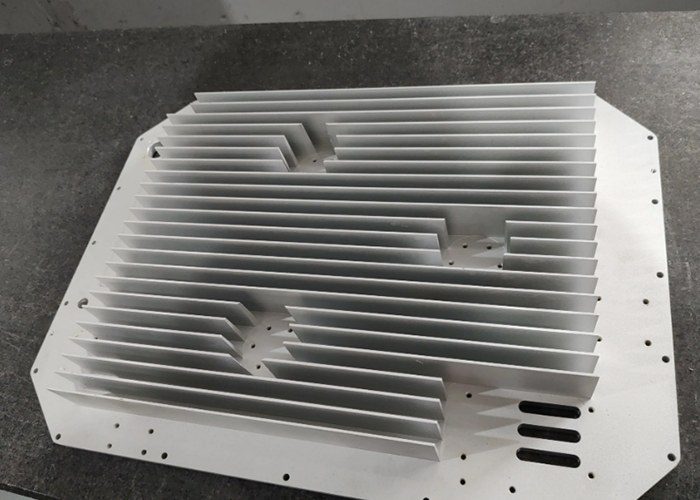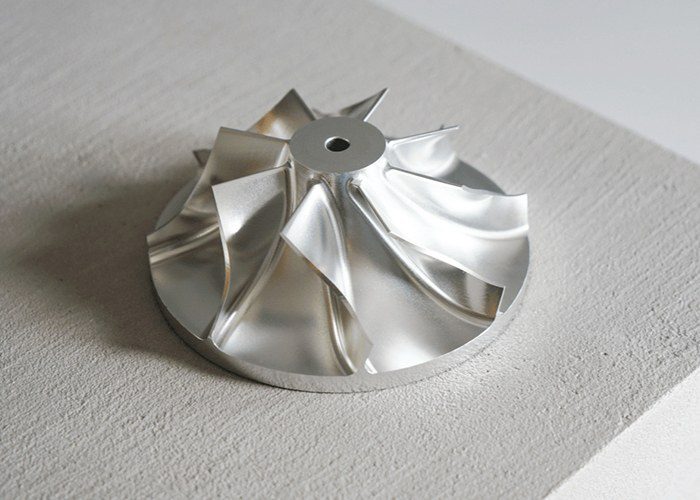
In the landscape of contemporary manufacturing, few technologies have reshaped industrial production as profoundly as CNC milling precision machining. This computer-controlled subtractive manufacturing process has become the cornerstone of high-quality component production across virtually every advanced industry. From the turbine blades that power commercial aircraft to the surgical instruments that save lives, CNC milling precision machining parts enable the extraordinary levels of performance, reliability, and miniaturization that define modern engineering.
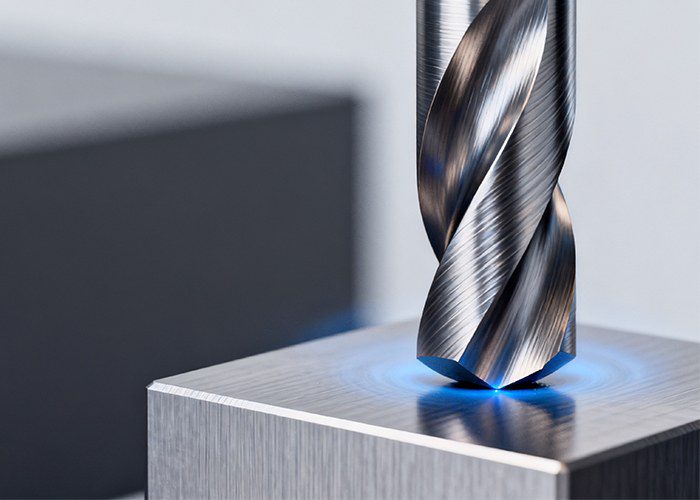
Understanding CNC Milling Precision Machining
At its core, CNC milling is a machining process that uses computer numerical control to automate the movement of rotating cutting tools that shape a workpiece. Unlike manual milling, which depends heavily on operator skill and is inherently variable, CNC milling relies on pre-programmed digital instructions to guide the cutting process with exceptional precision. This digital workflow begins with a three-dimensional CAD model of the component, which is then translated through CAM software into G-code—The machine-readable G-code governing the cutting tool’s every axial movement along the X, Y, and Z axes.
The result is a manufacturing process that transforms solid blocks of raw material—whether aluminum, stainless steel, titanium, brass, or engineering plastics—into finished components with dimensional tolerances measured in microns. Modern CNC milling machines can achieve tolerances as tight as ±0.005 mm, with surface finishes reaching Ra 0.8 μm, making them indispensable for applications that demand extreme accuracy.
Precision Capabilities and Technological Sophistication
What distinguishes CNC milling precision machining from conventional manufacturing methods is not merely its accuracy but its ability to maintain that accuracy consistently across thousands of production cycles. Part repeatability can exceed 99%, ensuring that the thousandth component is identical to the first. This consistency is achieved through advanced servo motors, rigid machine structures, and real-time feedback systems that detect and correct potential deviations during machining.
The sophistication of modern CNC milling extends far beyond three-axis systems. Multi-axis machines—particularly 5-axis CNC mills—have revolutionized the production of complex geometries. By moving the cutting tool or workpiece along five different axes simultaneously, these machines can machine complex surfaces, helical grooves, undercuts, and irregular parts that would be impossible—or prohibitively expensive—to produce with traditional equipment. The ability to reach multiple surfaces within a single clamping reduces cumulative alignment error, strengthens process stability, and eliminates the positioning deviations associated with multiple setups.
Material Versatility and Application Diversity
CNC milling precision machining parts demonstrate remarkable versatility across materials. Aluminum and its alloys remain the most commonly machined materials due to their excellent machinability and widespread application in aerospace structural components, electronic casings, and automotive parts. Stainless steel, despite presenting greater machining challenges due to its hardness and thermal conductivity, is extensively used in medical devices, food processing equipment, and industrial components. Titanium alloys—lightweight, corrosion-resistant, and exceptionally strong—are machined for aerospace parts and medical implants, though they demand high-end equipment and precise process control.
The application landscape for CNC milling precision parts spans virtually every industrial sector. In aerospace, components must withstand extreme conditions and meet tolerances that are five to ten times stricter than those common in automotive manufacturing. Turbine blades require surface finishes below 0.4 μm Ra and positional accuracy measured in ten-thousandths of an inch. In medical device manufacturing, CNC milling produces surgical instruments, implants, and miniature components with micron-level accuracy. The automotive industry relies on precision-machined parts for engines, transmissions, and suspension systems, while the electronics sector depends on CNC milling for the intricate housings and heat dissipation structures that enable device miniaturization.
Competitive Advantages Driving Industry Adoption
The advantages of CNC milling precision machining are compelling and multifaceted. Precision and consistency stand at the forefront—the ability to hold tight tolerances within microns is critical in industries where even minute dimensional deviations can affect product performance or safety. The elimination of human error in critical cutting phases ensures that every part meets strict design specifications.
Efficiency represents another transformative benefit. CNC milling reduces production time by up to 60% compared with traditional methods while simultaneously lowering scrap rates by more than 30%. High-speed spindles reaching several thousand RPM, combined with automatic tool changers and 24/7 operational capability, enable manufacturers to handle both small-batch prototypes and large-scale production orders with equal efficiency.
The capacity to produce complex geometries that would be difficult or impossible to achieve manually gives engineers design freedom that was previously unattainable. Multi-axis coordination reduces the need for repositioning, shortens machining time, and maintains accuracy and surface finish throughout the production process.
Market Trajectory and Future Trends
The global precision parts market reflects the indispensable role of CNC milling in modern manufacturing. Valued at $231.83 billion in 2025, the market is projected to reach $251.46 billion in 2026 and $347.24 billion by 2030, growing at a compound annual rate of approximately 8.4%. Major trends shaping the industry include the miniaturization of precision components, tighter dimensional tolerances in critical assemblies, growing adoption of multi-axis CNC machining, rising demand for high-durability materials, and increasing customization of precision parts.
The integration of artificial intelligence and digital twin technology represents the next frontier in CNC milling precision. AI-driven machining now uses real-time sensor feedback to automatically adjust feeds, speeds, and toolpaths in response to vibration, load, or temperature changes, enabling adaptive correction rather than passive prediction. Digital twins—continuously updated models that mirror the entire machining process—allow manufacturers to simulate, validate, and optimize production runs offline, reducing scrapped parts and shortening time-to-market.
Conclusion
CNC milling precision machining parts have fundamentally transformed what is possible in manufacturing. The combination of computer-controlled accuracy, material versatility, multi-axis capability, and relentless efficiency has established CNC milling as the standard method for producing high-quality components across aerospace, medical, automotive, electronics, and countless other industries. As the technology continues to evolve with AI integration, digital twins, and ever-tighter tolerances, CNC milling precision machining will remain at the heart of industrial innovation—turning digital designs into physical reality with a level of precision that was unimaginable just a generation ago. For manufacturers seeking to compete in an increasingly demanding global marketplace, the question is no longer whether to adopt CNC milling precision machining, but how to leverage its full potential.