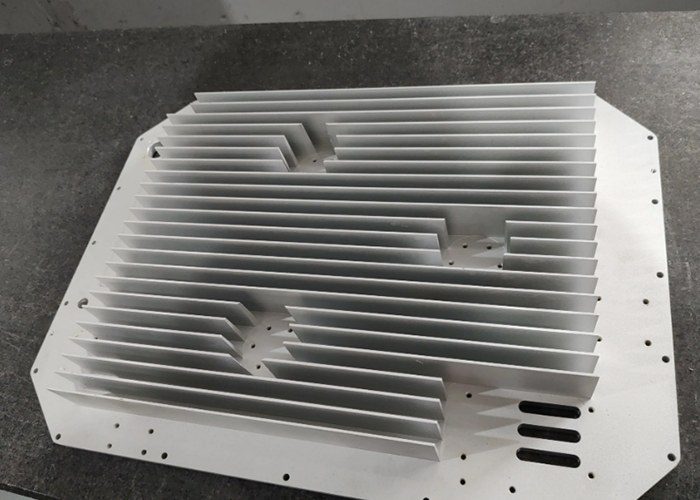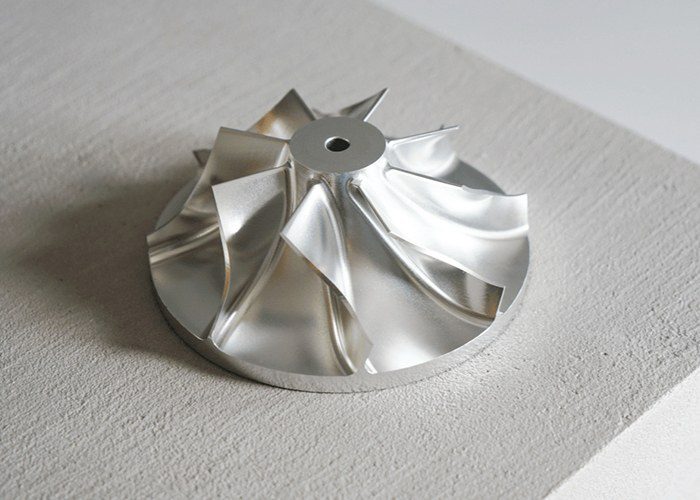
In the landscape of modern manufacturing, CNC milling metal parts represent the pinnacle of precision engineering. Computer Numerical Control (CNC) milling has transformed how industries approach the production of metal components, offering unparalleled accuracy, repeatability, and complexity that manual machining simply cannot achieve. As technology continues to evolve, CNC milling remains at the heart of industrial innovation, serving critical sectors from aerospace to medical devices.
Understanding CNC Milling Technology
CNC milling is a subtractive manufacturing process where rotating cutting tools remove material from a metal workpiece to create desired shapes and features. Unlike manual machining, which relies on operator skill and handwheels, CNC milling follows pre-programmed instructions generated from Computer-Aided Design (CAD) models. These instructions dictate every movement of the cutting tools—their speed, path, and depth of cut—ensuring consistent results across production runs.
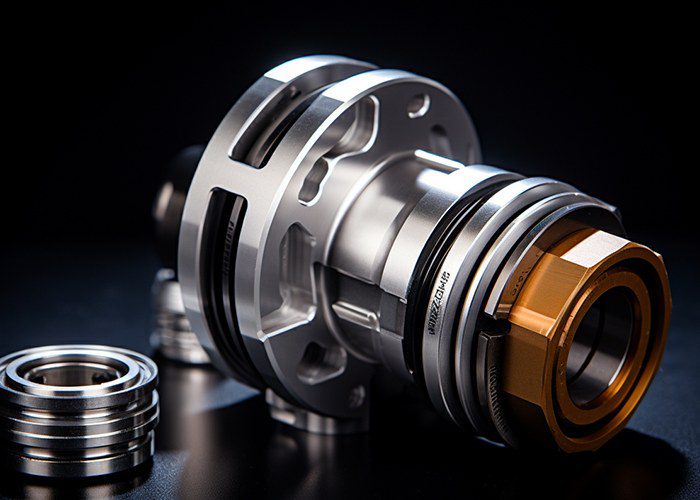
Modern CNC milling machines range from basic 3-axis systems to sophisticated 5-axis and even 7-axis configurations. Multi-axis machining allows manufacturers to produce intricate geometries in a single setup, reducing handling errors and cycle times. Machines like the DMU 60 eVo from DMG MORI can achieve accuracy in the micrometer range—as tight as 4 micrometers in circular form tests—demonstrating the extraordinary precision available today.
The Material Advantage
One of the greatest strengths of CNC milling lies in its versatility with materials. The process can handle virtually any machinable metal, from common alloys to exotic materials that challenge other manufacturing methods.
Aerospace-grade aluminum remains a staple for its excellent strength-to-weight ratio and machinability. Titanium and its alloys, while notoriously difficult to machine due to work hardening and heat retention, become manageable with proper tooling and techniques. Stainless steels, brass, copper, and engineering plastics like PEEK and Delrin all respond well to CNC milling operations.
For extreme environments, superalloys such as Inconel, Hastelloy, and Stellite present unique challenges that CNC milling overcomes through rigid machine construction, optimized tool paths, and advanced cooling strategies. These materials are essential in aerospace, defense, and energy applications where components must withstand intense heat, pressure, and corrosive conditions.
The selection of cutting tools is equally critical. Solid carbide end mills provide the rigidity needed for high-precision work, while coatings like TiAlN (Titanium Aluminum Nitride) improve heat resistance and tool life when machining hard materials. For abrasive composites and engineering plastics, polycrystalline diamond (PCD) tools offer exceptional wear resistance.
Precision That Defines Industries
The precision achievable with CNC milling is measured in tolerances that would have seemed impossible just decades ago. Modern machining centers routinely hold tolerances of ±0.0001 inches (approximately ±0.0025 millimeters), with some specialized applications requiring even tighter control. This level of accuracy is not merely impressive—it is essential.
In aerospace manufacturing, turbine blades, structural brackets, and engine components must meet exact specifications because lives depend on their performance. A deviation measured in thousandths of an inch could compromise an aircraft engine’s efficiency or safety. CNC milling delivers the consistency needed for these critical applications, producing parts that perform identically whether they are the first or the thousandth in a production run.
The medical device industry similarly relies on CNC milling for implants, surgical instruments, and diagnostic equipment. Orthopedic implants must match patient anatomy precisely, while surgical tools require sharp edges and sterile-smooth finishes. CNC milling achieves surface roughness as low as Ra 0.8 micrometers after fine milling—a finish that can approach mirror-like quality.
Efficiency and Cost-Effectiveness
While the initial investment in CNC equipment can be substantial, the long-term economic benefits are compelling. Automated operation reduces labor costs, as one skilled machinist can oversee multiple machines simultaneously. Material waste is minimized through precise cutting and optimized nesting of parts.
For medium-volume production runs—typically ranging from hundreds to thousands of parts—CNC milling offers the most cost-effective pathway. Unlike injection molding or casting, there are no expensive dies or molds to fabricate. Changes to designs can be implemented simply by modifying the digital program, making iteration and customization affordable.
The integration of automation takes efficiency further. Robotic loading systems, palletized machining cells, and automatic tool changers enable “lights-out” manufacturing—unattended operation around the clock. Facilities can deliver up to 4,000 complex parts monthly with minimal human intervention.
Emerging Trends: Hybrid Manufacturing
Perhaps the most exciting development in CNC milling is its convergence with additive manufacturing. Hybrid systems that combine laser-based metal deposition with traditional milling are gaining traction, particularly in aerospace, defense, and specialized industrial applications.
Companies like Hybrid CNC Parts are integrating Meltio’s laser wire technology into Haas machining centers, creating machines that can both add and remove material in a single setup. This approach offers several advantages:
- Repair and refurbishment: Worn components can be built up with new material, then machined back to original specifications—extending the life of expensive parts.
- Functionally graded structures: Material can be applied only where needed, combining a cost-effective base with high-performance surface alloys.
- Complex internal features: Additive techniques create geometries impossible to machine conventionally, while milling ensures critical surfaces meet tolerance requirements.
As Jesse Silverberg, founder of Hybrid CNC Parts, explains: “Designing for hybrid requires a different mindset. It’s not just about printing complete parts. It’s about knowing where material should be applied and where it should be machined—combining the strengths of both approaches to achieve the best results”.
Quality Assurance and Traceability
Precision manufacturing demands rigorous quality control. Leading CNC milling facilities operate under certified quality management systems such as AS9100 for aerospace or ISO 13485 for medical devices. These standards mandate comprehensive documentation, process controls, and inspection protocols.
Modern shops employ statistical process control (SPC), failure mode effects analysis (FMEA), and real-time monitoring to maintain quality. Each part may be serialized with complete traceability to its production data, inspection results, and material certifications. This level of accountability is essential in regulated industries and builds trust with customers who depend on consistent, reliable components.
Conclusion
CNC milling metal parts represent far more than a manufacturing process—they embody the convergence of digital design, materials science, and mechanical engineering. From the aluminum brackets in consumer electronics to the titanium implants that restore human mobility, CNC-milled components surround us, often unnoticed but always essential.
As technology advances toward smarter automation, hybrid additive-subtractive methods, and AI-optimized machining, the capabilities of CNC milling will only expand. Yet the fundamental promise remains unchanged: to transform digital designs into physical reality with accuracy, efficiency, and reliability that engineers of previous generations could only imagine. For industries that demand the best from metal, CNC milling delivers—one precisely machined part at a time.