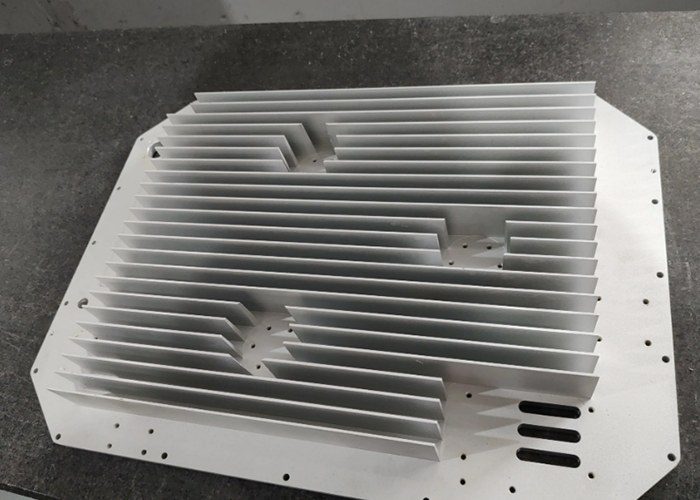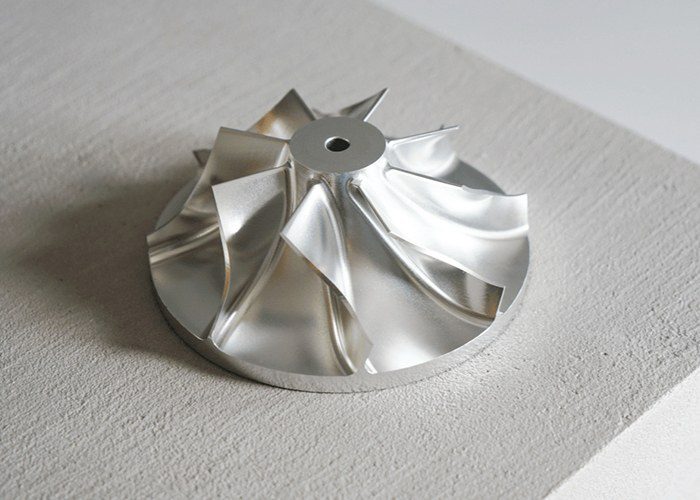
In the landscape of modern medicine, behind every successful surgery and every reliable diagnostic tool lies an often-overlooked hero: precision manufacturing. Computer Numerical Control (CNC) milling has emerged as the backbone of medical device production, transforming raw biomaterials into life-saving components with accuracy measured in microns. As medical technology advances toward minimally invasive procedures and patient-specific implants, the role of CNC milling in medical parts manufacturing has never been more critical.
The Stakes of Medical Precision
Unlike conventional machining, where a deviation of a few thousandths of an inch might simply mean a discarded part, errors in medical machining can have profound consequences. “Everyone knows someone who’s had a hip replacement or a knee replacement,” observes Scott DeVinney of Kennametal. “Unlike any other industry, the medical field hits closest to home”.
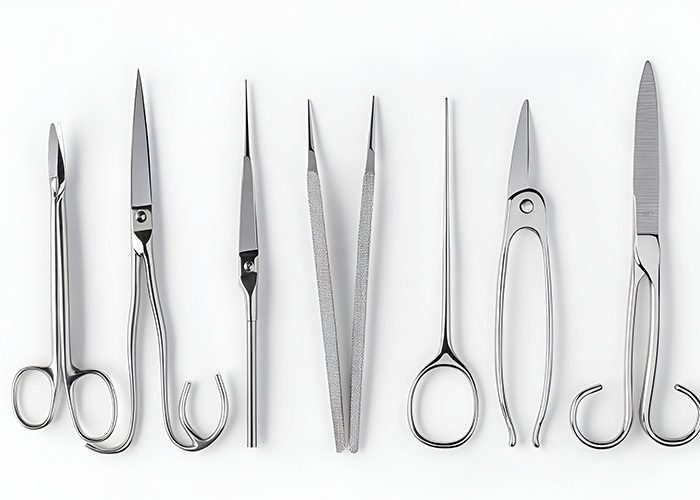
This reality drives an uncompromising demand for quality. A truly compliant medical component must carry with it a complete genealogy of data—from the mill that melted the raw material to the specific CNC machine that cut the final thread. For implantable devices, even minor imperfections such as rough edges or small burrs can lead to serious complications once the component is inside the human body.
Advanced Materials for Hostile Environments
The human body presents a uniquely challenging environment for manufactured components. It is warm, saline, and chemically aggressive—conditions that demand materials with exceptional properties. CNC milling for medical applications must accommodate a diverse range of materials, each with distinct machining characteristics.
Titanium alloys, particularly Ti-6Al-4V ELI (Grade 23), dominate the implant sector due to their osseointegration capabilities—the ability for bone tissue to grow directly onto the metal surface. Unlike standard Grade 5 titanium used in aerospace, medical implants strictly require Grade 23 with reduced oxygen and iron content to improve fracture toughness and ductility. However, titanium presents machining challenges due to its low modulus of elasticity; the material tends to pull away from cutting tools and spring back, causing chatter and rubbing. Effective strategies employ positive rake geometry tools and heavy chip loads to achieve clean shearing rather than abrasive rubbing.
Stainless steels remain essential for surgical instruments and temporary implants. For applications requiring high strength and sharp cutting edges, 17-4 PH precipitation-hardening stainless steel is commonly machined in an annealed state before heat treatment. For temporary implants, 316LVM (vacuum melt) offers superior surface finish through vacuum-arc remelting, which eliminates gas pockets and non-metallic inclusions where bacteria could otherwise hide.
Medical-grade polymers have gained prominence, particularly PEEK (polyetheretherketone), which offers radiolucency—invisibility to X-ray and MRI—while remaining chemically inert. However, PEEK machining requires careful attention to internal stresses; aggressive machining without intermediate annealing cycles can lead to warping during subsequent sterilization. Cobalt-chrome-molybdenum alloys, used for wear surfaces like femoral hip heads, represent the extreme end of machinability, requiring ceramic-reinforced cutting tools and rigid, vibration-damped fixturing.
Machining Technologies for Complex Geometries
The diversity of medical components demands an equally diverse range of machining strategies. Multi-axis CNC milling enables production of complex geometries with tolerances as tight as ±0.001 inch, making it ideal for orthopedic implants, surgical tools, and housings for electronic medical devices. For particularly small and intricate components, micro-milling produces extremely small features for implants, surgical instruments, catheters, and endoscopic components.
Swiss-style CNC machining has proven invaluable for small, high-precision parts requiring high-volume production. By feeding stock through a guide bushing, Swiss lathes maintain near-zero overhang regardless of part length, enabling consistent production of bone screws, cannulas, and cylindrical implant components. Thread whirling attachments can cut deep bone-screw threads in a single pass without burrs, while micro-drilling capabilities create cannulated holes as small as 0.5mm over lengths exceeding 100mm.
Recent demonstrations highlight the sophistication of modern medical machining. At a recent industry event, a shoulder implant stem was machined from solid titanium bar in a 45-minute cycle combining front and back-end operations, including roughing and finishing, OD profiling, slotting, face and side milling, three-axis turning, five-axis simultaneous milling, drilling, and countersinking—all in a single setup.
The Regulatory Framework: Beyond Precision
Meeting dimensional specifications, while essential, represents merely the starting point for medical machining. The defining characteristic of medical manufacturing is risk management, codified through stringent regulatory standards.
ISO 13485 stands as the global benchmark for medical device quality management systems, requiring risk-focused processes in all areas—from tool calibration and environmental control to supplier vetting. Unlike ISO 9001, which emphasizes continuous improvement, ISO 13485 focuses on maintaining system effectiveness and meeting regulatory requirements. This translates to operational mandates including Corrective and Preventive Action (CAPA) protocols and rigorous risk analysis following ISO 14971, which guides Failure Mode and Effects Analysis (FMEA) for hazards like tool breakage causing defects.
In the United States, the FDA’s 21 CFR Part 820 (Quality System Regulation) enforces controls in design and manufacturing, requiring tight specifications often reaching ±0.0005 inches on critical features. For international markets, additional layers such as the EU Medical Device Regulation (MDR) or Japan’s PMDA requirements come into play.
Metrology and Validation
Medical machining demands measurement capabilities matching its production precision. Tolerances of ±0.005mm are common, and traditional contact measurement often proves impossible due to part fragility or complex geometry. Vision inspection systems using high-resolution optics and edge-detection algorithms enable 100% inspection of critical features without operator error. Coordinate Measuring Machines (CMMs) with scanning probes collect thousands of data points to generate heat maps comparing physical parts directly to CAD models.
For surface quality, profilometry provides quantitative Ra (average roughness) and Rz (mean roughness depth) data essential for verifying compliance with FDA requirements, as surface roughness directly affects bacterial adhesion.
Surface Treatment and Final Processing
The machining process leaves behind stress, tool marks, and potential contaminants. Post-processing restores materials to a biocompatible state through several critical steps. Passivation, governed by ASTM A967 or AMS 2700, uses controlled acid baths to selectively dissolve free iron from stainless steel surfaces, leaving a chromium-rich surface that forms a passive, inert corrosion shield.
Titanium anodizing serves multiple functions: Type 2 gray anodize provides anti-galling treatment for screws to prevent cold welding during surgery, while Type 3 color anodize enables size identification through light interference patterns without using dyes, ensuring complete biocompatibility. Electropolishing removes 5-10 microns to enhance smoothness, corrosion resistance, and overall biocompatibility.
Conclusion
CNC milling for medical parts represents the convergence of advanced manufacturing technology, materials science, and regulatory compliance. As medical devices continue to evolve toward greater complexity and patient-specific customization, the capabilities of precision machining will remain essential. From the initial CAD model to the final sterilized implant, every step must honor the fundamental truth that these components will ultimately reside within the human body, where perfection is not an aspiration but an absolute requirement.