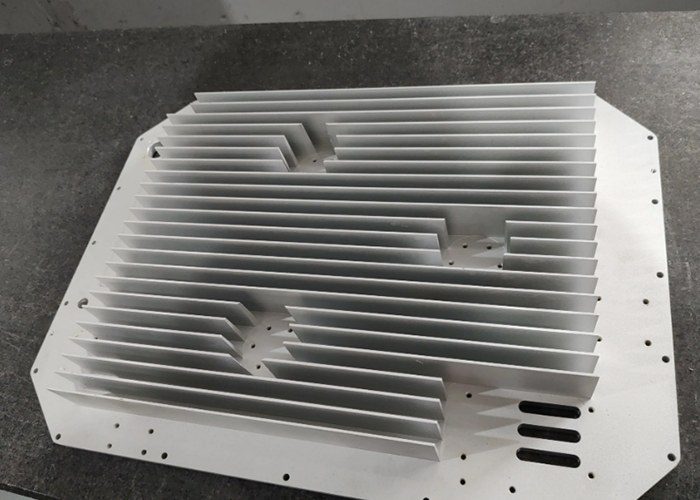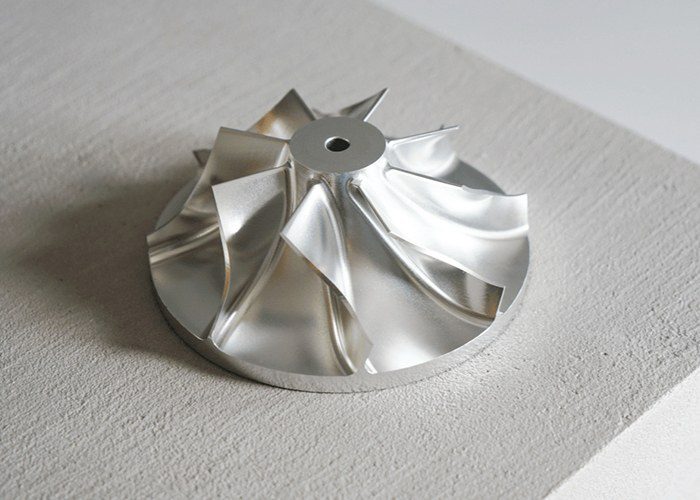
In the landscape of modern manufacturing, few technologies have proven as transformative as CNC milling. CNC milling mechanical parts represent the culmination of digital design and precision engineering—components that drive industries ranging from aerospace to medical technology. This article explores the intricacies of CNC milled components, their manufacturing processes, and their critical role in contemporary industrial applications.
Understanding CNC Milling Technology
CNC (Computer Numerical Control) milling is a subtractive manufacturing process where computer-controlled cutting tools progressively remove material from a workpiece to create desired shapes and objects. Unlike traditional manual milling, which relied heavily on operator skill and judgment, CNC milling transforms digital designs into physical reality with exceptional accuracy and repeatability.
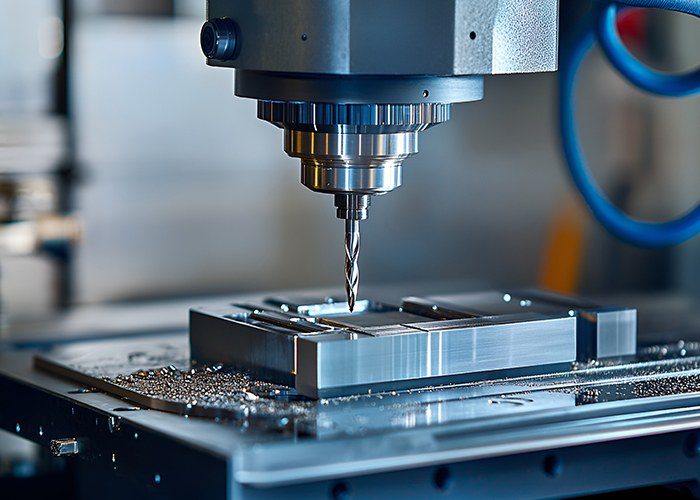
The process begins with a CAD (Computer-Aided Design) model, which is converted into machine-readable G-code through CAM (Computer-Aided Manufacturing) software. This code directs the milling machine’s movements across multiple axes—typically three to five—determining tool paths, cutting speeds, and feed rates with microscopic precision.
Key Components and Configurations
CNC milling machines share fundamental components regardless of size or complexity. The spindle holds and rotates cutting tools at speeds reaching thousands of RPM, while the worktable securely positions the workpiece. The control panel serves as the operator’s interface, and the column provides structural support for the entire assembly.
Modern CNC mills are classified by their axis configurations. 3-axis machines move linearly along X, Y, and Z coordinates, making them ideal for parts with relatively simple geometries. 4-axis machines add rotational capability, enabling machining of angled surfaces without repositioning. 5-axis CNC mills incorporate two rotary axes, allowing cutting tools to approach workpieces from virtually any direction—essential for complex aerospace components and medical implants.
Materials and Applications
The versatility of CNC milling is perhaps most evident in its material compatibility. CNC milling mechanical parts can be manufactured from an extensive range of materials, including aluminum and its alloys, various grades of steel and stainless steel, brass, copper, titanium, and engineered plastics such as PEEK and PC.
This material flexibility enables applications across diverse industries. In aerospace, CNC milling produces lightweight yet robust structural components, turbine blades, and critical fittings where material integrity is paramount. The automotive sector relies on milled parts for engine components, transmission cases, and suspension elements, benefiting from the process’s consistency in high-volume production.
The medical field demands the uncompromising precision that CNC milling provides—for orthopedic implants, surgical instruments, and prosthetics, where exacting specifications are critical to patient safety. Meanwhile, the electronics industry utilizes milled components for device housings, heat sinks, and miniature precision parts where miniaturization and accuracy are essential.
Design Considerations for Optimal Results
Successful CNC milling requires thoughtful design for manufacturability (DFM). Several factors significantly impact both cost and quality:
Wall thickness must be carefully considered—typically exceeding 0.5mm for metals and 1.0mm for plastics—to prevent breakthrough or warping during machining. Internal corners present particular challenges: because cutting tools are cylindrical, sharp internal corners cannot be achieved without secondary processes. Designers should incorporate radii at least 130% of the tool diameter to optimize machining efficiency.
Depth-to-width ratios affect tool stability and surface finish. Keeping cavity depths within 3:1 to 4:1 ratios reduces tool deflection and chatter, while deeper features may require specialized tooling that increases costs. Similarly, hole depths should generally not exceed six times the drill diameter to maintain accuracy.
Tolerances and Surface Finishes
CNC milling excels at holding tight tolerances, typically achieving ±0.05mm for standard machining and ±0.01mm for precision work. However, specifying unnecessarily tight tolerances throughout a design dramatically increases machining time, inspection requirements, and overall costs. The industry standard ISO 2768 medium tolerance suffices for many features, with tighter tolerances reserved for critical mating surfaces and alignment points.
Surface finishes range from Ra 0.8μm for fine finishing to Ra 3.2μm for standard machining passes. Post-processing options further enhance part characteristics—anodizing for aluminum components, passivation for stainless steel, and various plating, painting, or powder coating options for corrosion resistance and aesthetics.
From Prototype to Production
One of CNC milling’s greatest strengths is its scalability. The same equipment that produces single prototype parts can efficiently manufacture production runs of 100,000 pieces or more. Workpiece dimensions vary tremendously—from miniature components measuring just 10×10×1mm to massive parts approaching 10,000×1,500×3,000mm.
This scalability makes CNC milling equally valuable for product development and full-scale manufacturing. Designers can iterate rapidly on prototypes, validating form, fit, and function before committing to production tooling. Once designs are finalized, the digital nature of CNC machining ensures that every production part mirrors the original with absolute fidelity.
Conclusion
CNC milling mechanical parts represent the intersection of digital design and physical precision. As manufacturing technology continues to evolve, CNC milling remains indispensable—delivering the accuracy, repeatability, and material versatility that modern industry demands. From critical aerospace components to life-saving medical devices and precision automotive parts, CNC milling turns engineered visions into reality, one precision-crafted piece at a time.