
In the intricate tapestry of modern manufacturing, few processes are as fundamental and transformative as CNC milling. At its heart lies the creation of CNC milling machined parts—components that form the literal building blocks of industries ranging from aerospace and automotive to medical devices and consumer electronics. These are not mere pieces of metal or plastic; they are embodiments of precision, efficiency, and innovation, sculpted from raw material by the relentless dance of digitally commanded cutting tools.
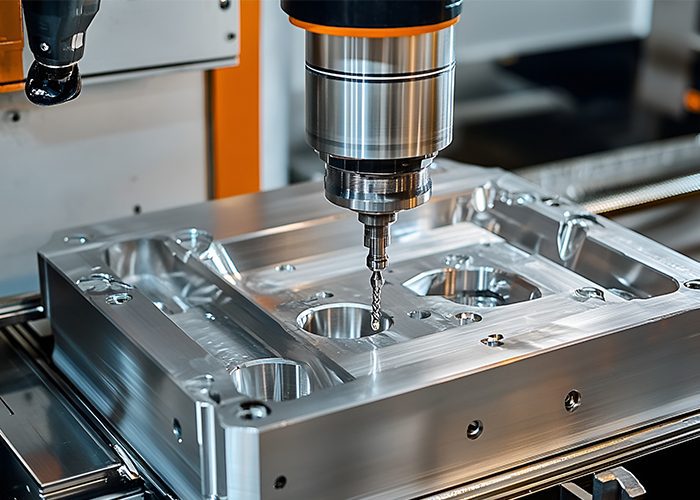
CNC milling is a subtractive manufacturing process that uses computer-controlled machine tools to remove material from a workpiece. It begins as a solid block of material—such as aluminum, steel, titanium, brass, or engineering plastics—and a custom part is carved out by removing material with rotating multi-point cutting tools. What separates it from traditional manual machining is the pre-programmed computer software (using G-code) that dictates every movement of the machine. This digital blueprint translates a three-dimensional CAD (Computer-Aided Design) model into precise instructions for the milling machine, controlling the path, speed, depth, and angle of the cuts with microscopic accuracy.
The machinery itself is a marvel of engineering. A standard CNC milling machine features a worktable that holds the raw material (the workpiece) and a spindle that holds and drives the cutting tools. The critical movement occurs along multiple axes. While a 3-axis machine moves the cutter in the linear X, Y, and Z directions, advanced machines offer 4-axis or 5-axis capabilities, allowing the workpiece or tool to rotate. This enables the machining of incredibly complex geometries—pockets, contours, slots, holes, and sculpted surfaces—in a single setup, a feat impossible with manual methods. The result is a CNC machined part with exceptional dimensional accuracy, often within tolerances tighter than a human hair.
The advantages of utilizing CNC milling for part production are profound. First and foremost is precision and repeatability. Once a program is verified, a CNC mill can produce tens, thousands, or even millions of identical parts, each a perfect clone of the last. This eliminates human error and ensures consistent quality, which is non-negotiable in safety-critical applications like aircraft landing gear or surgical implants.
Secondly, it offers unmatched complexity and flexibility. Intricate designs that would be cost-prohibitive or impossible to make with other methods become achievable. Prototypes can be machined rapidly from digital files, accelerating the product development cycle. Furthermore, a quick change of the software program and cutting tools allows the same machine to produce an entirely different part, making it ideal for both high-volume production and small-batch, customized jobs.
Thirdly, efficiency and material versatility are key strengths. Modern CNC mills operate at high speeds and can run unattended for long periods, optimizing production time. They also handle a vast spectrum of materials, from lightweight aluminum for drones to ultra-strong, heat-resistant superalloys for turbine blades, or biocompatible titanium for medical prosthetics. This adaptability makes it a universal solution across sectors.
The applications of CNC milling machined parts are virtually limitless. In aerospace, they are found in engine components, structural airframe sections, and delicate instrumentation, where strength-to-weight ratio and reliability are paramount. The automotive industry relies on them for precision engine blocks, transmission components, and custom aftermarket parts. In medical technology, CNC milling creates sterile, complex surgical tools, orthopedic implants, and diagnostic device housings that meet stringent regulatory standards. Even the sleek chassis of your laptop, the heat sink in your gaming console, and the intricate molds for plastic injection are likely products of CNC milling.
However, the process is not without considerations. Initial costs for high-end machinery and programming expertise can be significant. While material waste (swarf) is generated in this subtractive process, advancements in toolpath optimization help minimize it. Furthermore, the expertise of machinists and programmers remains crucial—they select the right tools, materials, feeds, speeds, and fixturing strategies to ensure optimal results, proving that behind the automated process, human ingenuity still drives innovation.
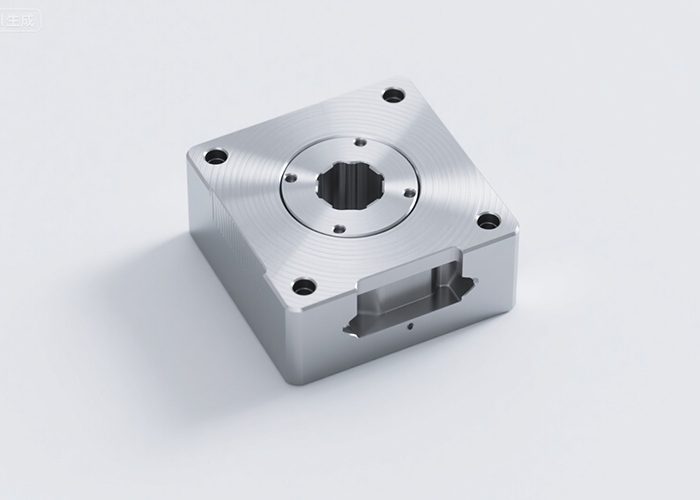
In conclusion, CNC milling machined parts are far more than just industrial components. They are the silent enablers of technological progress, the physical manifestations of digital design, and a testament to human ingenuity in mastering material fabrication. From enabling the miniaturization of electronics to making space exploration possible, CNC milling continues to push the boundaries of what can be manufactured. As the technology evolves with trends like automation, IoT integration, and hybrid additive-subtractive systems, one thing remains constant: the demand for the perfect part, and CNC milling’s pivotal role in delivering it. It is, and will remain, the precision powerhouse at the core of advanced manufacturing.


