In the symphony of modern manufacturing, where digital designs materialize into tangible reality with astonishing accuracy, the conductor is the Computer Numerical Control (CNC) milling machine. But this maestro’s performance hinges entirely on the quality, precision, and interaction of its core components. A CNC milling machine part is not merely a piece of metal; it is a critical nexus of engineering intent, material science, and motion control, working in concert to carve, drill, and shape the world around us. Understanding these parts is to understand the very language of digital fabrication.
At the most fundamental level, a CNC milling part can be categorized by its function within the machine’s ecosystem. The structural framework forms the skeleton. This includes the robust base, the column, and the worktable (often a precision-ground T-slotted table or a fixture-plate). These parts, typically made from cast iron or polymer composites, must provide immense static and dynamic rigidity. They absorb vibrations, resist torsional forces, and maintain geometric stability under the punishing stresses of high-speed machining, ensuring that the machine’s movements are true and repeatable.
The drive and motion system is the muscular and nervous system. It translates digital commands into physical movement. Key parts here are the ball screws and linear guides. Ball screws convert the rotary motion of servo or stepper motors into precise linear motion along the X, Y, and Z axes. Paired with high-precision linear guides—often featuring recirculating ball bearings—they enable smooth, friction-minimized, and exceptionally accurate travel. Any backlash, wear, or imperfection in these components directly translates into inaccuracy in the machined workpiece.
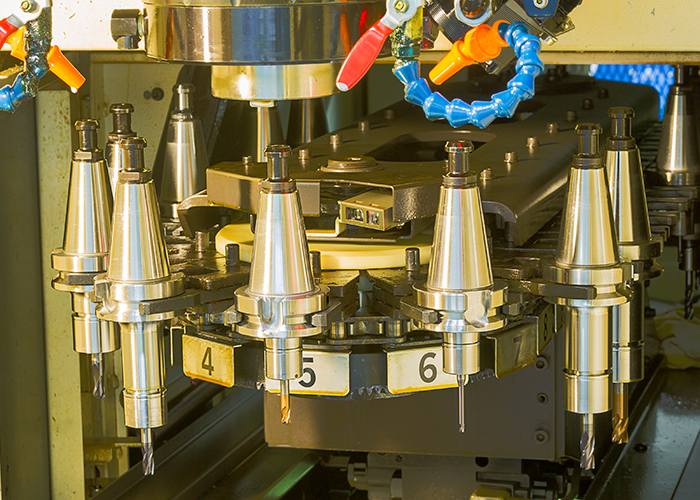
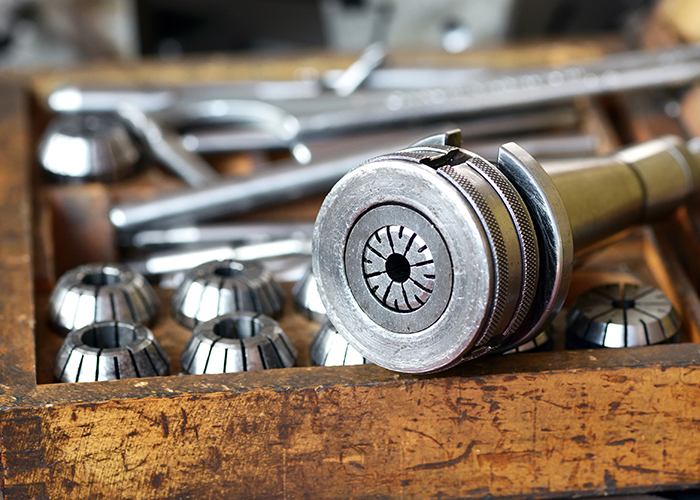
The spindle assembly is the beating heart of the milling machine. It is a high-tech marvel comprising the spindle itself, its integral motor (often high-frequency or built-in servo), a precision tool-holding system (like BT, CAT, or HSK collets and chucks), and a complex bearing arrangement (angular contact bearings being common). The spindle’s role is to rotate the cutting tool at precisely controlled speeds, sometimes exceeding 30,000 RPM, while maintaining minimal run-out and extreme rigidity. The tool changer, an automated carousel or arm, is an integrated part of this system, enabling uninterrupted machining by swapping tools as programmed, a key feature for complex parts.
The control system is the brain. While largely electronic, its physical interface and critical feedback components are essential machine parts. This includes the operator control panel, the CNC controller unit, and vital feedback devices like rotary encoders or linear scales mounted on the axes. These encoders provide closed-loop feedback, constantly telling the controller the exact position of the tool, allowing for real-time correction and ensuring the tool path matches the digital model to within microns.
Beyond these core systems, auxiliary parts play indispensable roles. The coolant system, with its pump, nozzles, and filtration units, is crucial for evacuating chips, reducing thermal distortion of both tool and workpiece, and improving tool life. Enclosures and guards are critical safety parts, containing hazardous debris and coolant mist. For advanced machining, probe systems (touch-trigger or laser) act as the machine’s “sense of touch,” allowing for automated workpiece setup, tool breakage detection, and in-process measurement.
The creation of these parts themselves is a testament to advanced manufacturing. They are machined from specialized materials: spindles from high-grade alloy steels, bases from stress-relieved cast iron, guides from hardened steel. Their manufacturing tolerances are often tighter than those of the parts they will later produce, a recursive loop of precision begetting precision.
In essence, every CNC milling machine part serves a singular, unified purpose: to minimize and control variables. They combat friction, heat, vibration, and deflection. The interplay between a perfectly preloaded ball screw, a rigidly supported linear guide, and a dynamically balanced spindle is what allows a CNC mill to reliably machine a block of aluminum into a complex aerospace component or a medical implant. The part is not just an item on a bill of materials; it is a fundamental unit of reliability and accuracy.
Therefore, the next time you witness a CNC mill effortlessly crafting a intricate component, see beyond the swirling cutter. See the symphony of precisely engineered parts in motion—the steadfast frame, the silent glide of the drives, the whirring heart of the spindle, and the vigilant eye of the control system. Each CNC milling machine part, from the largest casting to the smallest encoder, is a dedicated guardian of precision, a silent partner in the ongoing revolution of making. Their unerring performance is the foundation upon which innovation, from prototype to mass production, is built.