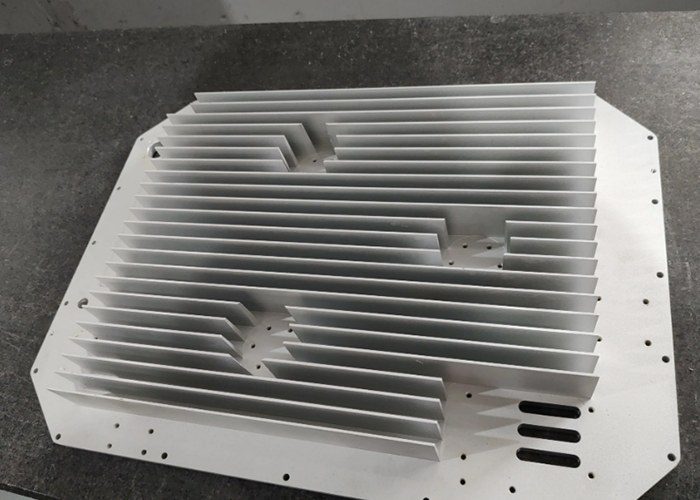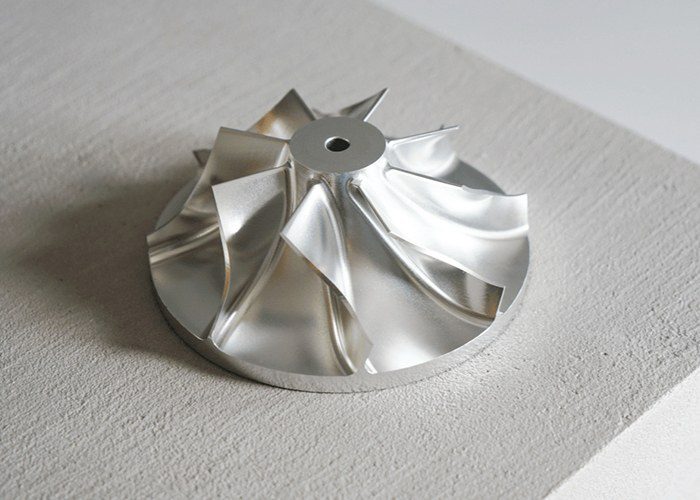
In the realm of modern manufacturing, precision, efficiency, and the ability to produce complex parts are paramount. While 3-axis CNC (Computer Numerical Control) machining has long been the workhorse for countless applications, the evolution towards multi-axis machining has unlocked new possibilities. Among these, 4 axis CNC machining stands as a pivotal technology, striking a powerful balance between enhanced capability and relative accessibility. It represents a significant leap from basic machining, allowing for the creation of more intricate components in fewer setups, thereby revolutionizing prototyping and production workflows.
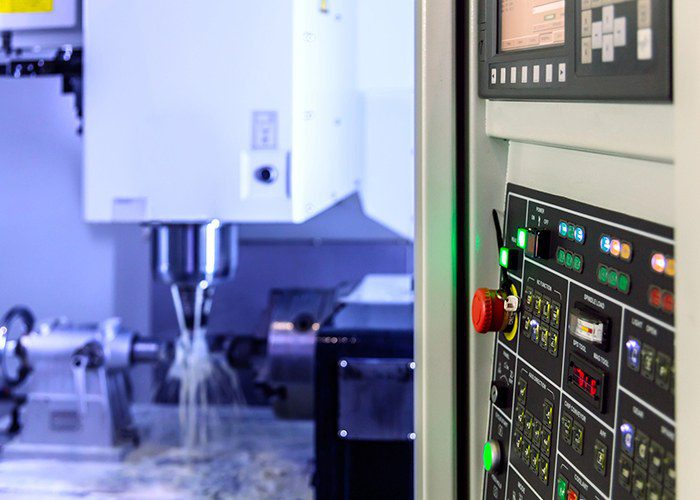
To understand the 4-axis advantage, one must first grasp its core differentiator: the addition of a rotational axis. A standard 3-axis CNC machine (milling machine, for example) moves its cutting tool along three linear axes: X (left-right), Y (front-back), and Z (up-down). A 4-axis machine incorporates an additional rotary axis, typically designated as the A-axis. This axis allows the workpiece itself to rotate, usually 360 degrees, around the X-axis. In some configurations, the rotation occurs around the Y-axis (B-axis) instead. This rotational capability is the key to its expanded functionality.
The primary benefit of this setup is the machine’s newfound ability to access up to four sides of a workpiece in a single clamping. This is where the technology truly shines. Instead of an operator having to stop the machine, manually reposition the part, and reset the zero point for multiple operations—a process prone to errors and misalignment—the 4-axis machine rotates the part automatically with perfect precision. This single-setup machining drastically reduces lead times, minimizes human error, and improves overall accuracy because all features are machined in relation to a single, fixed datum.
4-axis machining operates in two main modes: indexing and simultaneous machining. In indexing mode, the machine uses the rotary axis to position the workpiece at a specific, fixed angle. Once locked in place, machining proceeds as on a 3-axis machine. This is ideal for drilling holes or milling pockets on different sides of a cylinder or a cubic part. Simultaneous 4-axis machining, a more advanced function, allows for the tool and the rotary axis to move in coordinated motion at the same time. This enables the continuous machining of complex curved surfaces and contours that wrap around the workpiece, such as cam lobes, helical gears, or intricate artistic engravings on a cylindrical surface. It brings a level of fluidity and complexity to part creation that is impossible with 3-axis technology.
The applications for 4-axis CNC machining are vast and span high-tech industries. It is indispensable in aerospace for manufacturing structural components, landing gear parts, and turbine blades with complex airfoils. The automotive sector relies on it for engine components, custom wheels, and prototypes. It manufactures precise implants, surgical instruments, and orthopedic devices. Furthermore, it is widely used for creating molds and dies with complex contours, architectural models, and sophisticated pieces in the world of custom fabrication and art.
When compared to 3-axis machining, the 4-axis offers clear advantages in complexity, speed for multi-sided parts, and accuracy for features requiring angular relationships. However, it is generally more expensive in terms of initial machine investment and programming complexity. Compared to its more advanced sibling, 5-axis CNC machining, 4-axis is less capable. A 5-axis machine adds a second rotary axis, allowing the tool to approach the workpiece from virtually any direction in a single setup, enabling the machining of incredibly complex, free-form geometries like impellers and airframe monoliths. Yet, 4-axis remains a more cost-effective solution for parts that primarily require rotational features around one axis, offering a significant portion of the multi-axis benefit without the steep cost and programming overhead of full 5-axis systems.
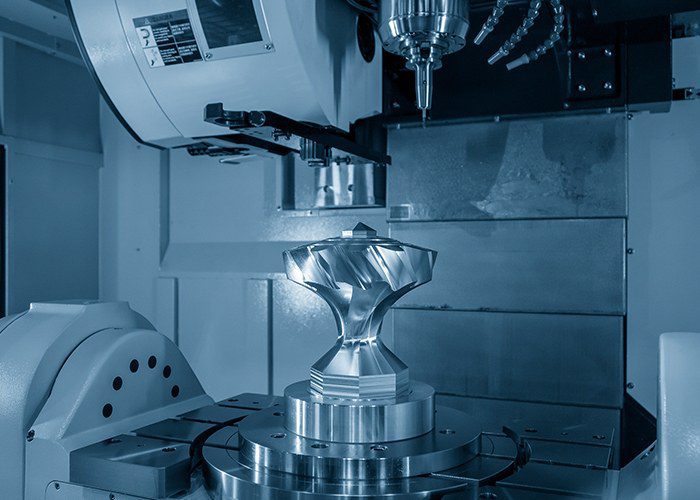
In conclusion, 4-axis CNC machining is a transformative technology that fills a crucial niche in the manufacturing landscape. It successfully bridges the gap between the simplicity of 3-axis and the supreme versatility of 5-axis machining. By introducing controlled rotation, it empowers manufacturers to produce more intricate, accurate, and higher-quality parts with remarkable efficiency. As industries continue to demand components with greater complexity and tighter tolerances, 4-axis CNC machining will remain a cornerstone technology, enabling innovation and driving productivity from the workshop floor to the final, precision-engineered product.