
In the world of modern manufacturing, Computer Numerical Control (CNC) machining stands as a cornerstone technology, transforming digital designs into precise physical parts. Among its various configurations, 3 axis CNC machining remains the most fundamental, widely adopted, and accessible form of subtractive manufacturing. It serves as the entry point into the world of automated precision and continues to be the workhorse for a vast array of industries, from prototyping to full-scale production. This article delves into the principles, capabilities, advantages, limitations, and applications of this indispensable technology.
Understanding the Core Concept
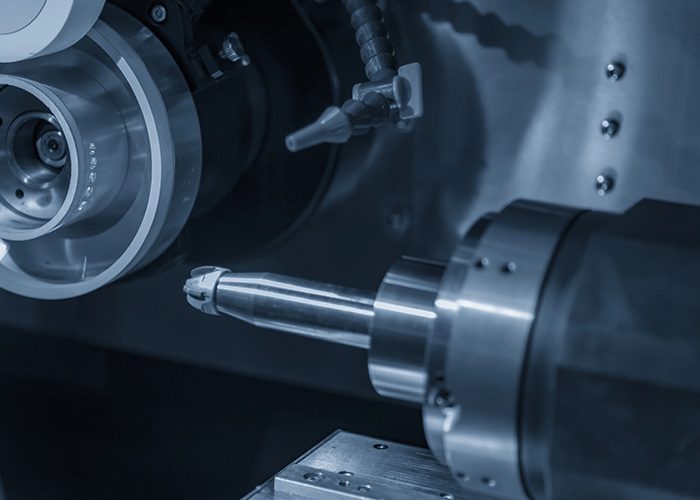
At its heart, 3-axis CNC machining refers to a process where a cutting tool moves along three linear axes relative to a stationary workpiece. These axes are universally defined:
- X-axis: Represents left-to-right movement.
- Y-axis: Represents front-to-back movement.
- Z-axis: Represents up-and-down movement.
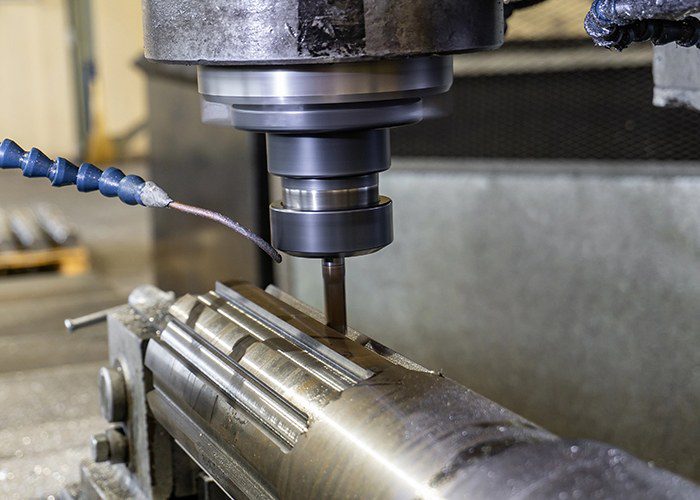
The “3-axis” designation means the tool can approach the workpiece from these three orthogonal directions. The machine interprets instructions from a computer-aided manufacturing (CAM) program, driving servo motors to move the tool along these paths, precisely cutting away material—typically metal, plastic, or wood—to reveal the final part. The most common type of 3-axis CNC machine is the vertical machining center (VMC), where the spindle holding the tool moves vertically (Z-axis) and the workpiece is secured on a table that moves in the X and Y directions.
The Workflow: From Digital to Physical
The process is initiated with a 3D CAD model. The model is imported into CAM software for the programmer to define the machining strategy. This includes selecting tools (drills, end mills, etc.), specifying cutting speeds and feed rates, and generating the toolpaths—the precise routes the cutter will follow. The CAM software then translates this information into G-code, a low-level programming language that the CNC controller can understand. This code commands every movement of the machine, orchestrating the complex dance of rotation and linear motion that results in a finished part. Post-processing, often involving deburring or surface finishing, may follow the machining cycle.
Advantages and Strengths
The enduring popularity of 3-axis CNC machining is rooted in several key advantages:
- Cost-Effectiveness: Compared to 4-axis or 5-axis machines, 3-axis CNCs have a simpler mechanical structure and control system, making them significantly less expensive to purchase, operate, and maintain. This lower barrier to entry makes them ideal for job shops, startups, and educational institutions.
- Ease of Programming and Operation: The programming for 3-axis work is relatively straightforward. Many CAM packages have highly automated toolpath strategies for 2.5D and 3D contouring, reducing the required skill level and time for setup. Operators also find them easier to manage and troubleshoot.
- Excellent Accuracy and Repeatability: For parts that fit within its geometric capabilities, a well-calibrated 3-axis machine delivers exceptional precision and surface finish. It is perfectly suited for producing flat features, holes, pockets, and contours on a single plane or multiple parallel planes.
- Rapid Prototyping and Production: It is the go-to solution for quickly turning concepts into functional prototypes or for manufacturing large batches of parts that do not require complex undercuts or multi-angle features.
- Wide Material Compatibility: From aluminum and stainless steel to engineering plastics like PEEK and common materials like wood and foam, 3-axis machines can handle a remarkably broad spectrum of materials.
Inherent Limitations
The primary limitation of 3-axis machining is geometric. Since the workpiece remains fixed in a single orientation, the tool cannot reach all sides of a part in one setup. To machine features on different faces, an operator must manually reposition the workpiece, which introduces potential alignment errors (tolerance stack-up) and increases labor time. This makes it inefficient or impossible to produce parts with complex geometries, deep cavities with tight entrance angles, or features on multiple non-parallel planes without multiple, careful setups.
Typical Applications
Despite its “simple” nature, the application list for 3-axis CNC machining is extensive:
- Sheet Metal Fabrication: Cutting panels, brackets, and enclosures.
- Mold and Die Making: Creating base cavities and cores for injection molds (often before detailed 5-axis finishing).
- Aerospace Components: Manufacturing brackets, plates, and housings.
- Automotive Parts: We manufacture engine components, interior panels, and prototypes.
- Consumer Electronics: Machining aluminum laptop chassis, device frames, and heatsinks.
- Medical Devices: Precision fabrication of surgical instrument handles, diagnostic equipment components, and device enclosures.
- Signage and Artistic Work: Cutting intricate designs from wood, plastic, and metal for decorative purposes.
Conclusion
3-axis CNC machining is far from obsolete in the age of advanced multi-axis systems. Instead, it represents the essential foundation of precision manufacturing. Its perfect blend of affordability, reliability, and capability for a huge range of parts ensures its continued dominance. It is the ideal starting point for understanding CNC technology and remains the most practical choice for a majority of machining tasks where complexity is manageable and cost is a critical factor. By mastering 3-axis machining, manufacturers and engineers build the core competency upon which more advanced manufacturing strategies are later integrated, making it a truly timeless and vital technology in the digital fabrication landscape.


