
At the heart of today’s advanced manufacturing lies a pair of transformative technologies: the CNC lathe and the CNC milling machine. These computer-controlled tools have revolutionized how we shape raw materials into complex, high-precision components, forming the backbone of industries from aerospace and automotive to medical devices and consumer electronics. While distinct in their primary functions, their synergy defines the capabilities of modern machining.
The CNC Lathe: Master of Rotation
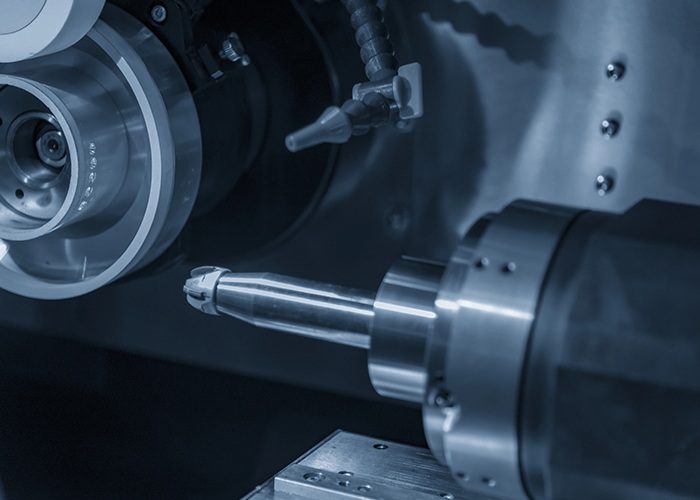
The CNC (Computer Numerical Control) lathe is the digital descendant of the ancient craft of turning. Its fundamental principle is the rotation of the workpiece against a stationary cutting tool. The raw material, typically a cylindrical bar of metal, plastic, or composite, is securely clamped in a spindle and set spinning at high speeds. Programmable tool posts, often equipped with multiple cutting tools, then move along precise linear and radial paths (X and Z axes) to remove material. This process is ideal for creating axisymmetric parts—components that are symmetrical around a central axis.
The applications of CNC turning are ubiquitous. It produces shafts, pins, bushings, nozzles, and fasteners with exceptional concentricity and surface finish. Advanced CNC lathes, known as turning centers, incorporate live tooling—rotating tools powered independently of the spindle. This allows for secondary operations like drilling holes or milling flats on the rotating part without unclamping it, significantly reducing cycle times and improving accuracy by completing multiple processes in a single setup.
The CNC Milling Machine: Architect of Form
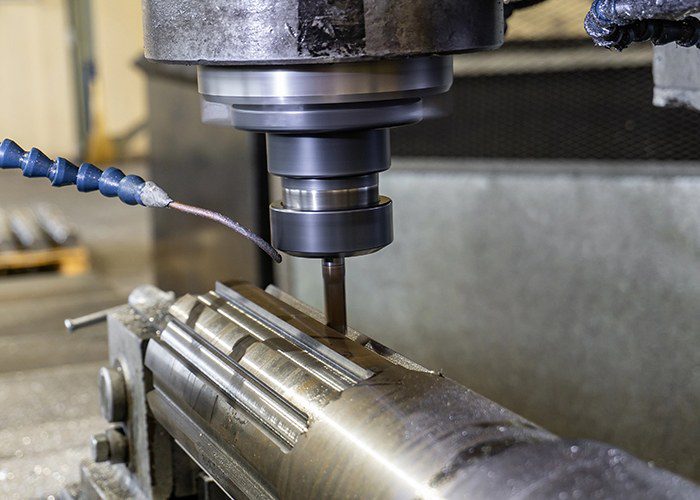
In contrast to the lathe’s rotational focus, the CNC milling machine operates on the principle of a rotating cutting tool moving against a stationary workpiece. The multi-point cutting tool (the mill) spins at high RPMs while the workpiece is mounted on a table that moves precisely in at least three linear directions (X, Y, and Z axes). This enables the machine to carve, drill, slot, and contour a vast array of shapes from a solid block of material. Modern machining centers, the most advanced form of CNC mills, often feature four or five axes of motion, allowing the cutting tool or workpiece to tilt and rotate, enabling the machining of incredibly complex geometries in a single operation.
From the aluminum frame of a smartphone and the titanium bone implant to the intricate mold for a plastic toy and the soaring structural components of an aircraft, CNC milling is the go-to process for creating prismatic and complex 3D forms. Its versatility is its greatest strength, capable of handling everything from rapid prototyping to high-volume production.
Divergent Strengths, Converging Capabilities
The core distinction is simple: a lathe rotates the workpiece to create round forms; a mill moves a rotating tool to create angular or complex shapes. The lathe excels at speed and efficiency for cylindrical parts, while the mill offers unparalleled flexibility in design. However, the line between them has blurred with technological convergence. As mentioned, turning centers with live tooling incorporate milling functions. Conversely, many machining centers now include a rotary table or a fourth axis that can spin the workpiece, allowing for “turning-like” operations.
This convergence creates unparalleled efficiency. A single, sophisticated machining center can now complete a part that once required separate setups on multiple machines. This “done-in-one” philosophy minimizes human handling, reduces cumulative error from re-clamping, and drastically shortens lead times. For a complex part like a transmission housing, a multi-axis machining center might mill the outer contours, drill and tap bolt holes, and even bore precise cylindrical bearing seats.
The Digital Backbone: Programming and Innovation
Both machines are driven by CAD (Computer-Aided Design) and CAM (Computer-Aided Manufacturing) software. An engineer’s 3D model is translated by CAM software into a set of coordinates and toolpaths—the G-code—that instructs the machine on every movement. This digital thread ensures repeatability, accuracy measured in microns, and the ability to replicate parts indefinitely or tweak designs with a few clicks.
Ongoing innovations continue to push the boundaries. High-speed machining, using specialized tools and strategies, allows for faster material removal. The integration of automation, such as robotic part loaders and pallet changers, creates “lights-out” manufacturing cells that run unattended. Furthermore, the rise of hybrid manufacturing, which combines additive (3D printing) and subtractive (CNC machining) processes in one machine, points to a future where parts are built up and precision-finished in a seamless, digital workflow.
In conclusion, the CNC lathe and milling machine are not competitors but complementary partners in the precision manufacturing ecosystem. Individually, they each master a fundamental method of shaping our world. Together, especially as fused in modern multi-tasking centers, they empower engineers to turn innovative designs into tangible, reliable, and complex products with a level of speed and accuracy unimaginable just a few decades ago. They remain, indisputably, the cornerstone of technological progress and industrial production.


