
At the heart of today’s advanced manufacturing landscape lies a process that transforms digital designs into tangible, high-precision parts: CNC milling. The products of this sophisticated technology, known as CNC milling components, are the unsung heroes within countless devices and machines that define our modern world. From the aerospace sector to medical devices, these components represent the pinnacle of accuracy, repeatability, and complex geometry, enabling innovation and reliability across industries.
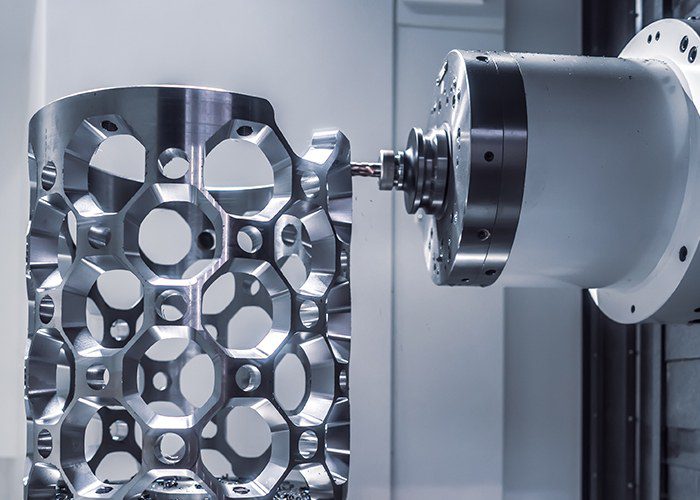
CNC milling is a subtractive manufacturing process that uses computer-controlled machine tools to remove material from a workpiece. It employs computerized controls and rotating multi-point cutting tools to progressively remove material from a solid block, known as the workpiece, to produce a custom-designed part. The resulting CNC milling components are characterized by their exceptional dimensional accuracy and ability to feature intricate contours, slots, holes, and pockets that would be challenging or impossible to achieve with manual machining. The process begins with a computer-aided design (CAD) model, which is translated into a set of numerical codes (G-code) that dictate every movement of the milling machine’s cutting tools along multiple axes.
The advantages of utilizing CNC milling components are manifold. Foremost is precision. Modern CNC machines can hold tolerances within a few microns, ensuring that every produced part is virtually identical to the last. This repeatability is crucial for mass production and assembly, where interchangeability is non-negotiable. Furthermore, CNC milling excels at creating complex three-dimensional shapes. Whether it’s a lightweight aerospace bracket with organic curves or a surgical implant with a bespoke bone interface, the technology handles complexity with ease. The process is also highly versatile, capable of working with a vast array of materials, including metals like aluminum, stainless steel, and titanium, as well as engineering plastics and composites. This material flexibility allows engineers to select the optimal substance for strength, weight, corrosion resistance, or biocompatibility, knowing it can be accurately machined into the required form.
The production of high-quality CNC milling components is not merely about the machine itself; it is a synergy of advanced engineering and meticulous planning. Toolpath strategy, cutting speed, feed rate, and tool selection are all critical parameters programmed by skilled machinists or engineers to optimize surface finish, minimize waste, and ensure tool longevity. Additionally, the integration of automated tool changers and pallet systems in modern machining centers allows for uninterrupted production of complex parts, significantly boosting efficiency.
In terms of application, CNC milling components are ubiquitous. In the automotive and aerospace industries, they form critical structural elements, engine parts, and custom fittings where strength-to-weight ratio and reliability are paramount. The electronics sector relies on precisely milled heatsinks, enclosures, and connector housings to protect sensitive circuitry. Perhaps most notably, in the medical field, the technology produces life-changing items such as orthopedic implants, surgical instrument parts, and diagnostic device components, where absolute precision and material integrity can be a matter of life and death.
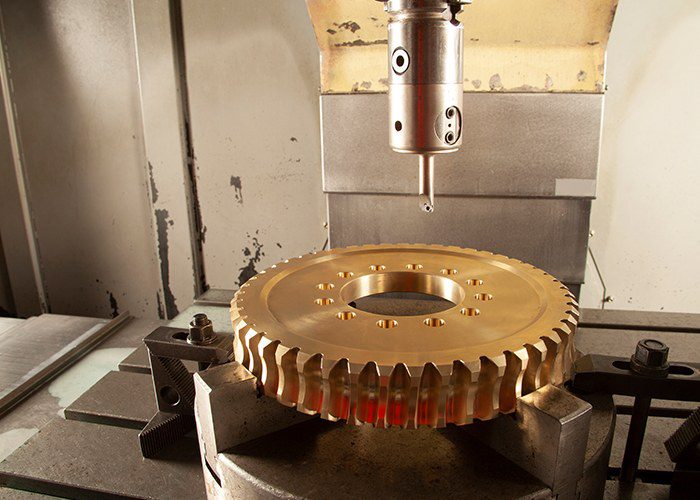
Looking forward, the evolution of CNC milling components is intertwined with broader technological trends. The rise of multi-axis and simultaneous 5-axis milling continues to push the boundaries of geometric complexity, reducing the need for multiple setups and accelerating production. Integration with computer-aided manufacturing (CAM) software is becoming more seamless, enabling faster prototyping and transition to full-scale production. Furthermore, the adoption of IoT sensors and data analytics in “smart” CNC machines allows for predictive maintenance and real-time optimization of the milling process, enhancing quality control and reducing downtime.
In conclusion, CNC milling components are far more than mere metal or plastic pieces; they are the physical manifestations of digital precision engineering. As the backbone of advanced manufacturing, they enable the creation of lighter, stronger, smarter, and more efficient products across every sector of technology. The ongoing refinement of CNC milling technology ensures that these vital components will continue to drive innovation, proving that in the quest for perfection, there is no substitute for precision crafted in motion.


