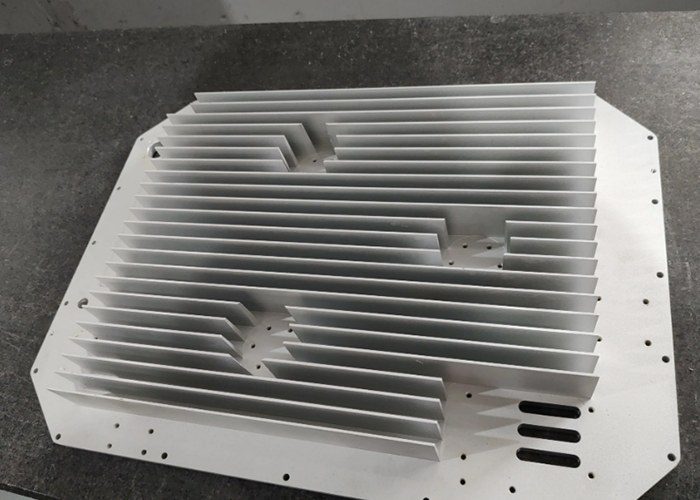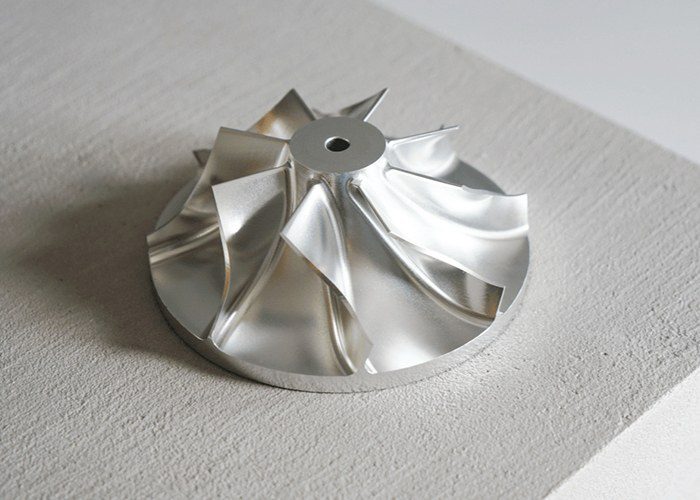
In the world of modern manufacturing and prototyping, where precision meets aesthetics, acrylic stands out as a remarkably versatile material. Known for its glass-like clarity, durability, and excellent machinability, it is the substrate of choice for countless applications, from sleek signage and sophisticated lighting fixtures to precise laboratory equipment and protective barriers. The key to unlocking acrylic’s full potential lies in a subtractive manufacturing process that offers unparalleled accuracy and repeatability: Computer Numerical Control (CNC) machining. The creation of CNC machining acrylic parts represents a perfect synergy between advanced technology and material science, yielding components that are both functionally robust and visually flawless.
Understanding the Material: Why Acrylic?
Acrylic, also known as Polymethyl Methacrylate (PMMA), is a transparent thermoplastic commonly used as a lightweight and shatter-resistant substitute for glass. Its properties make it uniquely suited for CNC processes. It is softer and more forgiving than metals, yet it requires specific handling to achieve optimal results. Unlike some plastics, acrylic does not chip easily but can melt if machined with excessive friction. Therefore, the CNC process for acrylic must be meticulously calibrated—a task for which CNC technology is perfectly equipped. The computer-controlled environment allows for exact control over cutting speed, feed rate, toolpath, and cooling, which are all critical factors when machining this sensitive polymer.
The CNC Machining Process for Acrylic
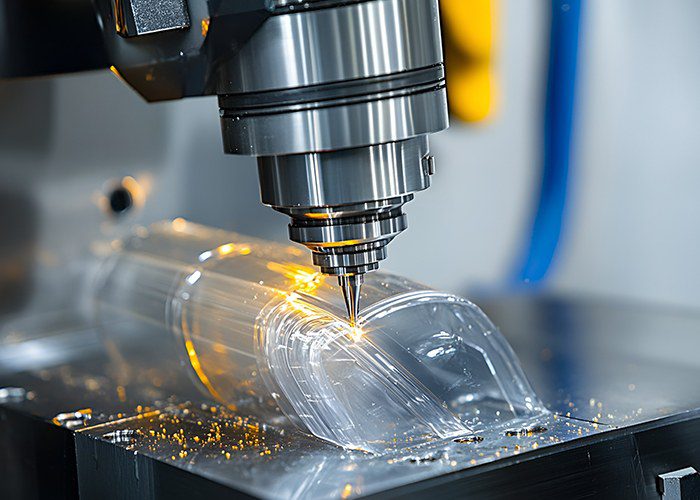
The journey of creating precision CNC machining acrylic parts begins with a digital design, typically a 3D CAD model. This model is translated into machine instructions (G-code) that guide the CNC mill or router. The selection of tools is paramount; single-flute or double-flute carbide end mills are often preferred as they efficiently evacuate chips, reducing heat buildup. Coolant or compressed air is frequently used to keep the cutting zone cool, preventing the acrylic from melting and re-fusing, which can cause rough edges or clouding.
CNC machining offers several operations specifically beneficial for acrylic:
- Milling: This is the core process for cutting the overall shape, creating pockets, holes, and complex 3D contours.
- Drilling: For creating precise, clean through-holes or blind holes without cracking or crazing (the formation of fine cracks).
- Engraving: To add fine details, text, or decorative patterns with incredible accuracy.
- Facing: To create an optically perfect, smooth surface finish directly from the machine.
The advantage of CNC over manual machining is its consistency. Once the optimal parameters are set, a CNC machine can produce hundreds or thousands of identical CNC machining acrylic parts with micron-level tolerance, ensuring every piece meets the exact same specification.
Achieving Optical Clarity and Superior Finish
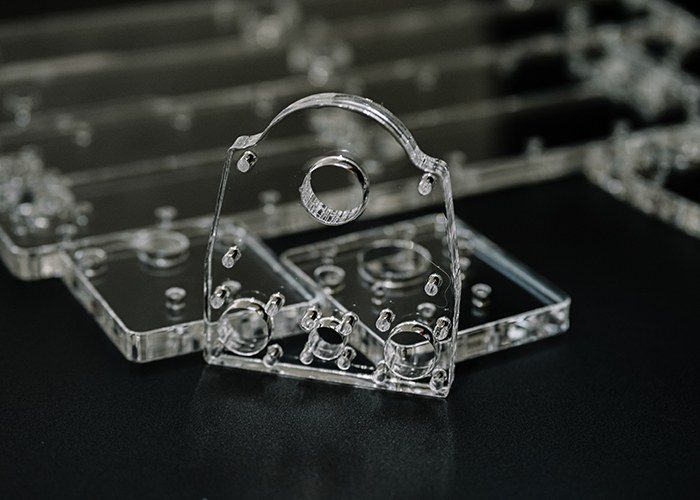
One of the primary goals when machining acrylic is to maintain or enhance its transparency. The “as-machined” finish from a well-tuned CNC process can be remarkably clear. However, the true jewel-like finish is often achieved through post-processing. The cut edges, which may initially appear translucent or frosted, can be polished to a brilliant, crystal-clear shine. This is done through flame polishing (where a flame gently melts the surface), chemical polishing (using a solvent), or mechanical polishing with progressively finer abrasives. CNC machining allows for such precise initial cuts that the subsequent polishing process is more efficient and yields superior results.
Applications and Advantages
The applications for precision CNC machining acrylic parts are vast and growing. In the retail and hospitality sectors, they become illuminated signage, product displays, and decorative panels. In the medical field, they are fabricated into fluidic devices, inspection chambers, and surgical guides. Engineers use them for prototypes requiring transparent housings to view internal mechanisms. The architectural world utilizes them for custom light fixtures, partitions, and even furniture.
The advantages are compelling:
- Design Freedom: CNC machining can create incredibly complex geometries that are impossible with traditional glass-forming methods.
- Rapid Prototyping and Production: It bridges the gap between one-off prototypes and medium-volume production runs seamlessly.
- Exceptional Accuracy: Critical for parts that must fit into assemblies or have precise optical qualities.
- Material Integrity: Unlike injection molding, which requires granules, CNC machining uses cast or extruded acrylic sheet or block, which often has higher clarity and better stress properties.
Conclusion
CNC machining acrylic is more than just a manufacturing process; it is an art form guided by digital precision. It transforms a raw sheet of polymer into a functional component of beauty and precision. For designers and engineers seeking clarity—both literal and metaphorical—in their components, the path forward is clear. By leveraging the meticulous control of CNC technology, manufacturers can consistently produce CNC machining acrylic parts that are not only dimensionally perfect but also possess the stunning visual appeal that makes acrylic such a beloved material. In the intersection of light, form, and function, CNC-machined acrylic continues to shine brightly.