
The Computer Numerical Control (CNC) milling machine stands as a cornerstone of modern manufacturing, enabling the precise, automated, and repeatable machining of complex parts from metals, plastics, and composites. While the machine is often viewed as a single entity, its capabilities are the direct result of the seamless integration and exceptional quality of its core CNC milling machine parts. Understanding these components—from the powerful spindle to the rigid frame—is essential to appreciating the technology that drives industries from aerospace to medical device production.
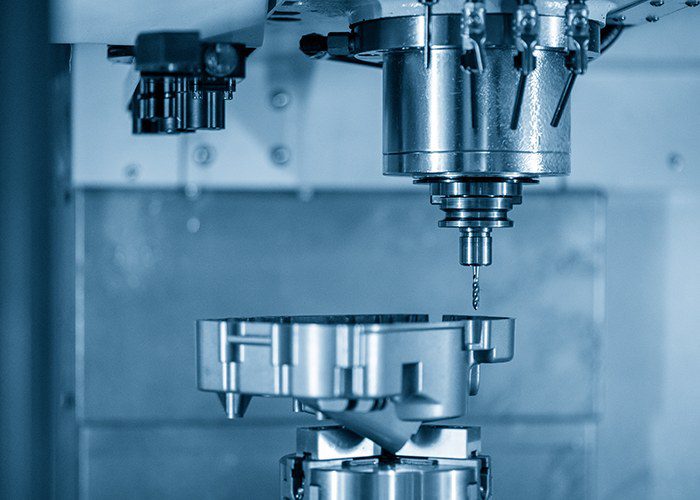
At the heart of every system lies the spindle assembly, arguably the most critical of all CNC milling machine parts. This component houses the rotating shaft that drives the cutting tools. Its power (measured in horsepower or kilowatts), maximum speed (RPM), and torque define the machine’s capacity to cut different materials. Spindles can be integral, built directly into the machine for maximum rigidity, or belt-driven. High-precision bearings within the spindle are crucial for minimizing runout, ensuring the cutting tool rotates perfectly true for superior surface finishes and tight tolerances. The spindle interface, such as BT, CAT, or HSK, standardizes the connection to the tool holder.
The tool holder is a deceptively simple yet vital link in the chain of CNC milling machine parts. It securely clamps the cutting tool (end mill, drill, face mill) into the spindle’s taper. Common types include collet chucks, which offer flexibility for various tool diameters, and shrink-fit holders, which provide exceptional gripping force and balance for high-speed machining. The accuracy and rigidity of this connection directly impact vibration, tool life, and the final part quality. Stored and managed automatically, these holders interface with the automatic tool changer (ATC).
The ATC, a marvel of automation among CNC milling machine parts, dramatically reduces non-cutting time. It consists of a magazine (carousel or arm-type) that holds multiple pre-set tools. Upon a command from the CNC program, the ATC swiftly exchanges the tool in the spindle with the next required one, often in a matter of seconds. This allows for complex operations involving drilling, tapping, and milling with different tools to proceed uninterrupted, a key factor in unattended machining and high-volume production.
Providing the stable, movable platform for the workpiece is the table and saddle assembly. This group of CNC milling machine parts typically includes a robust, ground cast-iron table with T-slots for clamping workholding devices like vises or fixture plates. The table is mounted on a saddle (Y-axis), which itself moves along the knee or directly on the bed (X-axis). The design and construction of these elements dictate the machine’s travel limits and, more importantly, its static and dynamic rigidity. Any flex or vibration in this structure translates directly into machining inaccuracies.
Enabling the precise movement of the spindle and table are the drive systems and guideways. These fundamental CNC milling machine parts consist of ball screws, driven by servo or stepper motors, which convert rotary motion into precise linear movement. The accuracy of these screws is paramount. The moving components glide along linear guideways—often hardened and ground rails with recirculating ball bearings—or box ways, which offer superior damping for heavy cuts. These components work in concert to position the tool and workpiece with micron-level accuracy.
Orchestrating the entire operation is the CNC control unit and servo drives. While not mechanical parts in the traditional sense, they are indispensable electronic components of the CNC milling system. The control unit (often from brands like Fanuc, Siemens, or Heidenhain) interprets the G-code program, calculating trajectory and sending command signals to the servo drives. The drives then power the motors, with continuous feedback from encoders ensuring the commanded position matches the actual position, creating a closed-loop system for precision.

Supporting these primary CNC milling machine parts are essential auxiliary systems. The coolant system pumps fluid to the cutting zone to dissipate heat, lubricate, and flush away chips. Enclosures contain this coolant and protect the operator. The machine frame and base, usually made of heavily ribbed, stress-relieved cast iron or polymer concrete, provide the foundational stability that dampens vibrations and resists the tremendous forces generated during milling.
In conclusion, a CNC milling machine is a symphony of specialized components, each playing a critical role. The performance, accuracy, and reliability of the machine are not inherent but are built from the ground up through the design, material, and manufacturing quality of its individual CNC milling machine parts. From the high-speed spindle and rapid ATC to the rigid frame and intelligent control, it is the synergy of these engineered elements that transforms a block of raw material into a precision part, driving innovation and efficiency in the digital manufacturing age.


