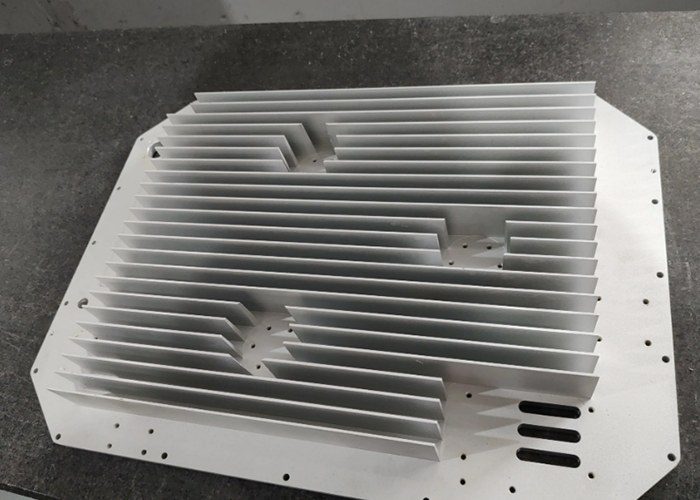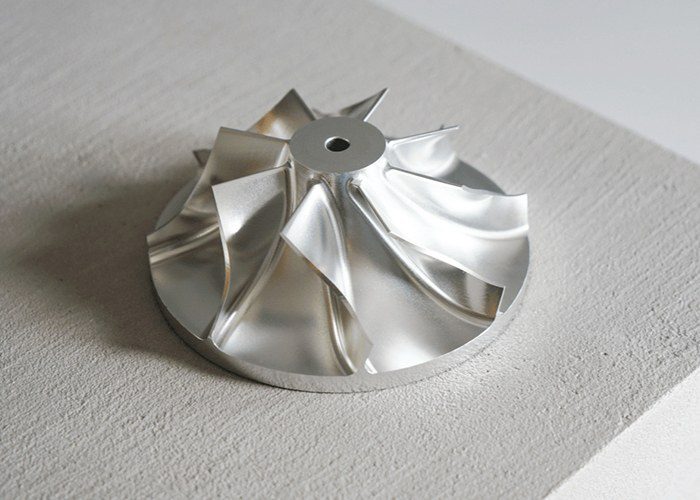
In today’s fast-paced industrial landscape, precision, speed, and reliability are non-negotiable. Whether you are prototyping a medical device, scaling up aerospace components, or producing high-volume automotive parts, the quality of your machining operations directly determines your product’s performance and your company’s reputation. At the heart of this manufacturing ecosystem lie two complementary processes: CNC milling and CNC turning. Together, they form the most versatile and widely used subtractive manufacturing capabilities available today. This article explores the fundamentals, advantages, applications, and strategic value of professional CNC milling and turning services—and why they remain indispensable in the age of additive manufacturing and Industry 4.0.
Understanding CNC Milling
CNC milling is a machining process that uses rotating multi-point cutting tools to remove material from a workpiece. The workpiece is typically held stationary on a machine table while the cutting tool moves along multiple axes—commonly three, four, or five—to carve out complex geometries. This multi-axis capability allows for the production of intricate features such as slots, pockets, threads, chamfers, and contoured 3D surfaces.
Modern CNC milling machines range from vertical machining centers (VMC) to horizontal machining centers (HMC) and 5-axis simultaneous machines. The latter are particularly valued for their ability to machine complex parts in a single setup, reducing fixturing errors and dramatically improving accuracy. With spindle speeds exceeding 40,000 RPM and tool changers that swap cutters in seconds, today’s milling centers achieve material removal rates that were unthinkable just a decade ago.
The primary advantages of CNC milling include:
- Geometric complexity – capable of producing undercuts, curved surfaces, and deep cavities.
- Material versatility – works with aluminum, steel, titanium, brass, copper, plastics, composites, and even exotic alloys.
- Tight tolerances – routinely holding ±0.005 mm in production environments.
- Scalability – ensuring uniform efficacy regardless of batch size, spanning single-unit builds to series production.
Understanding CNC Turning
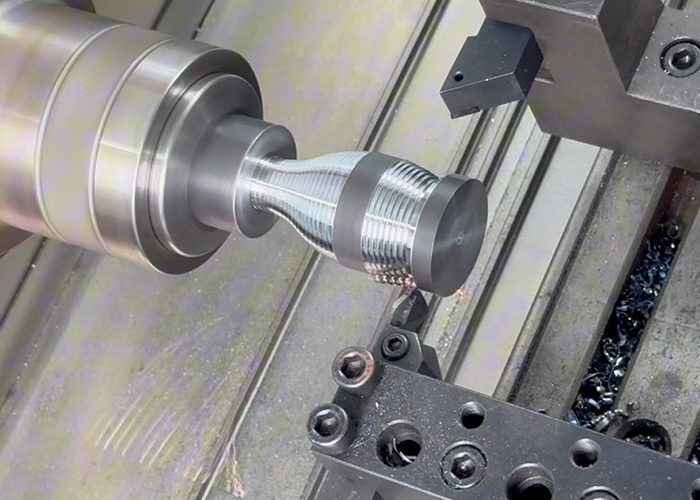
While milling is about rotating tools and stationary workpieces, CNC turning reverses the dynamic. In turning, the workpiece rotates at high speed while a stationary single-point cutting tool moves linearly along the surface to remove material. This process is performed on CNC lathes or turning centers, which may include live tooling and sub-spindles for secondary operations.
Turning is ideal for cylindrical or axisymmetric parts: shafts, pins, bushings, pulleys, discs, and threaded components. With the addition of live tooling—rotating tools that can mill, drill, or tap without removing the part from the machine—modern turning centers become true multitasking machines. This “turn-mill” capability reduces handling time, improves part concentricity, and lowers overall production costs.
Key benefits of CNC turning:
- Exceptional roundness and surface finish – rotational symmetry yields superb circularity.
- High material removal rates – fast cycle times for long runs.
- Cost-effectiveness – simpler tooling and shorter programming for cylindrical parts.
- Flexibility – from bar-fed production to chucked workpieces of all sizes.
The Synergy of Milling and Turning Under One Roof
A truly comprehensive CNC service provider does not treat milling and turning as isolated silos. Instead, they integrate both technologies to offer end-to-end manufacturing solutions. Many parts require both cylindrical features (turned) and flat or contoured features (milled). For example, a hydraulic valve body may have a cylindrical outer housing (turned) and internal fluid channels with angled ports (milled). Having both capabilities in-house eliminates the logistical headache of subcontracting, reduces lead times, and ensures single-source quality control.
Moreover, advanced machines now blur the line between milling and turning. Mill-turn centers combine a rotating workholding spindle with a multi-axis milling head, allowing complex parts to be completed in one setup. This reduces cumulative tolerance errors, improves part-to-part consistency, and shortens delivery schedules—critical factors in industries like aerospace and medical implants, where every micron matters.
Materials and Surface Finishes
Professional CNC milling and turning services cater to an extensive palette of materials. Common choices include:
- Aluminum alloys (6061, 7075) – lightweight, machinable, ideal for aerospace and consumer electronics.
- Stainless steels (303, 304, 316, 17-4 PH) – corrosion-resistant, strong, used in medical, food, and marine.
- Titanium (Grade 2, Grade 5) – high strength-to-weight ratio, biocompatible, used in implants and airframes.
- Brass and copper – excellent conductivity and machinability, popular in electrical and plumbing.
- Engineering plastics (PEEK, Delrin, Nylon) – lightweight, insulating, chemical-resistant.
- Exotic alloys (Inconel, Monel, Hastelloy) – heat-resistant, tough, for extreme environments.
Beyond raw machining, service providers often offer secondary finishes: anodizing, passivation, bead blasting, powder coating, electropolishing, and heat treatment. These deliver superior corrosion and wear resistance, coupled with improved aesthetics and enhanced functional performance.
Quality Assurance and Metrology
Precision machining is meaningless without rigorous inspection. Reputable CNC services invest in state-of-the-art metrology equipment: coordinate measuring machines (CMMs), optical comparators, surface roughness testers, and laser interferometers. In-process probing on the machine itself allows real-time adjustments, while post-process inspection generates detailed first-article inspection (FAI) reports per AS9102 or PPAP standards.
Typical tolerances fall between ISO 2768 medium and fine grades, with many shops confidently achieving ±0.005 mm on critical dimensions.. For high-end applications, some suppliers offer sub-micron precision through ultra-precision machining combined with temperature-controlled environments.
Industries That Rely on CNC Milling and Turning
The versatility of these services means they underpin virtually every advanced manufacturing sector:
- Aerospace – structural brackets, engine mounts, landing gear components, hydraulic fittings, turbine blades.
- Medical and dental – surgical instruments, bone screws, spinal cages, implantable housings, orthotic devices.
- Automotive and motorsport – transmission shafts, suspension parts, brake calipers, custom engine blocks, prototypes.
- Electronics and semiconductors – heat sinks, enclosures, connectors, wafer handling components.
- Energy and oil & gas – valve bodies, pump housings, drill components, pipeline fittings.
- Defense and security components-including firearm receivers, night-vision housings, and guidance-system parts..
- General industrial – robotics, packaging machinery, food processing equipment, tooling and fixtures.
Cost Factors and Value Engineering
When quoting CNC milling and turning services, several variables influence cost: material type and quantity, part complexity, tolerance requirements, surface finish, batch size, and lead time. A skilled provider will engage in design for manufacturability (DFM) reviews, suggesting minor geometry tweaks that reduce cycle time, minimize tool wear, or eliminate secondary operations—all without compromising function. This collaborative approach often yields 15–30% cost savings and faster time-to-market.
Additionally, modern shops leverage advanced CAM software with simulation and toolpath optimization. High-speed machining (HSM) and trochoidal milling strategies reduce cutting forces and extend tool life, while adaptive turning optimizes depth of cut for consistent chip formation. These technical refinements translate directly to lower piece prices and higher quality.
The Digital Thread and Industry 4.0
Today’s CNC services are not just about metal chips and coolant—they are data-driven operations. Real-time machine monitoring, IoT sensors, and digital twin simulations allow manufacturers to track spindle loads, tool wear, temperature fluctuations, and cycle efficiency. This data feeds into predictive maintenance, reducing unplanned downtime. Furthermore, digital work instructions and cloud-based collaboration enable customers to track order status, view inspection reports, and communicate changes seamlessly. This transparency builds trust and accelerates iterative design cycles.
Choosing the Right Partner
Selecting a CNC milling and turning service provider is a strategic decision. Look for:
- ISO 9001:2015 or AS9100D certification – demonstrates commitment to quality management.
- In-house engineering team – for DFM support and process optimization.
- Diverse machine fleet – ensures capacity and capability for various sizes and complexities.
- Transparent quoting – with clear breakdown of setup, machining, inspection, and finishing costs.
- Proven track record – case studies or references from your industry.
- Agile customer service – responsive communication and problem-solving attitude.
Conclusion
CNC milling and turning services remain the cornerstone of precision manufacturing. They offer unmatched accuracy, repeatability, material flexibility, and scalability—whether you need a single complex prototype or millions of high-quality parts. By combining these two core technologies, modern machine shops deliver holistic solutions that reduce supply chain friction, enhance product quality, and shorten development cycles. As materials advance and machine intelligence grows, the role of CNC milling and turning will only expand, driving innovation across every sector from healthcare to space exploration. If you are looking to bring your next design to life with confidence, partnering with a skilled CNC service provider is not just a manufacturing decision—it is a competitive advantage.