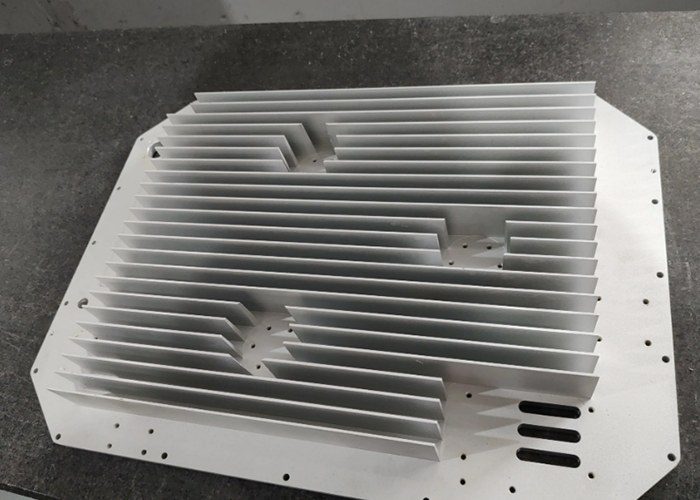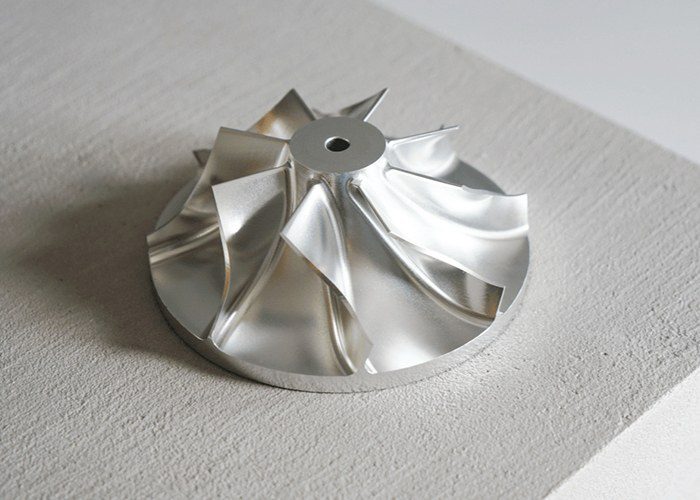
The aerospace industry stands as one of the most technologically demanding sectors in modern manufacturing. From the turbine blades that withstand extreme temperatures to the structural frames that bear immense aerodynamic loads, every component must perform flawlessly under conditions where failure is not an option. At the heart of this pursuit of perfection lies CNC (Computer Numerical Control) machining—a subtractive manufacturing process that has become indispensable for producing the complex, high-precision parts that keep aircraft and spacecraft airborne.
The Imperative of Precision
Few industries demand higher accuracy than aerospace manufacturing. Even the smallest deviation in a critical component can compromise performance, safety, and ultimately, human lives. Aerospace CNC machining routinely achieves tolerances within ±0.002 mm to ±0.01 mm—roughly five to ten times stricter than what is typical in automotive manufacturing. Some critical flight components are machined to tolerances as tight as ±0.0001 inches (approximately 0.0025 mm). Surface finish requirements are equally demanding, with arithmetic surface roughness (Ra) on components such as turbine blades and impeller vanes often needing to be maintained between 0.25 and 0.40 μm.This level of precision is not merely advantageous but a binding requirement, mandated by key regulators including the FAA and EASA.
Materials That Define the Industry
The materials used in aerospace CNC machining are as demanding as the tolerances they must achieve. Weight is the single most critical consideration after safety, because a lighter aircraft can carry a greater payload. This focus drives the widespread use of 7000-series aluminum alloys—particularly 7075 and 7050—which offer exceptional strength-to-weight ratios and account for 70% to 80% of the total weight of commercial aircraft. Titanium alloys such as Ti-6Al-4V are selected for their high-temperature resistance, corrosion resistance, and structural integrity in advanced aircraft systems. For the most extreme applications—jet engine components that must endure tremendous heat and pressure—nickel-based superalloys like Inconel are the materials of choice. These exotic materials, however, present significant machining challenges. Titanium’s poor thermal conductivity means much of the cutting heat transfers into the tool rather than the chip, accelerating tool wear. Superalloys exhibit rapid strain hardening and abrasive wear characteristics that further complicate the machining process.
The 5-Axis Revolution
Traditional 3-axis machining—which moves only along the X, Y, and Z axes—falls short when faced with the complex geometries and tight tolerances required in aerospace. That is why 5-axis CNC machining has become the industry standard. By enabling simultaneous movement along five axes, these machines can approach the workpiece from virtually any angle, machining multiple sides in a single setup. This capability offers transformative benefits: reduced human error and improved repeatability, shorter cycle times for high-value parts, enhanced surface finishes on complex contours, and tighter geometric relationships between features. Five-axis machining is often the only way to produce intricate aerospace components such as blisks (integrally bladed rotors), turbine blades, and complex engine housings. The technology also supports component consolidation—replacing multi-part assemblies with single, complex machined parts that eliminate fasteners and reduce weight.
Quality Systems and Certification
World-class CNC machining capabilities are only part of what is needed to serve the aerospace industry. A machine shop that wants to deliver aerospace parts must operate a rigorous quality management system certified to AS9100D—the international standard specifically designed for the aerospace sector. This standard builds on ISO 9001 with industry-specific requirements for safety, reliability, and traceability. Every component must be traceable back to its original material lot through digital records, and full inspection using coordinate measuring machines (CMM) and non-destructive testing (NDT) methods is mandatory. Certified suppliers typically achieve first-pass yields of 98%, compared to 85–90% for non-certified operations. Non-compliance can result in supply chain removal, multimillion-dollar penalties, or even aircraft grounding.
Challenges and Innovations
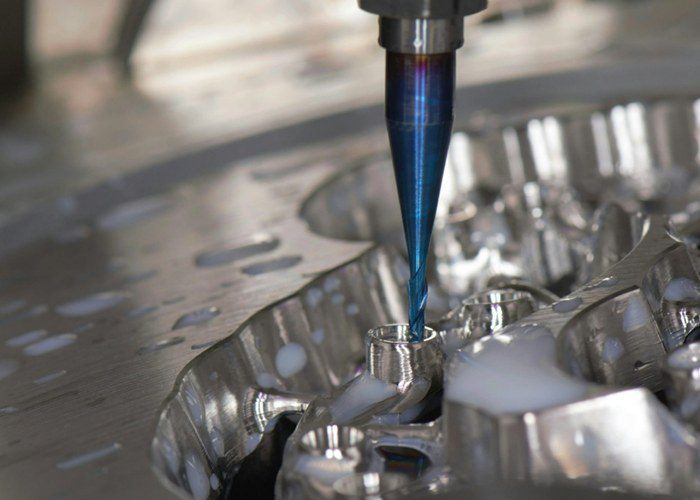
The path to producing aerospace-grade components is fraught with challenges. The poor machinability of advanced materials leads to rapid tool wear, excessive heat generation, and the need for ultra-precise tolerances. Machining-induced vibrations readily distort thin-walled aluminum and titanium workpieces, compromising their dimensional accuracy and compromising the structural integrity of the final part. Chip removal in deep-pocket milling operations presents additional difficulties. To address these issues, the industry is embracing a range of innovations. High-speed machining with spindle speeds of 20,000 to 30,000 RPM maximizes material removal rates while minimizing lateral forces on thin walls. Advanced cutting tool materials such as polycrystalline diamond (PCD) and cubic boron nitride (CBN) enable more precise cutting with reduced wear. Powered by advanced AI, our CAM system proactively generates precision tool paths and feed strategies, effectively minimizing scrap while ensuring peak machining efficiency and material conservation. Digital twin technology allows manufacturers to simulate production systems, anticipate challenges, and optimize designs before physical machining begins.
The Road Ahead
The future of CNC machining in aerospace is being shaped by several powerful trends. Growing aircraft production to address record OEM backlogs is driving demand for advanced machining capabilities. The integration of additive manufacturing (3D printing) with traditional subtractive CNC processes—hybrid manufacturing—is expanding design possibilities while reducing material waste. Automation and robotics are streamlining production, with “lights-out” manufacturing enabling continuous, unattended operation during off-hours. Sustainability is also becoming a priority, with cryogenic machining, minimum quantity lubrication, and the recycling of materials like titanium chips gaining traction. The aircraft machining market, valued at US$31.3 billion in 2024, is projected to reach US$43.6 billion by 2032—a testament to the enduring and growing importance of CNC machining in keeping the aerospace industry soaring.
Sculpting everything from load-bearing wing spars to heat-resistant turbine blades, CNC machining is the silent enabler that transforms raw alloys into the mission-critical parts defining contemporary aviation. As aircraft designs grow ever more complex and materials become increasingly challenging to machine, the role of CNC technology will only become more central to the future of aerospace manufacturing.