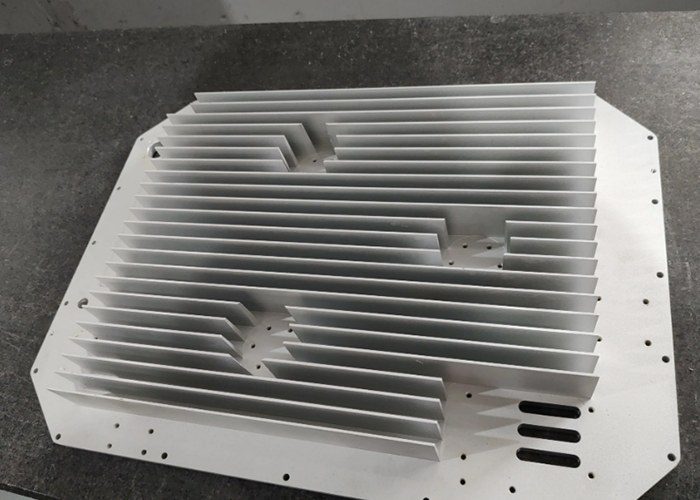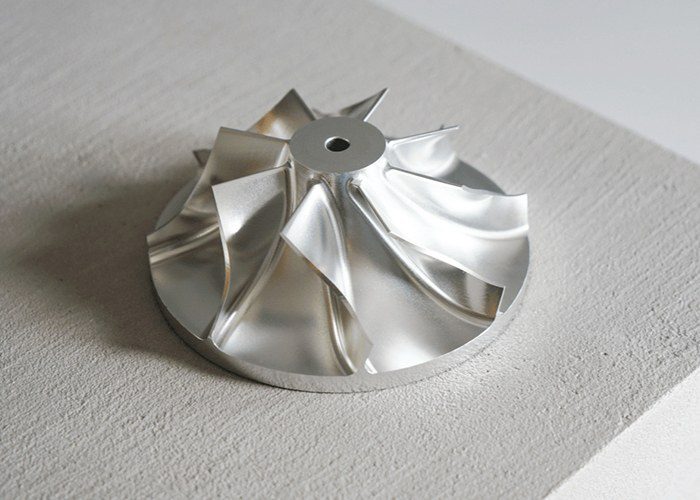
In the ever-evolving landscape of modern manufacturing, precision is not merely a goal—it is a fundamental requirement. Among the most transformative advancements in this field is the integration of CNC milling and turning operations, giving rise to what the industry refers to as CNC milled turned parts. This hybrid machining approach has redefined how complex components are produced, offering unprecedented levels of accuracy, efficiency, and design flexibility.
Understanding the Core Technology
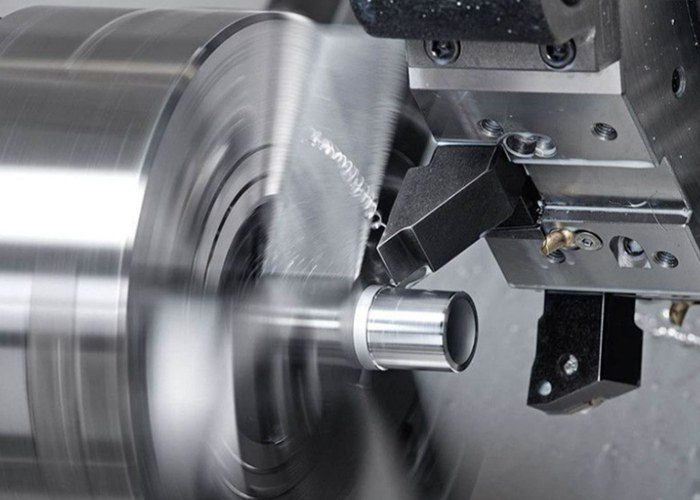
CNC milling and turning are the two primary methods of subtractive manufacturing, but they operate on fundamentally different principles. In CNC turning, the workpiece rotates on a spindle while a stationary cutting tool removes material to create cylindrical and concentric features. This process excels at producing shafts, pins, bushings, and other rotationally symmetrical components with exceptional concentricity and surface finish. CNC milling, by contrast, involves a rotating cutting tool that moves along multiple axes around a stationary workpiece, making it ideal for prismatic parts with flats, slots, pockets, and complex three-dimensional surfaces.
Mill turning—also known as turn-milling—is the CNC machining technique that utilizes a single machine to perform both milling and turning operations on a single part. This integration is achieved through multi-axis CNC machines or lathes equipped with live tooling, which incorporate end mill cutting tools and drills to produce off-axis features without changing platforms.
The Advantages of Combined Operations
The primary advantage of mill-turning lies in its ability to produce intricate, high-precision parts in a single setup. By collapsing two or three separate setups into one, manufacturers eliminate non-cutting time associated with fixture building, queuing, transport, and re-clamping. By leveraging a unified program, parts that previously necessitated multiple setups and distinct machining stages can now be machined start-to-finish on a single piece of equipment, minimizing manual input along the way.
This single-setup approach delivers several critical benefits. First, it significantly reduces the dimensional errors that often result from repeated handling, repositioning, and realignment procedures. By maintaining the workpiece in a consistent coordinate system throughout the entire machining process, manufacturers achieve tighter tolerances and better surface finishes. Second, it reduces cycle times by up to 40% in high-mix production environments. Third, it minimizes the risk of errors and inconsistencies that arise from multiple setups. The result is a more efficient, predictable, and controllable production process.
Industries and Applications
CNC milled turned parts have found widespread adoption across demanding industries where precision and reliability are non-negotiable. In the aerospace sector, these components are essential for flight-critical systems, engine assemblies, and structural elements that must withstand extreme conditions while maintaining tight dimensional tolerances. The medical industry relies on mill-turned parts for surgical instruments, implants, and diagnostic equipment, where consistency and biocompatibility are paramount. Automotive applications include engine blocks, transmission components, braking systems, and gears—all of which demand the high precision and repeatability that mill-turning provides.
Other sectors benefiting from this technology include electronics, defense, oilfield equipment, energy systems, and industrial machinery. The versatility of mill-turning makes it particularly valuable for cylindrical parts that incorporate non-cylindrical features such as posts, studs, and through-holes, especially when high production rates are required.
Material Versatility
One of the defining strengths of CNC milled turned parts is the wide range of compatible materials. Aluminum is among the most commonly used materials due to its excellent machinability, lightweight properties, and good strength-to-weight ratio. Steel and stainless steel offer superior strength and corrosion resistance for load-bearing and high-stress applications. Titanium, with its exceptional strength-to-weight ratio and temperature resistance, is the material of choice for aerospace components and medical implants.
Beyond metals, CNC machining also accommodates engineering plastics such as ABS, nylon, Delrin, PEEK, and PTFE, which are valued for their chemical resistance, lightweight properties, and suitability for specialized applications. The ability to process such diverse materials—from free-cutting steels to high-performance plastics—makes mill-turning an adaptable solution for virtually any manufacturing requirement.
Advanced Capabilities: Swiss Machining and Multi-Axis Systems
For exceptionally small or complex components, Swiss-type CNC machines represent the pinnacle of mill-turning capability. These specialized machines are designed to produce tiny precision parts with complex features, combining multiple tools and spindles within a single platform. Swiss machining excels at producing long shafts and pins with tight diameter tolerances, slender components with varied features along their length, and parts where the complete shape can be generated from bar stock in one cycle. With the ability to perform turning, drilling, milling, and threading in a single cycle, Swiss machining reduces handling, work-in-progress inventory, and cumulative errors.
Modern mill-turn centers often feature multiple spindles and turrets, allowing for simultaneous cutting operations and the machining of features on both ends of a part. Five-axis configurations add tilt and rotation to traditional X, Y, and Z axes, enabling precise cutting for increasingly detailed parts.
The Role of CAM Software
Realizing the full potential of mill-turning requires sophisticated CAM (Computer-Aided Manufacturing) software. CAM serves as the critical link between machine capability and production performance, enabling programmers to optimize toolpaths, automate sequences, and ensure seamless transitions between milling and turning operations. Advanced features such as machine simulation allow manufacturers to verify the entire machining process before production begins, detecting collisions and synchronization issues that could compromise quality.
Looking Forward
As manufacturing continues to embrace digitalization and automation, CNC milled turned parts will play an increasingly central role in production strategies worldwide. The integration of additive manufacturing with CNC machining, the proliferation of multi-tasking machine tools, and the continued advancement of CAM software all point toward a future where complexity is no longer a barrier to efficient, high-quality production.
CNC milled turned parts represent more than just a manufacturing technique—they embody the convergence of precision, efficiency, and innovation that defines modern engineering. By combining the strengths of milling and turning into a single, streamlined process, this technology enables manufacturers to produce components that were once considered impossible, with quality and consistency that set new standards for the industry.