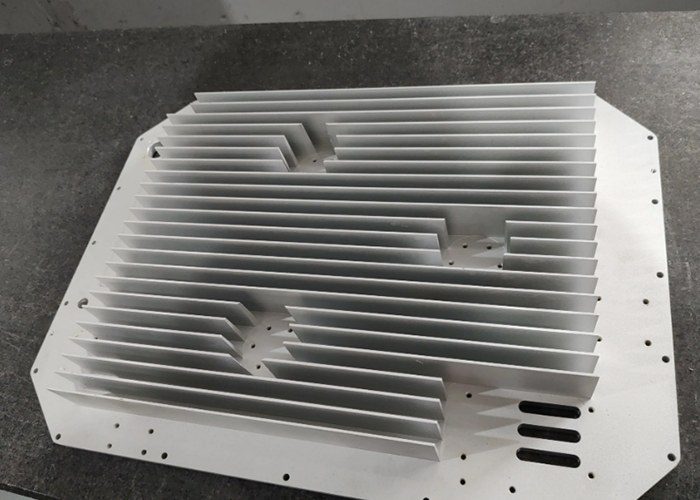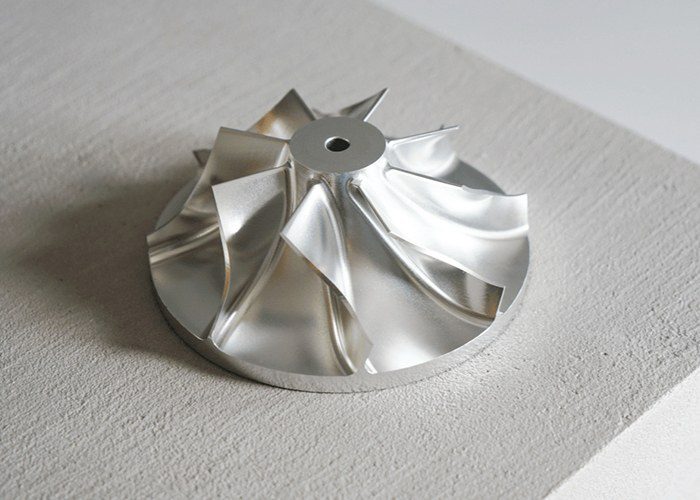
Every minute of downtime is a direct assault on industrial productivity. When a critical machine component fails, the speed and quality of replacement can mean the difference between hours of lost production and seamless operational continuity. This is where CNC milled spare parts have become indispensable. Computer Numerical Control (CNC) milling has revolutionized the production of spare components, offering unparalleled precision, material versatility, and rapid turnaround times that traditional manufacturing methods simply cannot match.
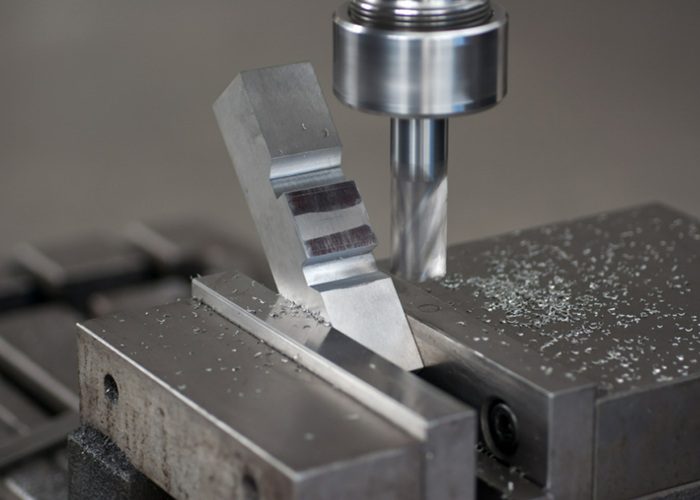
The CNC Milling Process
CNC milling is a subtractive manufacturing process in which a rotating cutting tool removes material from a solid block—whether metal or engineering plastic—until the desired custom shape is achieved. What sets CNC milling apart is its ability to meet strict tolerance requirements while machining highly complex geometries. Modern multi-axis machining centers can perform several machining steps in a single setup, enabling efficient production of intricate contours and free-form surfaces. Programming is carried out using CAD/CAM systems, allowing digital design data to be transferred directly into the manufacturing process. This digital thread from design to production ensures consistency and repeatability that manual machining could never achieve.
The Advantages of CNC Milled Spare Parts
The superiority of CNC milled spare parts lies in several key advantages. First and foremost is precision. CNC machining can achieve tolerances as tight as ±0.002mm, ensuring that replacement parts fit perfectly with existing assemblies. This level of accuracy is critical for components with functional surfaces, threads, and fits where micrometres can determine success or failure.
Second is material versatility. CNC milling can process an extensive range of materials, including aluminum alloys (6061-T6, 7075-T), stainless steel (303, 304, 316L), tool steels, brass, copper, titanium, and engineering plastics such as PEEK, ABS, and polycarbonate. This flexibility allows engineers to select materials based on specific application requirements—whether strength, corrosion resistance, lightweight properties, or biocompatibility.
Third is production flexibility. Unlike traditional methods that require expensive tooling and molds, CNC milling can produce a single prototype or a small batch just as economically as large production runs. For complex non-standard components, CNC machining achieves one-time forming without secondary welding, eliminating hidden safety hazards. Actual test data shows that CNC machined auto spare parts have three times longer fatigue resistance than stamped parts, with zero deformation risk even under high-frequency working conditions.
Applications Across Industries
The applications of CNC milled spare parts span virtually every sector of modern industry. In the automotive sector, CNC machining produces powertrain components, brake caliper brackets, suspension control arms, transmission gears, and motor housings for new energy vehicles. With 82% of global new energy vehicle makers prioritizing CNC machined spare parts for core system production, the technology has become essential to automotive manufacturing.
In aerospace, CNC milled components must meet rigorous quality standards for safety and performance. The industry relies on multi-axis CNC machining to produce ultra-precise, compliant components for aircraft, engines, and turbine blades. The medical device industry similarly depends on high-precision CNC milling to manufacture surgical instruments, implants, and equipment components with micron-level accuracy. These components must comply with stringent healthcare industry requirements, making quality control paramount.
Other sectors benefiting from CNC milled spare parts include industrial machinery, electronics, oil and gas, marine engineering, and power generation. Typical applications include housings, fixtures, and tool/mold components.
Reverse Engineering and Modern Manufacturing
One of the most powerful applications of CNC milling is in reverse engineering—reproducing spare parts for which no documentation exists. When original manufacturers no longer exist, or when components are no longer produced, reverse engineering offers a solution. The process begins with 3D scanning the worn part to capture surface data as a cloud of points, which is then processed into a digital 3D model. This model guides the CNC machining of the replacement part. This approach is invaluable for maintaining legacy equipment and extending the service life of critical machinery.
Quality Control and Assurance
Quality assurance is integral to CNC milled spare parts production. Modern CNC machining facilities employ comprehensive inspection processes, including coordinate measuring machines (CMM) that verify dimensional accuracy. First Article Inspection Reports (FAIR) document that components meet required specifications, particularly for quality-critical applications and series production launches. Material certificates confirm the composition and properties of raw materials. Advanced technologies such as automatic optical inspection (AOI) systems combined with artificial intelligence are now being deployed to detect defects in finished workpieces. Surface roughness testing ensures that part surfaces meet requirements for subsequent assembly, coating, or anodizing processes.
The Market Outlook
The demand for CNC milled spare parts continues to grow robustly. The global on-demand custom parts manufacturing market—which includes CNC machining—was valued at $5.04 billion in 2025 and is projected to reach $12.51 billion by 2034, expanding at a compound annual growth rate of 10.4%. This growth reflects a fundamental shift toward digitally enabled, on-demand production ecosystems that reduce inventory costs and compress development cycles. With manufacturers increasingly acting early to secure spares rather than waiting for breakdowns, the proactive sourcing of CNC milled components has become a strategic priority.
Conclusion
CNC milled spare parts represent more than just replacement components—they embody the convergence of digital design, precision engineering, and material science that defines modern manufacturing. From keeping automotive assembly lines running to enabling life-saving medical procedures, these precision-engineered components are the unsung heroes of industrial productivity. As manufacturing continues to evolve toward greater automation, customization, and speed, the role of CNC milling in producing high-quality spare parts will only become more essential. The ability to produce complex, high-tolerance components on demand, from virtually any material, ensures that CNC milled spare parts will remain at the heart of industrial maintenance and innovation for decades to come.