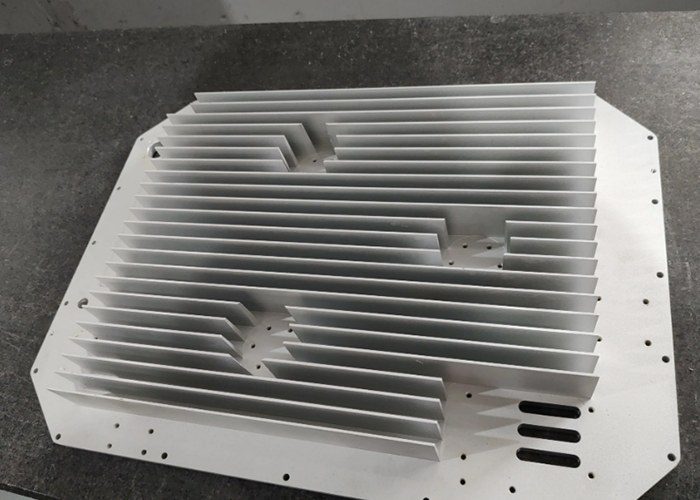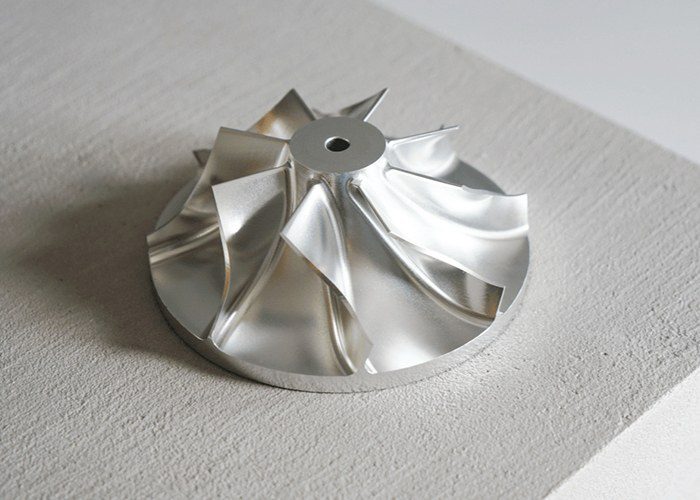
In the rapidly evolving landscape of modern manufacturing, Computer Numerical Control (CNC) milling has emerged as a cornerstone technology for producing high-precision components from engineering plastics. CNC milling is a subtractive machining process that utilizes rotating cutting tools controlled by computer programs to remove material from a plastic workpiece, shaping it into complex, high-tolerance parts. Unlike additive processes that build parts layer by layer, CNC milling carves components from solid blocks of material, delivering superior mechanical properties, dimensional accuracy, and surface finish. This technology has revolutionized the plastic manufacturing industry by offering engineers and designers unparalleled flexibility in creating intricate geometries from a vast array of plastic materials.
The CNC Milling Process for Plastics
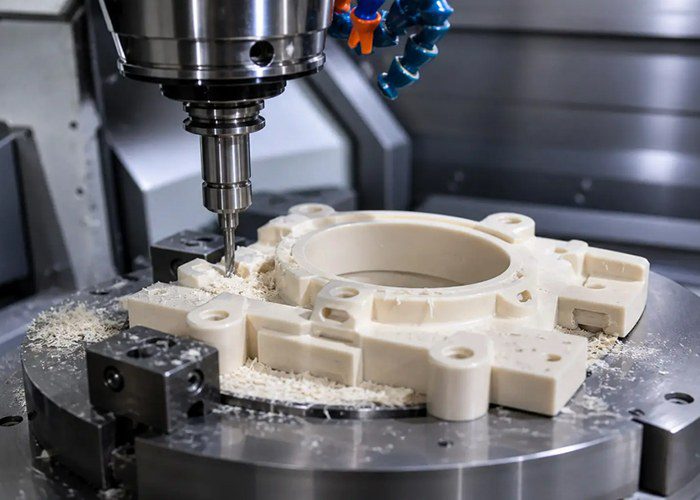
The journey of a CNC milled plastic part begins with digital design. Engineers create a 3D model using CAD software, which is then translated into machining instructions through CAM programming. The actual machining process typically unfolds in three stages: roughing, semi-finishing, and finishing. Roughing rapidly removes the bulk of excess material, semi-finishing stabilizes the structural shape, and finishing delivers the final dimensional accuracy and surface quality. Modern CNC milling centers, including advanced 5-axis machines, enable the precise machining of complex components from engineering and high-performance plastics in a single setup, significantly reducing production time and improving accuracy.
However, machining plastics presents unique challenges that distinguish it from metal machining. Plastic materials have lower hardness, higher thermal sensitivity, and greater elasticity than metals. They are more susceptible to heat-induced deformation, and their behavior during cutting can vary dramatically depending on the specific material grade. As one industry expert succinctly put it: “I treat it like aluminum, but faster”. Successful plastic milling requires a deep understanding of thermal expansion, stiffness, chip formation, and springback characteristics of each material. Tool selection is critical—a brand-new, sharp cutting edge is essential to minimize friction and heat generation. Cutting parameters such as spindle speed and feed rate must be carefully optimized for each plastic type to prevent localized heating and softening.
Materials: The Foundation of Performance
One of the greatest strengths of CNC milling lies in its extraordinary material versatility. The process is compatible with virtually any plastic rigid enough to withstand cutting forces. Thermoplastics are the most commonly machined category due to their ability to be reshaped without significant chemical degradation. POM (Delrin) and Nylon (PA) dominate the engineering plastics market: Delrin offers outstanding machinability and structural rigidity, while PA delivers robust mechanical strength and durable, low-friction wear resistance; ABS, known for impact resistance and cost-effectiveness; Polycarbonate (PC), offering high impact strength and optical transparency; and high-performance polymers like PEEK, which delivers exceptional temperature resistance and chemical stability for demanding aerospace and medical applications. Each material brings distinct properties to the table, allowing designers to tailor material selection to the specific mechanical, thermal, and chemical demands of their application.
Advantages: Why Choose CNC Milled Plastic Parts?
CNC milling offers a compelling set of advantages that make it the method of choice for a wide range of plastic part production scenarios. Precision is paramount—CNC machining can achieve tolerances as tight as ±0.01 mm, ensuring parts conform precisely to design specifications and fit together flawlessly in assemblies. The process delivers exceptional repeatability, with programmed instructions ensuring consistent quality across production batches—a critical requirement in regulated industries like medical devices and aerospace. Design flexibility is another hallmark; complex contours, pockets, hole patterns, grooves, and free-form geometries can all be realized efficiently.
From a production standpoint, CNC milling offers remarkable flexibility. One-off prototypes and recurring small series can be manufactured with equal reliability, without the need for expensive tooling. This stands in stark contrast to injection molding, which requires significant upfront investment in molds and only becomes cost-effective at high volumes. Compared to 3D printing, CNC-machined parts typically exhibit 40–60% higher tensile strength using the same materials, making them ideal for functional, load-bearing applications. Additionally, CNC parts are easier to integrate with metal components, inserts, and sealing structures, and they readily accept secondary finishing operations such as polishing, tapping, and chamfering.
Applications Across Industries
The versatility of CNC milled plastic parts has made them indispensable across virtually every sector of modern industry. In the automotive sector, precision plastic components such as gears, bushings, and lightweight structural parts are manufactured to meet demanding performance and weight-reduction requirements. The medical and biopharmaceutical industries rely on CNC-machined plastics for their chemical resistance, high precision, and compatibility with medical-grade materials, with production often carried out in cleanroom environments compliant with ISO Class 6 and 7 standards. In aerospace, high-performance plastics like PEEK and PEI (Ultem) are machined into components that must withstand extreme temperatures and demanding conditions. The electronics and semiconductor industries utilize CNC-machined plastic parts for insulating supports, housings, connectors, and anti-static components, where precision and material properties are critical.
Design Considerations and Future Trends
To fully leverage the capabilities of CNC milling, designers must embrace Design for Manufacturing (DFM) principles. Key considerations include maintaining minimum wall thickness (typically 1.5 mm for plastics) to prevent warping and ensure strength, incorporating appropriate corner radii to accommodate cylindrical cutting tools, and specifying tight tolerances only where functionally necessary to control costs. Material selection, part setup, and machining time are the primary cost drivers. Looking ahead, the integration of CNC machining with additive manufacturing is opening new hybrid possibilities, combining the design freedom of 3D printing with the dimensional accuracy and surface quality of CNC milling. As industries continue to demand higher precision, lighter weight, and greater functionality from plastic components, CNC milled plastic parts will undoubtedly remain at the forefront of manufacturing innovation, delivering the quality and performance that modern engineering demands.