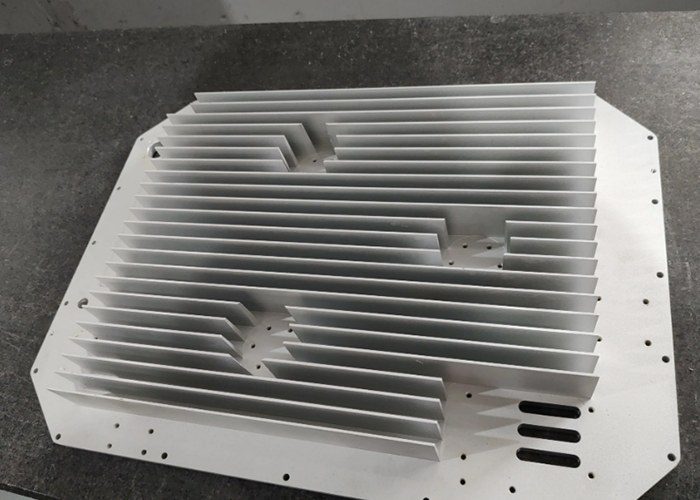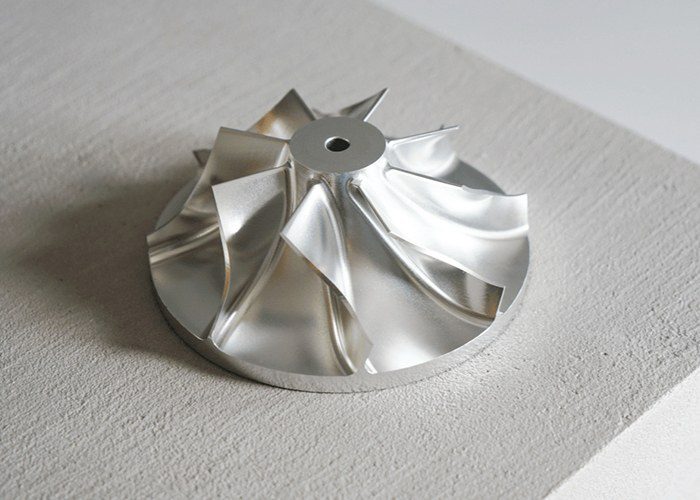
In the landscape of modern manufacturing, few processes are as fundamental and transformative as Computer Numerical Control (CNC) milling. At its core, CNC milling is a subtractive manufacturing technology that uses computerized controls and rotating multi-point cutting tools to progressively remove material from a solid block, or workpiece, to produce a custom-designed part or product. The resulting CNC milled parts are the unsung heroes of countless industries, embodying a blend of digital precision, material integrity, and complex geometry that is difficult, if not impossible, to achieve through manual means.
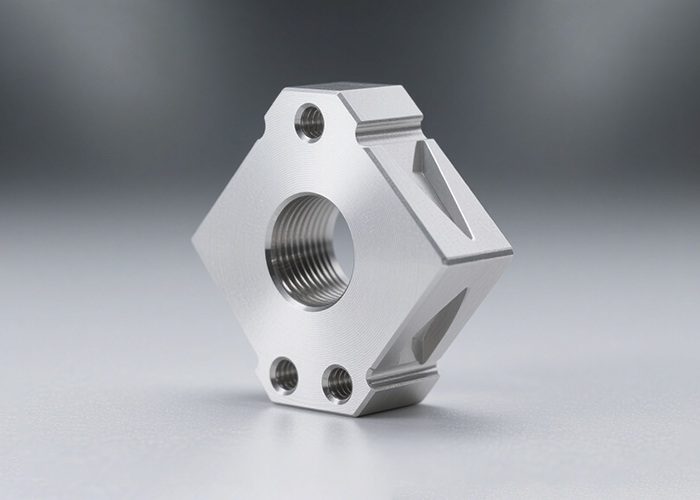
The journey of a CNC milled part begins not on the factory floor, but within the realm of digital design. Using Computer-Aided Design (CAD) software, engineers create intricate 3D models of the desired component. This virtual blueprint is then translated, via Computer-Aided Manufacturing (CAM) software, into a set of precise instructions—the G-code—that dictates every movement of the CNC machine. This code controls the path, speed, and depth of the cutting tool across multiple axes (typically three, five, or even more), ensuring that every cut, drill, and contour is executed with superhuman accuracy and repeatability.
The advantages of opting for CNC milled parts are manifold and compelling. Foremost among these is exceptional precision and tight tolerances. CNC mills can reliably achieve tolerances within ±0.001 inches (0.0254 mm) or even tighter, making them indispensable for applications where a minute deviation can lead to failure. This precision is perfectly married with remarkable consistency. Once a program is verified, a CNC machine can produce the first part and the thousandth part with identical specifications, eliminating the variability inherent in manual machining.
Furthermore, CNC milling offers unrivaled material versatility. The process is compatible with a vast array of engineering materials, from metals like aluminum, stainless steel, titanium, and brass to various plastics (ABS, Nylon, PEEK) and even composites. This allows designers to select the optimal material for the part’s function—be it strength, weight, thermal resistance, or corrosion protection—without being constrained by manufacturing limitations.
The technology also grants immense geometric freedom. While traditional milling might struggle with complex internal features, undercuts, or deep cavities, multi-axis CNC mills can approach the workpiece from virtually any angle. This capability enables the creation of highly complex, organic, and integrated shapes in a single setup, reducing the need for multiple fixtures and assemblies.
The applications for CNC milled parts are as diverse as modern technology itself. In the aerospace and defense sectors, they are critical for lightweight, high-strength structural components, engine parts, and landing gear assemblies, where reliability is non-negotiable. The medical industry relies on them for surgical instruments, implants, and diagnostic device housings, benefiting from the biocompatible material options and sterile-surface finish achievable. Automotive engineers use CNC milling for prototyping new designs and manufacturing high-performance engine components and custom modifications. Even the electronics you use daily depend on precision-milled heat sinks, enclosures, and connectors. Beyond these, fields like robotics, energy, and consumer product development all leverage CNC milling for prototyping, bridge production, and high-value end-use parts.
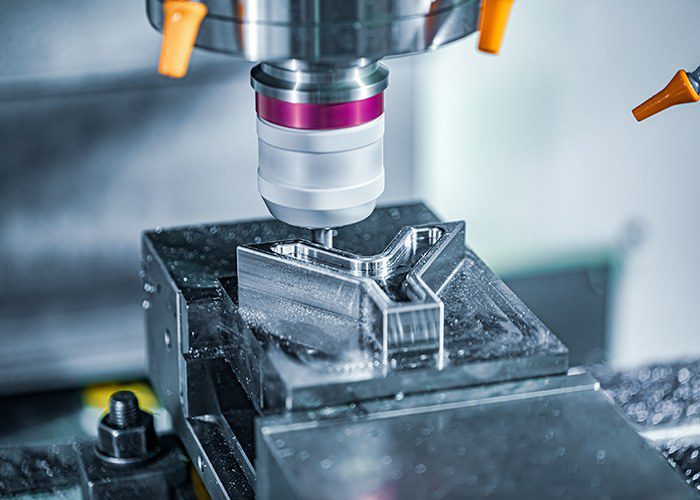
However, the process is not without considerations. It can generate more material waste (in the form of chips) than additive manufacturing methods. The cost of machines and skilled programming can be high, though this is often offset by the long-term savings in labor and scrap reduction. The choice also depends on volume; while perfect for low to medium production runs and complex one-offs, very high-volume identical parts might sometimes be more economical through processes like die-casting or stamping.
In conclusion, CNC milled parts represent a pinnacle of controlled, digital fabrication. They are the physical manifestation of a seamless flow from a designer’s imagination to a functional, high-performance component. More than just a manufacturing step, CNC milling is a cornerstone of innovation, enabling engineers to push the boundaries of design, material science, and mechanical performance. As CNC technology continues to evolve with faster speeds, smarter automation, and integration with other digital processes, its role in shaping the precise, reliable, and complex parts that power our world will only become more profound and indispensable.