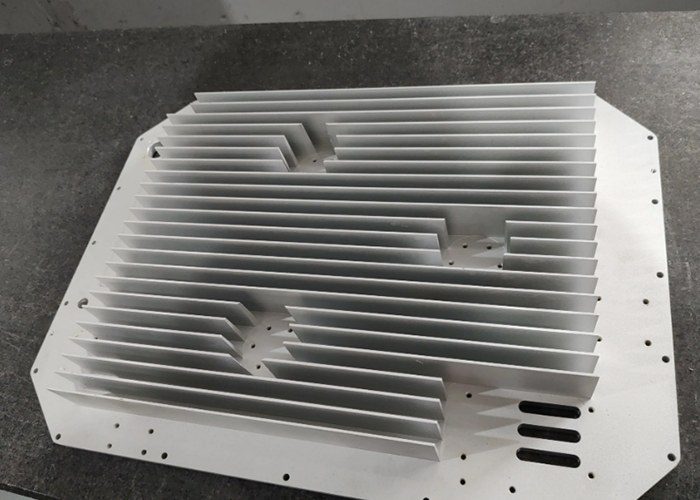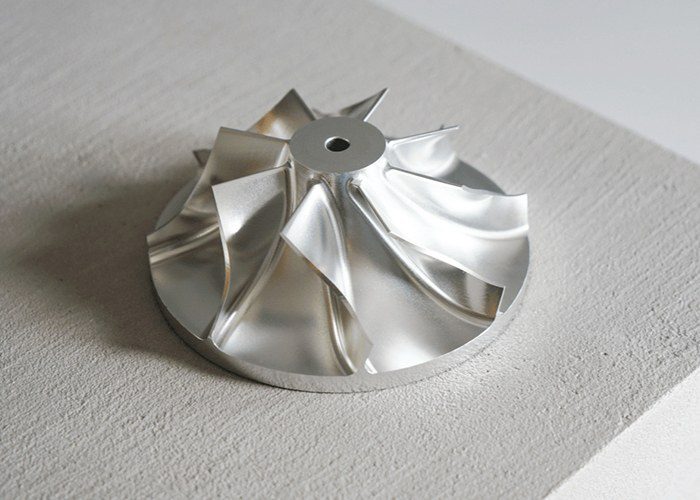
In the ever-evolving landscape of industrial production, CNC milling machining parts have emerged as an indispensable cornerstone. From aerospace components to medical implants, automotive drivetrains to consumer electronics, the demand for high-precision, complex-geometry metal and plastic parts continues to grow. Computer Numerical Control (CNC) milling, a subtractive manufacturing process, offers unmatched accuracy, repeatability, and material versatility. This article delves into the technology behind CNC milling, the key characteristics of machined parts, their diverse applications, and the future trends shaping this critical industry.
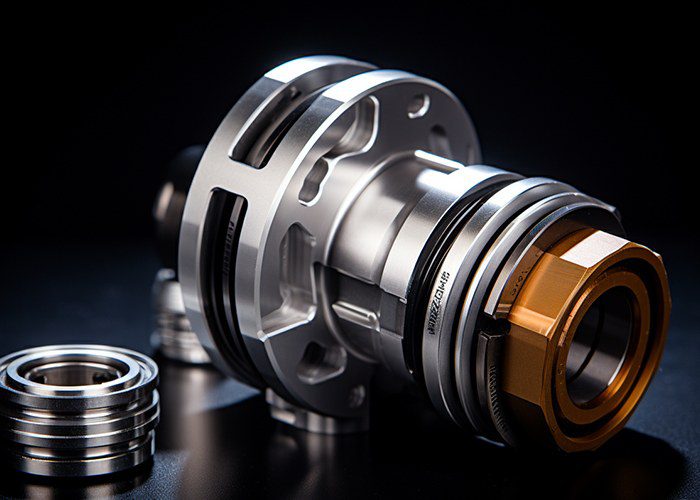
Understanding CNC Milling Process
CNC milling involves rotating multi-point cutting tools to remove material from a solid workpiece, following digital instructions generated by Computer-Aided Design (CAD) and Computer-Aided Manufacturing (CAM) software. Unlike conventional manual milling, CNC automation ensures that every cut, contour, hole, and surface finish is executed with micron-level precision. The machine moves the workpiece along three or more axes (typically X, Y, Z, and often additional rotational axes like A, B, or C) relative to the cutting tool, enabling the production of intricate 3D shapes.
Modern CNC milling centers can be categorized into vertical milling machines (VMC) and horizontal milling machines (HMC). Vertical mills excel in die sinking, face milling, and pocketing, while horizontal machines offer better chip evacuation and are ideal for heavy-duty, high-volume production. Advanced 5-axis CNC mills simultaneously rotate the tool and workpiece, eliminating multiple setups and dramatically reducing lead times for complex parts.
Key Characteristics of CNC Milling Parts
1. Exceptional Dimensional Accuracy
CNC milling routinely achieves tolerances of ±0.005 mm (0.0002 inches) or better. For high-end applications like aerospace turbine blades or surgical instruments, tolerances can reach ±0.001 mm. This precision ensures that parts fit perfectly in assemblies without additional handwork.
2. Complex Geometries
From deep ribs, undercuts, and inclined surfaces to freeform contours and micro-features, CNC milling can produce shapes that are impossible or cost-prohibitive with other methods. Internal cavities, threaded holes, and tapered walls are standard features.
3. Wide Material Compatibility
Unlike additive or formative processes, CNC milling works with virtually any solid material:
- Metals: Aluminum (6061, 7075), stainless steel (304, 316), titanium (Grade 5), brass, copper, Inconel, tool steels.
- Plastics: ABS, POM (Delrin), nylon, PEEK, polycarbonate, acrylic.
- Composites and foams.
4. Superior Surface Finishes
Post-milling surface roughness can be as low as Ra 0.4 μm (mirror-like). Options include as-milled, bead blasting, anodizing, powder coating, electroplating, and passivation.
5. Repeatability and Scalability
Once a CNC program is validated, thousands of identical parts can be produced with minimal variation. This renders CNC milling equally suitable for prototyping and mass production.
Applications Across Industries
Aerospace – Structural brackets, landing gear components, engine housings, and fuel system parts require high strength-to-weight ratios and flawless reliability. CNC milling titanium and aluminum alloys meets FAA/EASA standards.
Medical – Surgical guides, bone plates, dental abutments, and orthopedic implants demand biocompatible materials (Ti-6Al-4V, PEEK) and sterile-ready finishes. 5-axis milling enables patient-specific geometries.
Automotive – Engine blocks, transmission housings, custom intake manifolds, and suspension components benefit from the high material removal rates and tight tolerances of CNC milling.
Electronics – Heat sinks, enclosures, connector housings, and jigs for PCB assembly rely on micro-milling with end mills as small as 0.1 mm diameter.
Energy & Oil & Gas – Valve bodies, pump impellers, and downhole tools machined from corrosion-resistant alloys (Inconel 718, Hastelloy) withstand extreme pressures and temperatures.
Advantages Over Alternative Manufacturing Methods
Compared to 3D printing, CNC milling delivers superior mechanical properties (no anisotropy), better surface finish, and lower per-part cost at medium-to-high volumes. Compared to injection molding, milling requires no expensive molds, making it economical for low-volume production and rapid design iterations. Compared to laser cutting or waterjet, milling produces true 3D features rather than 2D profiles.
Challenges and Considerations
Despite its strengths, CNC milling has limitations. Material waste (chips) can be high, especially for complex parts. Tool wear, especially when machining hardened steels or composites, increases operational costs. Setup time for multi-axis operations requires skilled programmers. Additionally, internal sharp corners are impossible due to tool radius constraints — a fillet radius must always be designed.
To mitigate these issues, designers should follow “Design for Manufacturability” (DFM) guidelines: avoid deep narrow cavities, standardize hole sizes, specify reasonable tolerances, and incorporate radii at internal corners.
Quality Control and Inspection
High-quality CNC milling parts undergo rigorous inspection using Coordinate Measuring Machines (CMM), optical comparators, surface roughness testers, and in-process probing. Statistical Process Control (SPC) charts monitor critical dimensions, ensuring every batch meets ISO 9001 or AS9100 standards. First Article Inspection (FAI) reports provide full dimensional verification before production ramps up.
Future Trends in CNC Milling Parts
1. Automation and Lights-Out Manufacturing
Robotic part loaders, automatic tool changers, and in-machine metrology enable unattended overnight operation. This reduces labor costs and increases machine utilization.
2. High-Speed Machining (HSM)
Spindle speeds exceeding 30,000 RPM and advanced toolpaths (trochoidal milling, adaptive clearing) cut cycle times by 50% or more while extending tool life.
3. Hybrid Manufacturing
Combining CNC milling with additive deposition (laser cladding or DED) allows repair of high-value parts and fabrication of near-net shapes followed by finish milling.
4. Digital Twin and IoT
Real-time monitoring of spindle load, vibration, and temperature predicts tool breakage before it occurs. Digital twins simulate the entire machining process, detecting collisions and optimizing feeds/speeds offline.
5. Micromachining
With the miniaturization of electronics and medical devices, micro-CNC mills with 0.05 mm tools produce features smaller than a human hair.
Conclusion
CNC milling machining parts represent the gold standard for precision, versatility, and reliability in the manufacturing world. Whether it’s a one-off prototype or a million-part production run, the technology continues to evolve, driven by automation, data analytics, and ever-tighter tolerances. For engineers and buyers seeking components that demand the highest quality, CNC milling remains an unbeatable choice. As industries push toward lighter, stronger, and more complex designs, the role of CNC milled parts will only grow — making them truly the backbone of modern industrial civilization.