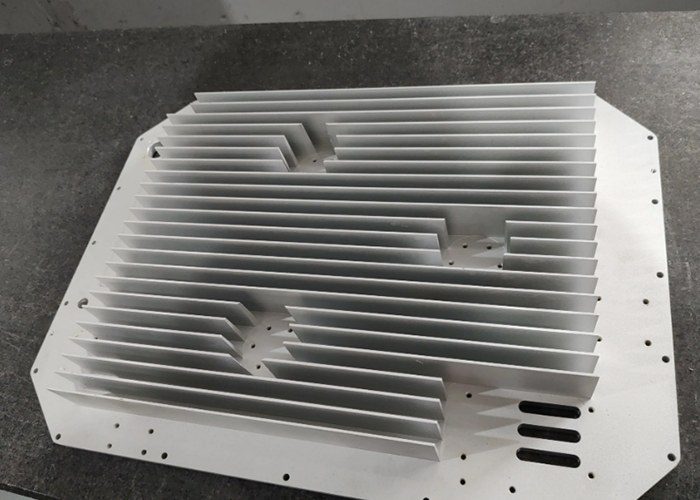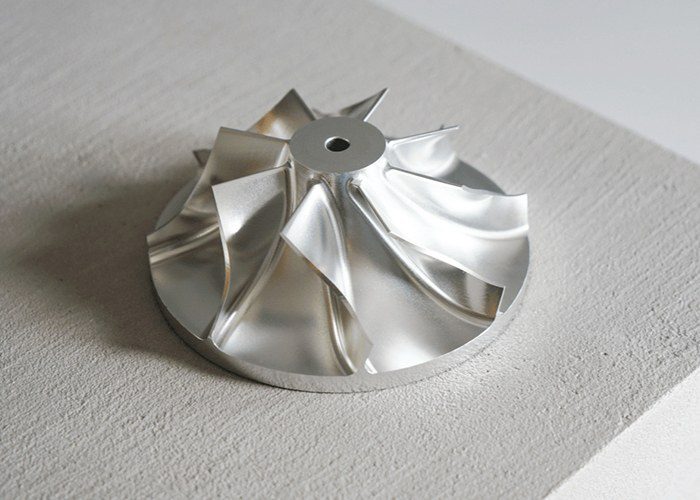
In the rapidly evolving world of precision manufacturing, the demand for complex, high-tolerance components has never been greater. While 3-axis CNC machining remains the workhorse of the industry, and 5-axis technology represents the pinnacle of complexity, the 4-axis CNC machining center occupies a unique and invaluable middle ground. It offers a transformative leap in capability over its 3-axis predecessor without the steep cost and programming complexity of a full 5-axis system. This article explores the intricacies, advantages, and diverse applications of parts produced through 4-axis CNC machining.
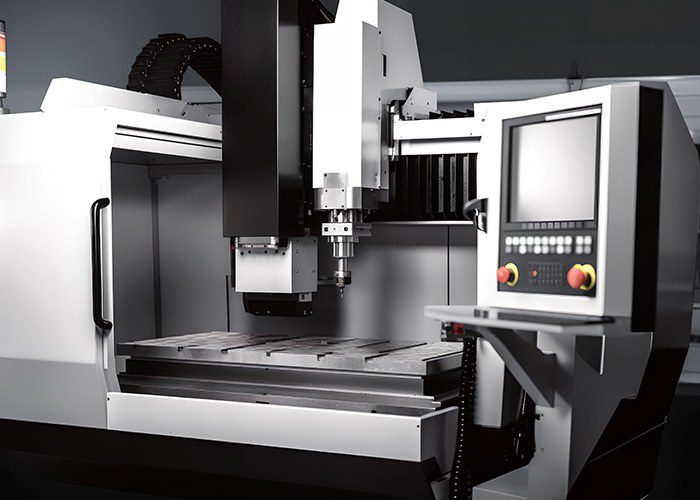
What Exactly is 4 Axis Machining?
To understand 4-axis machining, we must first revisit the fundamentals. A standard 3-axis CNC mill operates along three linear axes: X (left-right), Y (front-back), and Z (up-down). The cutting tool approaches the workpiece from a single, fixed orientation—typically from above. While effective for many prismatic parts, this method often requires multiple setups to machine different sides of a component, leading to increased handling time, potential for alignment errors, and geometric limitations.
A 4-axis CNC machine adds a rotary axis, typically designated as the A-axis (rotating around the X-axis) or the B-axis (rotating around the Y-axis). Most commonly, this is achieved through a rotary table integrated into the workbed. This fourth axis allows the workpiece to be rotated continuously or incrementally while the cutting tool engages it. In essence, the machine can now access four sides of a part in a single setup. The key distinction lies in the types of 4-axis operations: indexing (where the rotary axis rotates to a specific angle, stops, and then machining occurs, much like a manual dividing head) and continuous (or simultaneous) machining, where the rotary axis moves in coordination with the linear axes to produce complex curves and helical features.
The Decisive Advantages Over 3-Axis Machining
The shift from 3 to 4 axes brings several immediate and powerful benefits.
1. Reduced Setups, Enhanced Accuracy. Perhaps the most significant advantage is the elimination of multiple fixturings. A part that would require three or four separate setups on a 3-axis machine can often be completed in one operation on a 4-axis machine. Every time a part is repositioned, there is a risk of misalignment, stacking tolerances, and introducing errors. By machining a part from multiple sides without breaking the setup, 4-axis technology ensures superior geometric consistency between features on different faces.
2. The Ability to Machine Complex Features. Continuous 4-axis machining enables the creation of features that are impossible on a 3-axis mill. Consider a spiral groove on a cylindrical surface, a cam profile, or a series of angled holes around the perimeter of a part. With 3-axis machining, these would require complex fixturing or EDM (Electrical Discharge Machining). A 4-axis machine, however, can rotate the part while moving the tool in a synchronized linear path, producing these features efficiently and accurately.
3. Improved Surface Finish and Tool Life. By tilting the part into an optimal orientation, the cutter can maintain a more consistent engagement angle, avoiding the “heel” drag that can mar surfaces or break tools. Furthermore, for long, slender parts, the ability to rotate the workpiece allows the use of shorter, more rigid cutting tools, reducing chatter and improving surface finish.
4. Longer Unattended Run Times. With the ability to machine multiple faces in one cycle, 4-axis machines are ideal for lights-out manufacturing. A bar feeder combined with a 4-axis mill-turn center can run for hours, producing finished parts that are ready for the next stage of assembly.
Common Applications and Part Examples
4-axis CNC machined parts are ubiquitous across demanding industries. Common examples include:
- Aerospace: Structural brackets, hydraulic manifold bodies, and turbine blade root forms that require precise angled features and porting.
- Medical: Bone screws, surgical instrument handles with ergonomic contours, and spinal implant components that feature complex undercuts.
- Automotive: Turbocharger housings, intake manifold components, and custom gear blanks requiring helical teeth or oil grooves.
- General Industrial: Camshafts, eccentric shafts, pipe fittings, and valve bodies where ports must be machined at compound angles around a central axis.
Design Considerations for 4-Axis Machining
To fully leverage 4-axis capability, designers should adhere to several guidelines. Firstly, consider the part’s “line of sight.” A 4-axis machine excels with parts that have a dominant axis of rotation. Features should ideally be positioned radially around this axis. Secondly, avoid features that require simultaneous 5-axis motion—such as an angled hole that is not perpendicular to the axis of rotation and also not reachable from a single side. That would require a full 5-axis machine. Thirdly, ensure that clamping and workholding (often a custom collet or a chuck on the rotary table) do not interfere with the part’s rotation. Finally, remember that while 4-axis reduces setups, the machine still cannot access the side of the part opposite the rotary table’s centerline without a secondary operation or specialized tooling.
4-Axis vs. 3+1 Axis and 5-Axis
It’s important to distinguish between true 4-axis and a “3+1” axis machine. Many entry-level 4-axis machines operate only in indexed mode—the rotary axis positions, locks, and then the 3 linear axes cut. True simultaneous 4-axis machining requires a more sophisticated control and is essential for helical milling or continuous contouring. On the other end of the spectrum, 5-axis machining adds a second rotary axis, allowing the tool to approach the part from virtually any direction. For parts with extremely complex, freeform surfaces (like impellers or blisks), 5-axis is mandatory. For the vast majority of parts with features on multiple sides of a cylindrical or prismatic shape, 4-axis offers the perfect balance of capability and cost-efficiency.
Material Versatility
4-axis CNC machines are compatible with the full range of engineering materials. This includes aluminum (6061, 7075), stainless steels (303, 304, 17-4), brass, copper, titanium, engineering plastics (PEEK, Delrin, Nylon), and even pre-hardened tool steels. The rotary axis must have sufficient torque and braking force to handle heavier, denser materials without deflection.
Conclusion
The 4-axis CNC machining center is not merely a stepping stone to 5-axis technology; it is a highly capable, cost-effective production platform in its own right. For manufacturers looking to produce complex prismatic and cylindrical parts with tighter tolerances, fewer setups, and enhanced surface finishes, investing in 4-axis capability is a strategic move. From medical screws to aerospace brackets, the parts machined on these versatile platforms are the silent, reliable backbone of modern engineering. As automation and multi-tasking become increasingly vital, the role of the 4-axis CNC machine—and the skilled engineers who design parts for it—will only continue to grow.