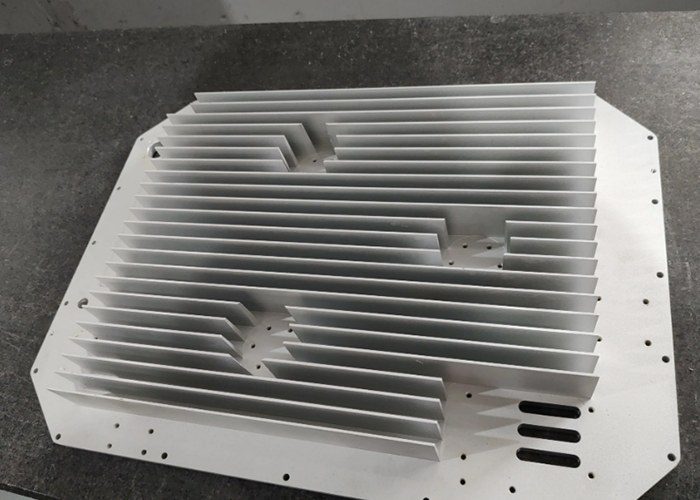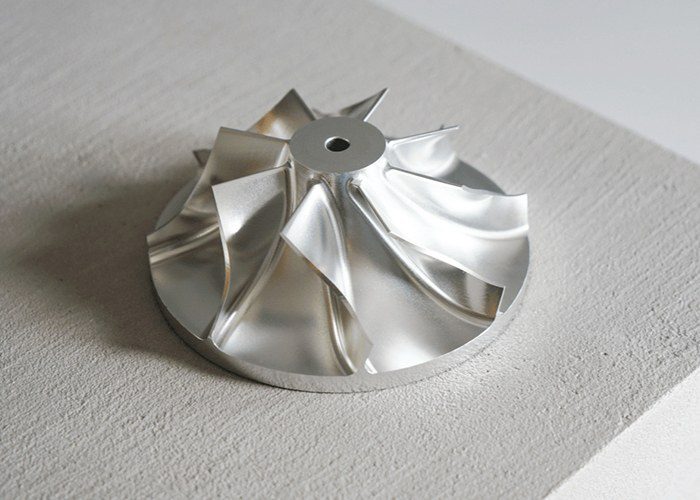
In the landscape of contemporary manufacturing, few technologies have proven as transformative as Computer Numerical Control (CNC) machining. In contemporary manufacturing, CNC machining serves as the essential enabler, facilitating the production of metal parts with high geometric complexity and dependable performance. From the smallest medical implant to massive aerospace structural components, CNC manufacturing of metal parts has become indispensable across virtually every industrial sector.
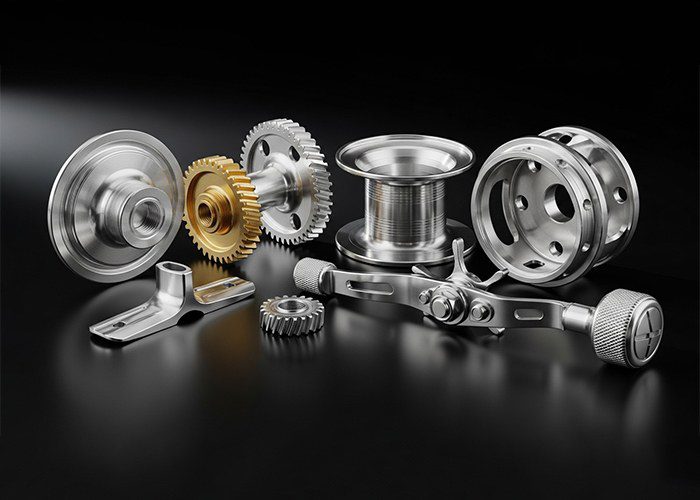
Understanding CNC Metal Parts Manufacturing
CNC machining is a computer-driven manufacturing process in which pre-programmed software dictates the movement of factory tools and machinery. Unlike manual machining, which relies on human operators to guide cutting tools, CNC systems execute precise instructions with exceptional consistency. The process begins with a solid block of metal—aluminum, steel, titanium, brass, or specialized alloys—and uses subtractive techniques to remove material until the desired part geometry is achieved.
The core CNC machining processes include milling, turning, drilling, and grinding. CNC milling uses a rotating cutting tool to remove material from a stationary workpiece, making it ideal for producing flat, contoured, and complex surfaces. CNC turning, on the other hand, rotates the workpiece against a stationary cutting tool to create cylindrical parts. Modern machining centers often combine multiple operations in a single automated setup, dramatically reducing production time and improving accuracy.
Precision and Quality Standards
The precision achievable through CNC machining is extraordinary. Modern CNC equipment can consistently hold tolerances within ±0.01mm, and in some applications, even micron-level accuracy is attainable. For sheet metal fabrication, CNC technology has enabled processing accuracy to break through ±0.1mm while increasing productivity by more than 50%. This level of precision is not merely a technical achievement—it is a critical requirement for industries where component failure is not an option.
Quality control in CNC manufacturing has also evolved significantly. Equipped with touch probes, modern CNC machines automatically verify part dimensions mid-cycle, ensuring robust in-process quality assurance. Automated optical inspection systems integrated with artificial intelligence can detect defects in finished workpieces using image processing and machine learning techniques. These advancements ensure that every part leaving the production floor meets exacting specifications.
Materials and Versatility
One of the great strengths of CNC metal parts manufacturing is its material versatility. Aluminum alloys are widely used for their excellent machinability and lightweight properties, making them ideal for aerospace structural components, electronic casings, and automotive parts. Stainless steel offers durability and corrosion resistance for medical devices, food processing equipment, and marine applications. Titanium, though more challenging to machine, delivers exceptional strength-to-weight ratios for high-performance aerospace and medical implant applications. Copper, brass, Inconel, and other nickel-based alloys further expand the possibilities.
Industry Applications
The applications of CNC-machined metal parts span nearly every major industry. In aerospace, there is no room for error—even minimal inaccuracies can lead to serious consequences. CNC machines produce turbine blades, jet engine components, structural elements for aircraft and satellites, and precision-machined light alloys. The automotive sector relies on CNC machining for engine components including crankshafts, pistons, and cylinders, as well as transmission parts, suspension components, and chassis elements. In the medical industry, CNC technology enables the production of orthopedic and dental implants, surgical instruments, and advanced prostheses with the extreme accuracy that patient safety demands. The electronics industry depends on CNC machining for miniature components, housings, and precision connectors. Beyond these, CNC machining serves shipbuilding, construction, industrial equipment, and even jewelry manufacturing.
Emerging Trends and Technological Advancements
The CNC manufacturing landscape is evolving rapidly. Automation has become a game-changer, with factories increasingly incorporating robotic arms and automatic tool changers that enable continuous operation around the clock with minimal human intervention. This shift toward “lights-out” manufacturing—where machines operate unattended overnight or on weekends—is transforming productivity and consistency.
Artificial intelligence is taking CNC machining beyond simple automation. AI-powered systems now optimize tool paths in real time, predict machine failures before they occur, and dynamically adjust cutting parameters to reduce cycle times and minimize defects. Five-axis machining centers have surpassed traditional three-axis machines, offering enhanced flexibility to machine intricate designs without repositioning the workpiece—a capability particularly valuable for aerospace, automotive, and medical applications.
Hybrid manufacturing, which combines additive manufacturing (3D printing) with subtractive CNC machining, is opening new possibilities. Companies are using 3D printing to create near-net-shape structures and then finishing with CNC machining for tight tolerances and superior surface finishes. Sustainability is also becoming a central concern, with CNC machines now designed with energy-efficient components and new cooling methods using environmentally friendly fluids.
Market Outlook and Global Significance
The global significance of CNC metal parts manufacturing is reflected in market data. The precision machining market was estimated at USD 123.54 billion in 2025 and is projected to reach USD 228.75 billion by 2033. The global CNC metal cutting service market alone was valued at USD 52.7 billion in 2024. These figures underscore the technology’s central role in global industry.
Conclusion
CNC manufacturing of metal parts stands as one of the most essential technologies of the modern era. Its ability to produce complex, precise, and reliable components across a vast range of materials and industries makes it indispensable. As automation, artificial intelligence, and hybrid manufacturing continue to advance, CNC machining will only become more capable, efficient, and sustainable. For businesses seeking innovation, reliability, and competitive advantage, CNC metal parts manufacturing is not merely an option—it is the foundation upon which modern precision industry is built.