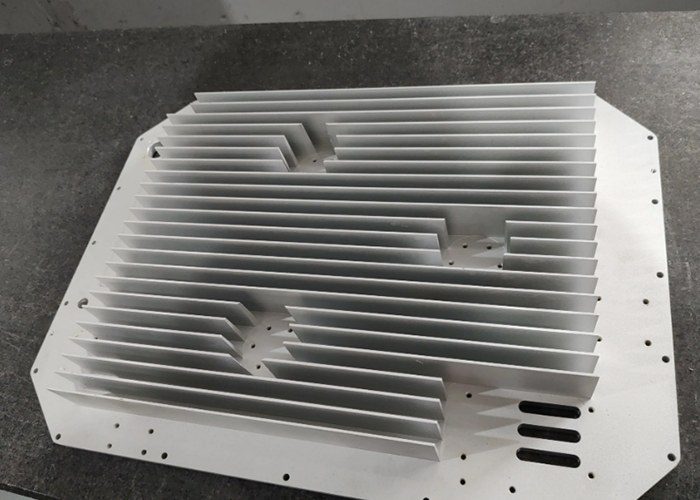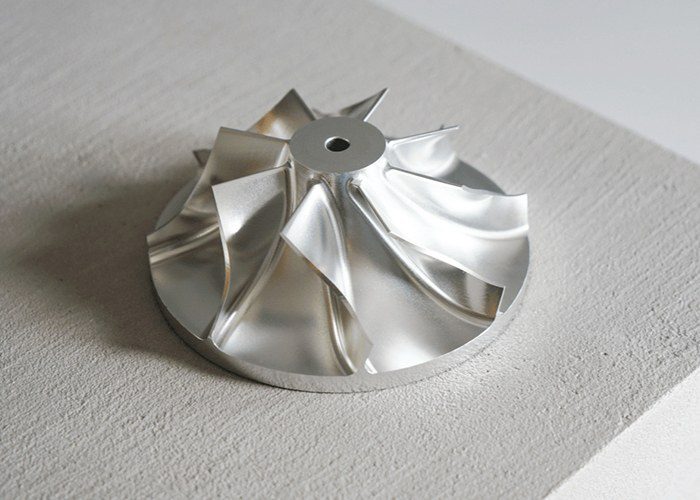
In the high-stakes world of healthcare, the difference between success and failure often comes down to microns. Computer Numerical Control (CNC) machining has emerged as the cornerstone of medical device manufacturing, delivering the uncompromising precision, reliability, and repeatability that life-critical applications demand. As the global medical precision parts market projects growth to $22.42 billion by 2030, CNC-machined components command the largest share at 28%, underscoring their indispensability to modern medicine.
The Imperative of Precision
Medical devices operate in the most unforgiving environment imaginable—the human body. Unlike components for automotive or aerospace use, medical implants must offer flawless biocompatibility, withstand repeated sterilization without degradation, and adhere to tolerances where failure is not an option. Even a microscopic burr or rough edge can precipitate serious post-implantation complications, which is why medical-grade CNC machining enforces standard tolerances of ±0.01 mm to ±0.005 mm—and ultra-precision operations can push as tight as ±0.002–0.003 mm. Some specialized manufacturers can hold tolerances as tight as ±0.0002 inches (approximately 5 microns), ensuring that each component meets the exacting specifications required for patient safety.
Diverse Applications Across the Medical Spectrum
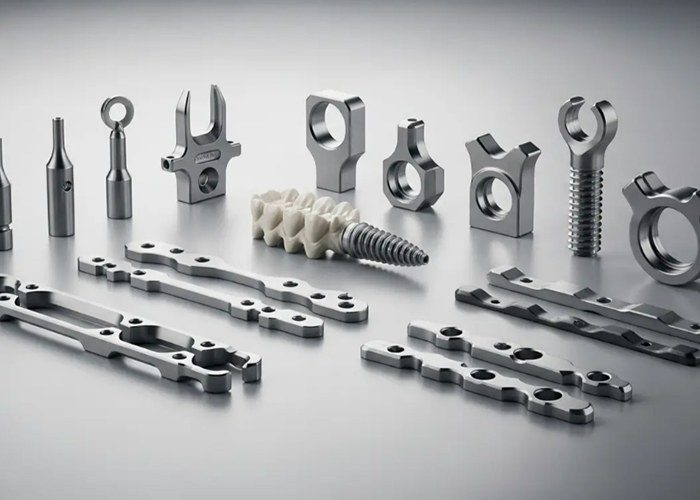
The applications of CNC machining in healthcare are remarkably broad and continually expanding. In orthopedics, CNC machining produces hip and knee implants, bone screws, plates, and acetabular cups—complex curved components that demand exceptional surface finish to minimize post-operative polishing requirements. The industry is increasingly moving away from generic joint replacements toward customized implants that fit each patient’s unique anatomy, a shift made possible through the combination of advanced scanning technology, additive manufacturing, and precision CNC machining.
In cardiovascular medicine, CNC machining creates intricate components for stents, heart valves, and neurovascular devices. Surgical instruments—including handles, tips, forceps jaws, and specialized fittings—require fine tolerances and smooth surface finishes to support precision handling during medical procedures. Diagnostic and imaging equipment such as CT and MRI scanners rely on machined shielding structures, alignment screws, and precision rails that provide structural stability and accurate positioning.
The growing field of minimally invasive surgery has driven demand for micro-scale components. CNC micro-machining produces electrode holders, micro tips, and precision housings with tooling as small as 0.004 inches in diameter and micro-holes as fine as 0.002 inches. Drug delivery systems, respiratory devices, and laboratory automation equipment all depend on CNC-machined parts for clean internal passages, accurate dosing, and consistent performance.
Materials Engineered for the Human Body
The choice of materials in medical CNC machining is as critical as the machining itself. Titanium and its alloys dominate orthopedic and dental applications due to their exceptional biocompatibility, high strength-to-weight ratio, and corrosion resistance. Stainless steel, particularly grades 304L and 316L, remains widely used for surgical instruments and temporary implants where sterilization compatibility is paramount. Cobalt-chrome alloys offer superior wear resistance for load-bearing implants, while advanced polymers such as PEEK (polyetheretherketone) provide lightweight, radiolucent alternatives for implant trials and device housings. Shape-memory alloys like Nitinol present unique machining challenges that require specialized techniques, yet their superelastic properties make them invaluable for cardiovascular and neurovascular applications.
The Quality Imperative: Regulation and Traceability
Medical device manufacturing operates under the most stringent regulatory framework of any industry. ISO 13485 certification is the gold standard, confirming a manufacturer’s commitment to comply with international standards for quality management, development, traceability, and quality control. Compliance with FDA 21 CFR Part 820 and CE marking requirements adds additional layers of oversight.
Quality control in medical CNC machining extends far beyond simple dimensional inspection. First Article Inspection (FAI) verifies that every aspect of a component meets specifications before production commences. Coordinate Measuring Machines (CMM) and vision inspection systems deliver highly accurate measurements of even the most complex geometries. Advanced inspection technologies now achieve 0.1-micron repeatability for 100% inspection of critical medical micro-components, driving defect leakage rates below 0.3 parts per million. Lot-level traceability records, material certifications, and documented inspection evidence ensure that every component can be traced from raw material to finished device.
The Hybrid Future: CNC and Additive Manufacturing
While additive manufacturing (3D printing) has revolutionized medical device prototyping and the production of highly engineered metal components, CNC machining remains essential for achieving the tight tolerances, polished surface finishes, and accuracy required for final medical components. The future of medical device manufacturing lies in hybrid approaches that combine the design freedom of additive manufacturing with the precision of CNC machining. Modern 5-axis CNC machines with advanced controls and optimized tool paths enable medical device producers to machine complex geometries in a single setup, reducing cycle times and improving accuracy.
Integrated manufacturing solutions that combine turning technology, counter-spindle machining, powered tools, and automation are transforming production turning into a platform for streamlined, automatable series production. These approaches address the key requirements of medical series production: high precision, reproducible quality, and reduced manual intervention.
Conclusion
CNC machining for medical device parts represents the intersection of engineering excellence and human compassion. Every component machined—whether an orthopedic implant, a surgical instrument, or a diagnostic device component—carries the weight of patient outcomes. As the industry continues to demand smaller, more complex, and more patient-specific devices, CNC machining will remain the manufacturing method of choice for delivering the precision, reliability, and quality that healthcare demands. In medical device manufacturing, microns truly matter—and CNC machining delivers.