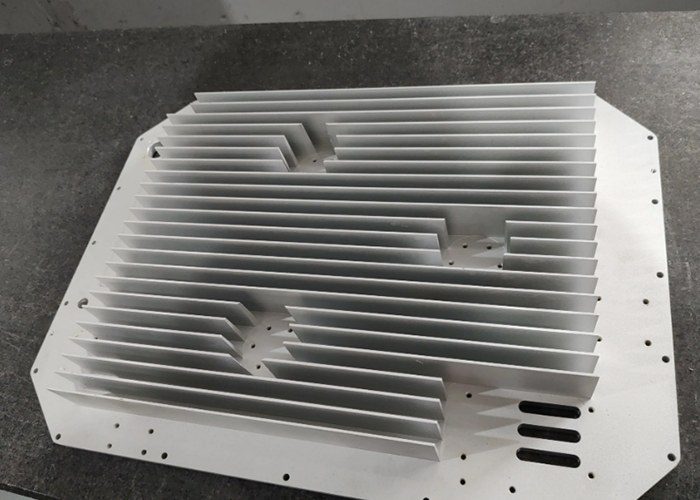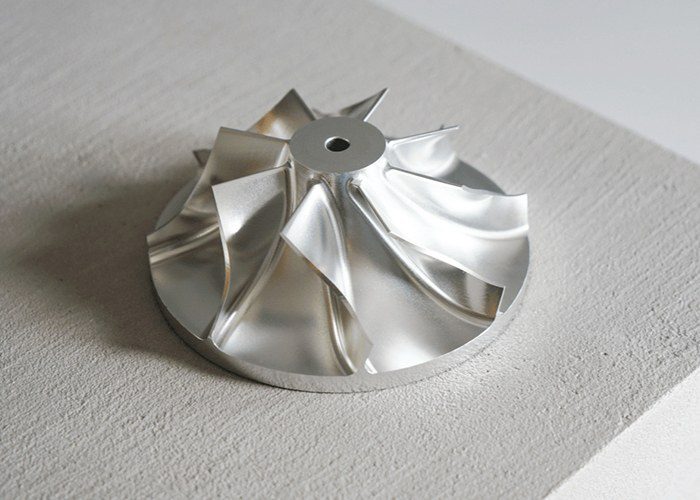
In the landscape of contemporary manufacturing, Computer Numerical Control (CNC) machining has evolved far beyond a simple production technique. It has become the central nervous system of automated production, enabling industries to achieve levels of precision, efficiency, and consistency that were unimaginable just a generation ago. As factories transform into fully connected, data-driven environments, the parts produced by CNC machining for automated equipment have become the critical components that power this revolution.
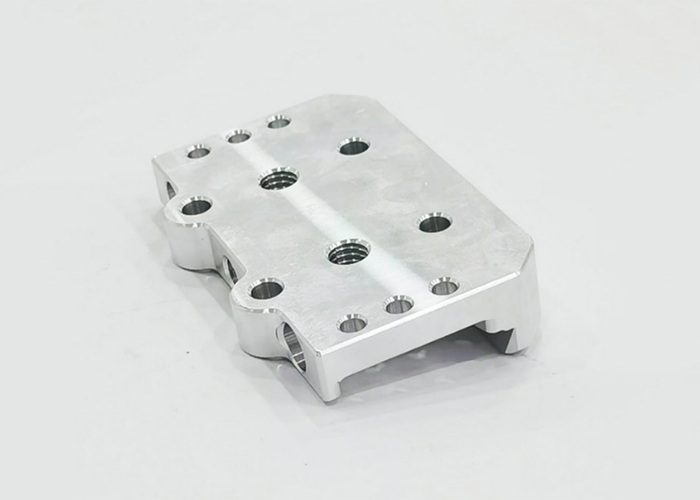
The Anatomy of Automation: Key Components
At the heart of every CNC machine lies a sophisticated ecosystem of interdependent components, each playing a vital role in the automated manufacturing process. The machine control unit (MCU) serves as the centralized processor, interpreting G-code and M-code programming to determine movement paths and coordinate all other components. This command center converts digital designs into electrical signals that actuate the machine’s drive system with remarkable precision.
The mechanical foundation of a CNC machine is built upon structural components such as the bed—typically constructed from cast iron or polymer-based composites to provide vibration-dampening stability. Motion and drive systems employ servo or stepper motors for each axis, with ball screws and linear guides converting rotary motion into linear movement along the X, Y, and Z axes with minimal friction and backlash. Feedback systems comprising encoders and sensors continuously monitor axis position, motor speed, and torque, providing instant feedback to the MCU and enabling nanometer-level accuracy.
The spindle and tooling assembly represents the business end of the machine, where materials are actually removed. The automatic tool changer (ATC) enhances automation by swapping tools based on the program being run, minimizing human intervention and maximizing production uptime.
Applications Across Industries
The versatility of CNC-machined automated equipment parts has made them indispensable across virtually every manufacturing sector. In aerospace, these components enable the machining of titanium and aluminum parts with exceptionally tight tolerances. The medical industry relies on CNC automation to produce implants, surgical instruments, and precision components where quality and consistency are matters of life and death. Automotive manufacturers leverage CNC automation to handle high-mix, small-lot production with rapid cycle times. Even in robotics and industrial automation, CNC-machined parts form the core components of gears, worms, shafts, and robotic executive components that enable precise movement and control.
The Advantages of CNC Automation
The integration of automation into CNC machining delivers transformative benefits. By combining 5-axis machining with automated loading and unloading, manufacturers dramatically reduce setup times, eliminate human error, and maximize spindle utilization. The result is faster cycle times, lower costs, and predictable production schedules.
Perhaps most significantly, CNC automation enables “lights-out” production—the ability to run machines unattended during overnight and weekend hours. By pairing CNC machines with robotic part handling, pallet changers, and automated inspection systems, manufacturers can extend production hours without increasing labor costs. In one installation, CNC robots performing unattended material handling and inline measurement with machine vision reduced downtime by up to 40% while enabling continuous operation for shifts exceeding 12 hours without human supervision.
Future Trends Shaping the Industry
The CNC machining landscape is being reshaped by several converging trends. Artificial intelligence is moving beyond simple automation to enable predictive maintenance, real-time tool-path optimization, and adaptive control. AI-powered systems now analyze machine data and usage patterns to predict failures before they occur, reducing unexpected downtime and improving overall equipment efficiency. In 2026, AI has become integral to daily machine control, with systems using real-time sensor feedback to automatically adjust feeds, speeds, and toolpaths in response to vibration, load, or temperature changes.
Hybrid manufacturing—combining additive manufacturing (3D printing) with subtractive CNC machining—is emerging as a powerful trend, enabling the production of parts with complex geometries that neither process could achieve alone. Digital twin technology has matured into a living ecosystem that mirrors the entire machining process, integrating design, process engineering, machining, and inspection into a continuously updated model.
Conclusion
CNC machining automated equipment parts represent far more than metal components—they are the precision backbone of modern manufacturing. As AI, digital integration, and automation continue to advance, these parts will become even more sophisticated, enabling manufacturers to achieve higher quality, greater efficiency, and unprecedented flexibility. The global CNC market, valued at USD 15.6 billion in 2025 and projected to reach USD 26.2 billion by 2034, reflects the growing recognition that precision automation is not merely an option but an essential foundation for competitive manufacturing in the twenty-first century.