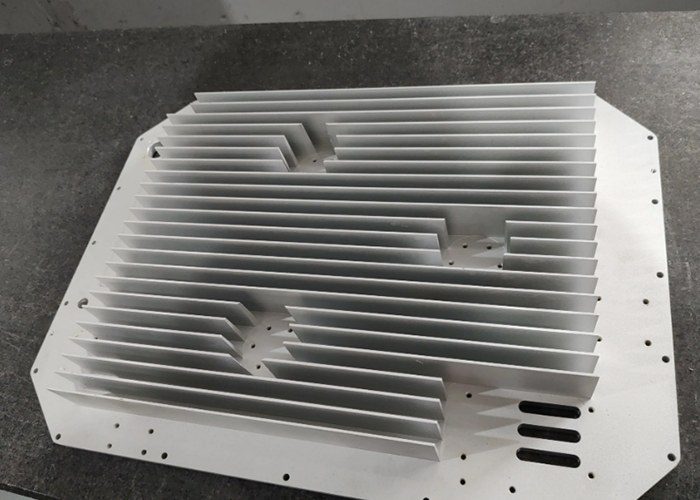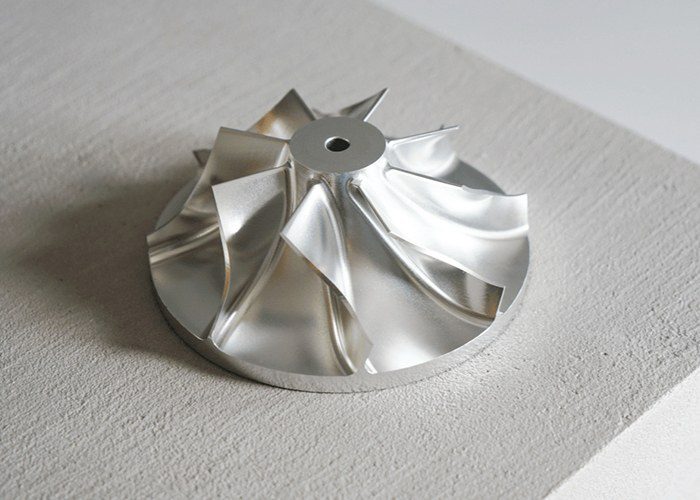
In the landscape of modern manufacturing, few technologies have reshaped production capabilities as profoundly as Computer Numerical Control (CNC) lathe machining. This automated turning process has become the cornerstone of mechanical parts production across industries ranging from aerospace to medical devices, offering unprecedented levels of precision, consistency, and efficiency. By combining computer-controlled automation with advanced cutting capabilities, CNC lathe machining has transformed how cylindrical mechanical components are designed, manufactured, and delivered to market.
Understanding the CNC Turning Process
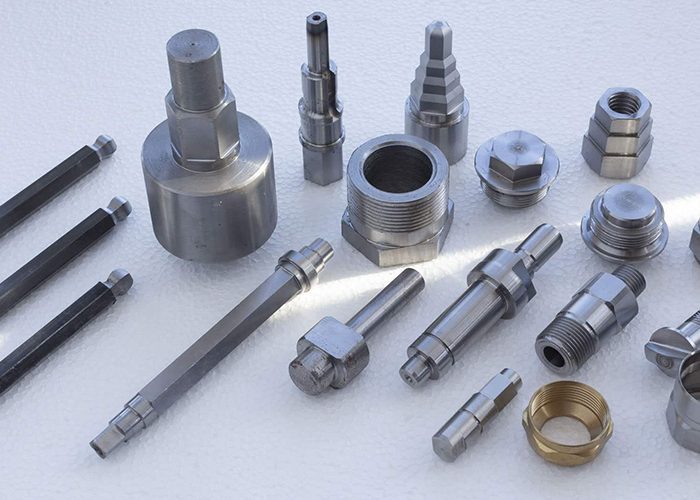
At its core, CNC lathe machining—commonly referred to as CNC turning—operates on a elegantly simple principle: the workpiece rotates at controlled speeds while stationary cutting tools remove material from its surface. This fundamental mechanism makes the process exceptionally well-suited for producing rotationally symmetrical parts such as shafts, pins, bushings, connectors, and threaded fittings where dimensional balance and concentricity are essential. Unlike manual lathes that rely heavily on operator skill, CNC systems follow digital instructions—known as G-code—that precisely guide spindle speed, tool movement, and cutting depth. This automation ensures robust process repeatability, enabling the production of complex geometries that meet the most demanding tolerance specifications.
The Complete Machining Workflow
The journey from raw material to finished mechanical part follows a carefully orchestrated sequence. It begins with design and engineering, where detailed three-dimensional models are created using CAD software, complete with dimensions, tolerances, and material specifications. These models are then transferred to CAM software, which generates the toolpaths and machine instructions that control the lathe. Material selection follows—choices ranging from aluminum and stainless steel to titanium and engineering plastics are made based on the part’s application and mechanical requirements.
The machining process itself encompasses multiple operations: facing creates flat surfaces at material ends; rough turning removes large amounts of material quickly; fine turning refines surface finish and achieves tighter tolerances. Additional operations encompass boring, drilling, threading (internal/external), and grooving or parting-off to detach finished parts from the workpiece. Modern CNC turning centers can perform all these operations in a single automated cycle without manual intervention.
Unmatched Advantages Over Traditional Methods
The advantages of CNC lathe machining over conventional approaches are compelling. Precision stands at the forefront—CNC turning can achieve tolerances as tight as ±0.01 millimeters and surface roughness values as low as Ra 0.8 micrometers. This exceptional dimensional accuracy ensures that mechanical parts meet the stringent requirements of modern engineering applications. Consistency is equally remarkable: once a program is created, it can be reused indefinitely, producing identical parts with minimal variation even across orders of thousands or millions of pieces.
Productivity gains are substantial. Studies have documented production time reductions of up to 40 percent following the implementation of CNC lathes, a testament to the automation that eliminates many manual steps that traditionally consume time and resources. The ability to complete complex parts in a single pass further accelerates production cycles. Moreover, the reduction in human intervention minimizes errors, enhances worker safety, and allows skilled operators to focus on higher-value activities.
Diverse Applications Across Critical Industries
The versatility of CNC lathe machining makes it indispensable across a broad spectrum of industries. In aerospace, the technology produces turbine shafts, fittings, bushings, and engine components that must meet rigorous safety and performance standards. The automotive sector relies heavily on CNC turning for engine components, transmission parts, axles, fasteners, and suspension components—all requiring the precision necessary for optimal efficiency and durability. Medical device manufacturing depends on CNC lathes to create surgical instruments, implants, and orthopedic screws where micron-level precision is literally a matter of life and health. Additional applications span electronics, energy, shipbuilding, and general industrial machinery.
The Evolution Toward Multi-Axis Machining
Today’s CNC turning centers bear little resemblance to their two-axis predecessors. Modern machines incorporate live tooling that enables drilling, milling, tapping, and engraving in the same setup. Multi-axis configurations—including X, Y, Z, and C axes—allow for off-center drilling, complex contouring, and the creation of parts with asymmetric features in a single automated process. Dual turrets and dual spindles make it possible to machine both ends of a part simultaneously, further reducing cycle times while minimizing handling and setup changes.
Looking to the Future
The CNC lathe machining sector continues to evolve rapidly. Market forecasts project growth from USD 11.76 billion in 2025 to USD 14.21 billion by 2031, driven by increasing demand for precision parts and the rising adoption of automation technologies. The integration of Industry 4.0 principles is turning standalone machines into intelligent, networked assets capable of predictive maintenance and real-time process optimization. As digitalization, IoT-enabled monitoring, and data analytics become standard features, CNC lathe machining will deliver even greater productivity, quality, and flexibility.
Conclusion
CNC lathe machining has fundamentally transformed the production of mechanical parts, delivering levels of precision, consistency, and efficiency that were unimaginable just decades ago. From the automotive assembly line to the aerospace factory floor, from surgical suites to power generation facilities, turned components produced by CNC lathes enable the technologies that define modern life. As the industry embraces multi-axis capabilities, smart manufacturing, and digital integration, CNC lathe machining will remain at the heart of mechanical parts production—driving innovation, enabling new possibilities, and ensuring that the machines that make our world function with ever-greater reliability and performance.