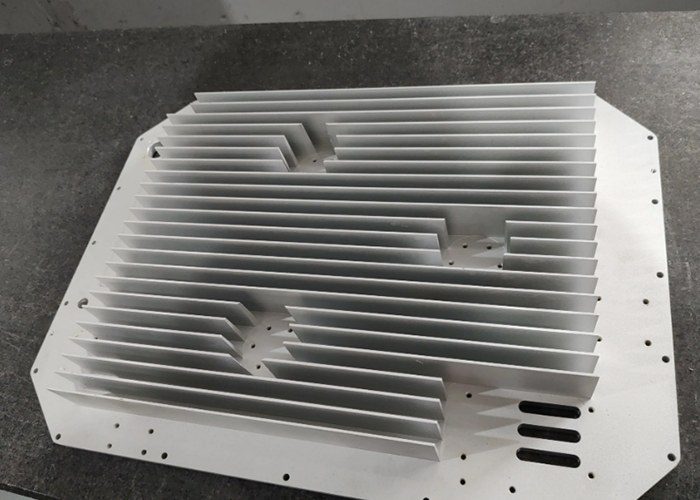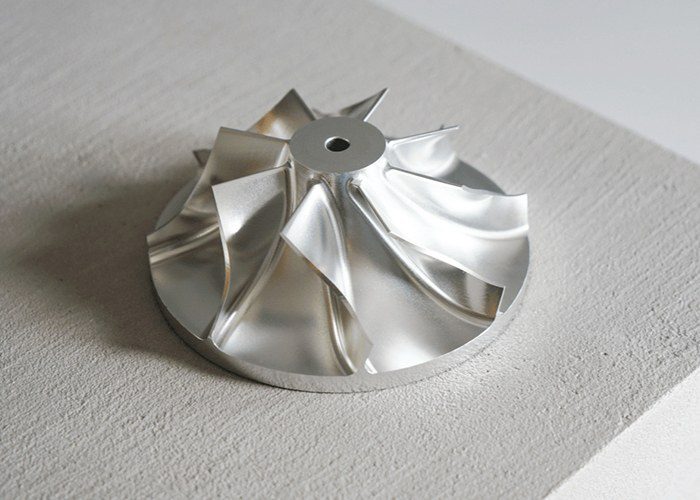
In the vast ecosystem of modern manufacturing, few processes are as foundational—or as transformative—as CNC lathe machining. From the humble bolt to the intricate turbine blade, CNC lathe machined parts are everywhere, shaping industries as diverse as aerospace, automotive, medical devices, and consumer electronics. But what exactly are these parts, how are they made, and why have they become indispensable to contemporary production? This article explores the world of CNC lathe machined parts, uncovering the technology, materials, applications, and advantages that make them a cornerstone of precision engineering.
Understanding the CNC Turning Process
At its core, CNC (Computer Numerical Control) lathe machining—often referred to as CNC turning—is a subtractive manufacturing process that produces rotationally symmetrical components. The workpiece is securely clamped in a chuck and rotated at high speeds while stationary cutting tools remove material from its outer or inner surfaces. The machining process begins with a digital part model or engineering drawing; programmable software then converts the design into precise instructions—G-code—that guide the machine’s every motion.
CNC lathes typically operate on three or four axes, with the X-axis moving the tool perpendicular to the spindle and the Z-axis moving it parallel to the workpiece. This configuration allows for a wide range of operations, including outside diameter (OD) turning, inside diameter (ID) boring, facing, grooving, threading, drilling, and tapping. Modern turning centers often incorporate live tooling and C-axis functionality, enabling milling, drilling, and tapping operations to be performed on the same setup without transferring the workpiece to another machine. This capability, known as mill-turn machining, dramatically reduces handling time and improves overall accuracy.
Materials: From Metals to High-Performance Plastics
One of the greatest strengths of CNC lathe machining is its remarkable material versatility. The process can handle virtually any machinable material, from common metals to advanced engineering plastics. Stainless steel, aluminum, brass, copper, and titanium are among the most frequently machined metals, each offering distinct properties for different applications. High-performance alloys such as Kovar, Inconel, and tungsten are also routinely processed for specialized applications.
On the non-metallic side, CNC lathes excel at machining engineering plastics including PEEK, PTFE, polycarbonate, acrylic, nylon, POM, and ABS. These materials are increasingly important in medical devices, electronics, and chemical processing equipment, where corrosion resistance, electrical insulation, or lightweight properties are paramount. With its capacity to process diverse materials on one platform, CNC turning offers unmatched manufacturing flexibility.
Typical Parts and Industry Applications
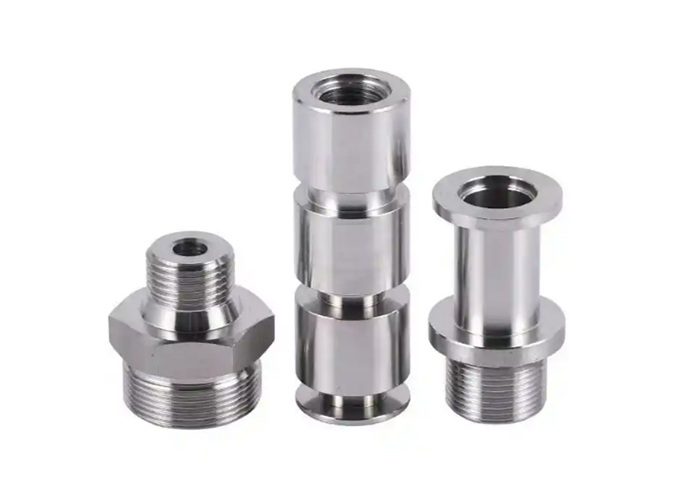
CNC lathe machined parts are characterized by their axial symmetry—shafts, rods, bushings, and cylinders are the most common geometries. However, with advanced live tooling and multi-axis capabilities, modern turning centers can produce far more complex components featuring off-axis holes, flats, splines, and milled features.
The applications span virtually every industrial sector. In aerospace, CNC turning produces shafts, fittings, bushings, and turbine components that must withstand extreme conditions while meeting the tightest tolerances. The automotive industry relies on CNC lathe machined parts for pistons, suspension components, transmission shafts, and brake system parts. In the medical field, surgical tools, orthopedic screws, implants, and precision instruments are manufactured using CNC turning. The electronics, robotics, and general industrial machinery sectors also depend heavily on these components for everything from connectors to actuator housings.
The Competitive Advantages of CNC Turning
What makes CNC lathe machined parts so widely adopted? The answer lies in several compelling advantages. First and foremost is precision and repeatability. CNC machines can produce identical parts consistently with minimal tolerance variation, often achieving accuracies within thousandths of a millimeter. This consistency is essential for industries where component interchangeability and reliability are non-negotiable.
Automation is another key benefit. Once a program is loaded, the machine operates with minimal human intervention, significantly reducing labor costs and eliminating the variability introduced by manual operation. Modern CNC lathes with automatic bar feeders can run unattended for extended periods, making them ideal for both prototyping and high-volume production runs.
Furthermore, CNC turning is remarkably efficient. The ability to perform multiple operations—turning, milling, drilling, threading—in a single setup eliminates workholding errors and reduces cycle times. Research has shown that CNC lathes with active tooling significantly enhance precision, reduce errors, and allow for faster production cycles compared to conventional methods. This efficiency translates directly into lower per-part costs and faster time-to-market.
Looking Ahead: The Future of CNC Lathe Machined Parts
As manufacturing continues to evolve, CNC lathe technology is advancing in lockstep. Multi-tasking turning centers with dual spindles and robotic loading systems are pushing the boundaries of what is possible in a single setup. The integration of advanced CAM software, real-time monitoring, and adaptive control systems is further enhancing precision and productivity. Meanwhile, the growing demand for lightweight, high-strength components in aerospace and electric vehicles is driving innovation in both tooling and machining strategies for difficult-to-cut materials.
CNC turned parts transcend simple machining—they are the precision-engineered backbone driving today’s industrial landscape. From the engines that power our aircraft to the surgical instruments that save lives, these parts enable the technologies that define our world. As CNC technology continues to advance, the capabilities—and the importance—of CNC lathe machined parts will only continue to grow.