In the landscape of precision manufacturing, few materials offer the remarkable combination of machinability, durability, and aesthetic appeal that brass provides. CNC machined brass parts have become indispensable across industries ranging from automotive and aerospace to electronics, plumbing, and medical devices. This article explores the unique properties that make brass a preferred material for CNC machining, the common alloys used, critical manufacturing considerations, and the diverse applications that depend on this versatile metal.
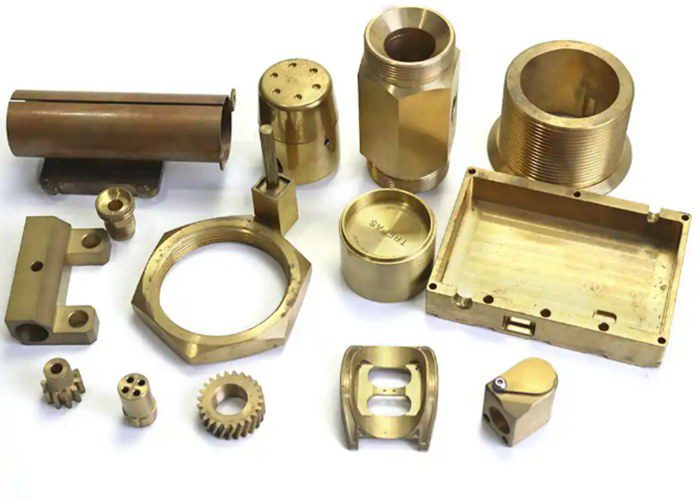
The Brass Advantage: Why This Alloy Excels in CNC Machining
Brass is a copper-zinc alloy that retains many of copper’s beneficial properties while improving upon others. It offers mechanical strength comparable to mild steel, excellent corrosion resistance, superior electrical and thermal conductivity, and a naturally low coefficient of friction. These attributes make brass ideal for components that must withstand demanding mechanical environments while maintaining reliable performance.
Perhaps the most compelling reason for brass’s dominance in CNC machining is its exceptional machinability. Among all copper alloys, brass is the most machinable. Free-cutting brass grades like C36000 have a machinability rating of 100% – the benchmark against which all other copper alloys are measured. This superior machinability translates directly into tangible manufacturing benefits: higher cutting speeds, reduced tool wear, superior surface finishes, and lower overall production costs.
The low cutting forces required when machining brass increase tool life by 30–50% compared to many other metals. With proper tooling, surface finishes can achieve Ra values as low as 0.4–1.6 μm without secondary operations. The metal removal rate for C360 brass is two to three times higher than that of stainless steel, and production cycle times can be reduced by over 20% in some applications. These efficiencies make brass a cost-effective choice despite being a premium material.
Common Brass Alloys for CNC Machining
The selection of the appropriate brass grade is critical to achieving optimal results. Several alloys are commonly used in CNC machining, each with distinct characteristics.
C360 Free-Cutting Brass is the industry standard for high-volume machining. Nominally composed of 61.5% copper, 35.4% zinc, and 3.1% lead, its lead content promotes the formation of short, easily broken chips that minimize tool wear and downtime. C360 is ideal for screws, fittings, connectors, gears, and automatic high-speed screw machine products.
C260 Cartridge Brass contains approximately 70% copper and 30% zinc. It offers high ductility and is considered the most general-purpose of all brass alloys. Common applications include electrical components, deep-drawn parts, radiator cores, and ammunition cartridges.
With a tin content of roughly 1%, C464 Naval Brass demonstrates superior resistance against corrosion and seawater erosion. It is the preferred choice for marine hardware, valves, and pumps where exposure to saltwater environments is a concern.
C385 Architectural Brass offers a decorative finish and is easy to polish, making it suitable for handles, decorative fittings, and architectural trim.
Precision Capabilities and Design Considerations
CNC machining delivers exceptional accuracy and repeatability for brass components. Dimensional tolerances can be held within ±0.025 mm (±0.001″) or tighter with precision setups. Surface finishes reaching Ra 0.4 μm are achievable. CNC systems can produce complex geometries with intricate details while maintaining consistent quality across production batches.
To optimize cost and manufacturability, several design principles should be followed. Adding a radius to internal vertical edges helps reduce tool wear and minimizes the risk of chipping. Cavity depth should be limited to within four times the cavity width to avoid extended machining times. Thin walls should be thickened where possible to improve dimensional stability and reduce vibration during machining. Designing parts to machine cleanly in as few setups as possible, with clear reference surfaces and realistic tolerances, further enhances efficiency.
Surface Finishing Options
One of brass’s distinctive advantages is that it often requires no additional finishing after machining. Its natural golden surface is visually appealing and suitable for numerous applications. However, when enhanced aesthetics or additional protection is required, several finishing options are available.
Polishing produces a smooth, shiny surface that reduces friction and enhances visual appeal. Plating with nickel or chrome adds a layer that improves corrosion resistance, hardness, and durability. Clear coating can be applied when cosmetic parts are exposed to environmental elements. Powder coating enhances durability and corrosion resistance while offering color options.
Applications Across Industries
The versatility of CNC machined brass parts is evident in their wide-ranging applications.
In the automotive industry, brass components include fuel system parts, sensor housings, electrical connectors, terminals, valve components, and engine mounts. Brass’s durability, corrosion resistance, and electrical conductivity make it essential for modern vehicle manufacturing.
The aerospace sector relies on brass for lightweight, corrosion-resistant fasteners, bushings, and conductive components used in avionic systems. Its reliability under demanding conditions makes it a trusted material for critical applications.
Plumbing and heating applications leverage brass’s corrosion resistance and excellent heat conductivity for durable valves, fittings, faucet components, and pipe fittings. Brass’s ability to withstand water pressure and resist dezincification makes it ideal for these demanding environments.
In electronics and electrical applications, brass is used for connectors, terminals, switch components, shielding parts, and precision contacts. Its high electrical conductivity (~28% IACS) and thermal conductivity (~120 W/m·K) ensure efficient operation.
The medical device industry utilizes precision-machined brass components for surgical instruments, diagnostic equipment, and dental components requiring smooth finishes and sterilization compatibility. Tight tolerances, typically within microns, are essential for these critical applications.
Market Outlook and Future Trends
The global market for brass CNC machining services reflects the material’s enduring importance. Valued at approximately US$2.46 billion in 2024, the market is projected to reach US$3.2 billion by 2031, representing a compound annual growth rate of 3.9%. Other forecasts suggest even stronger growth, with the market potentially reaching US$3.8 billion by 2035 at a CAGR of 6.0%.
A significant trend shaping the industry is the development of lead-free brass alloys. Driven by regulatory requirements and environmental concerns, manufacturers are increasingly switching to lead-free materials. While lead has traditionally been used to enhance machinability by promoting chip breakage, new alloy formulations and process optimizations are emerging to address this challenge.
Conclusion
CNC machined brass parts represent a perfect synergy of material science and precision manufacturing. The unique combination of excellent machinability, mechanical strength, corrosion resistance, electrical conductivity, and aesthetic appeal makes brass an enduring choice for engineers and manufacturers worldwide. As CNC technology continues to advance and new brass alloys emerge to meet evolving regulatory and performance requirements, the role of machined brass components in modern industry will only continue to grow. Whether in the engine of a car, the plumbing of a building, the circuitry of a electronic device, or the precision instruments of a surgical suite, CNC machined brass parts deliver the performance, reliability, and quality that demanding applications require.