Computer Numerical Control (CNC) machining has revolutionized manufacturing by enabling the production of components with extraordinary precision, repeatability, and efficiency. At the heart of every CNC machine lies a complex assembly of parts, each meticulously engineered to perform specific functions that collectively transform digital designs into physical reality. Understanding these components is essential for anyone working with modern machining equipment, as each element plays a critical role in accuracy, speed, and reliability. This article explores the key parts of CNC machining equipment, their functions, and the broader ecosystem that makes precision manufacturing possible.
Core Components of CNC Machining Equipment
Every CNC machine operates through a precise coordination of core components including the controller, spindle, motors, tooling system, coolant delivery, and sensors. These systems work together to achieve tolerances as tight as ±0.01 mm. Mechanically, a typical CNC milling machine comprises the machine bed, guides, milling spindle, tool changer, and workpiece clamping table. These components ensure stability, rigidity, and thermal consistency—all crucial for long-term machining accuracy.
The machine bed serves as the foundation, absorbing cutting forces and vibrations that would otherwise compromise part quality. Linear guides and axes enable movement in three or five spatial directions with high precision. The spindle, often rotating at speeds between 6,000 and 30,000 RPM depending on the material, holds and drives the cutting tools that actually remove material from the workpiece.
The Control and Drive Systems
Electronically, the CNC control system works in conjunction with servo or direct drives and sensors to ensure precise movement along programmed tool paths. The controller interprets G-code instructions, manages speeds and feeds, and coordinates tool changes. Integrating encoders and ball screws, the feedback loop guarantees high-precision, real-time position control. This closed-loop system ensures that the machine faithfully executes the designer’s intent, compensating for any deviations that might occur during operation.
Tooling and Workholding Systems
The tooling system encompasses everything from tool holders to the cutting tools themselves. CNC tool heads include drill bits, end mills, taps, reamers, and boring bars. Modern CNC machines often feature automatic tool changers (ATCs) that enable rapid switching between different tools without manual intervention, significantly reducing cycle times and enabling complex multi-operation machining in a single setup.
Workholding systems such as chucks, collets, and clamping tables secure the workpiece during machining. Workholding stability is paramount to preserving concentricity and mitigating vibration and chatter throughout the machining process. The choice of workholding method depends on the part geometry, material, and production volume requirements.
Materials and Precision Standards
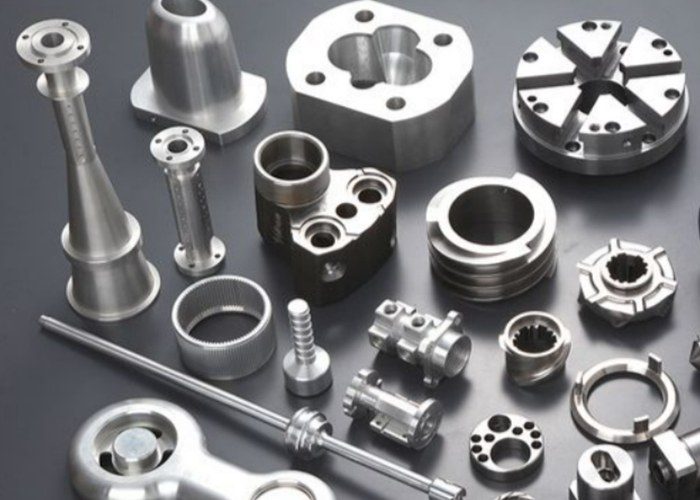
CNC machining equipment parts are manufactured from a wide range of materials, each selected for specific performance characteristics. Common metals include aluminum alloys (valued for their excellent strength-to-weight ratio), steel, stainless steel, titanium, and copper. Engineering plastics such as PEEK, nylon, acetal, and polycarbonate are also widely used. The material selection significantly impacts cost, performance, manufacturability, and lifecycle.
Quality control in CNC machining adheres to rigorous international standards. ISO 2768 covers general linear and angular tolerances, while ASME Y14.5 specifically dictates the application of geometric dimensioning and tolerancing (GD&T). Aerospace and medical applications demand even more stringent controls, often requiring non-destructive testing methods such as ultrasonic inspection and X-ray examination. For today’s quality-conscious buyers, full lot traceability—covering materials, machinery, operators, and inspections—is no longer an advantage, but a baseline requirement.
Applications Across Industries
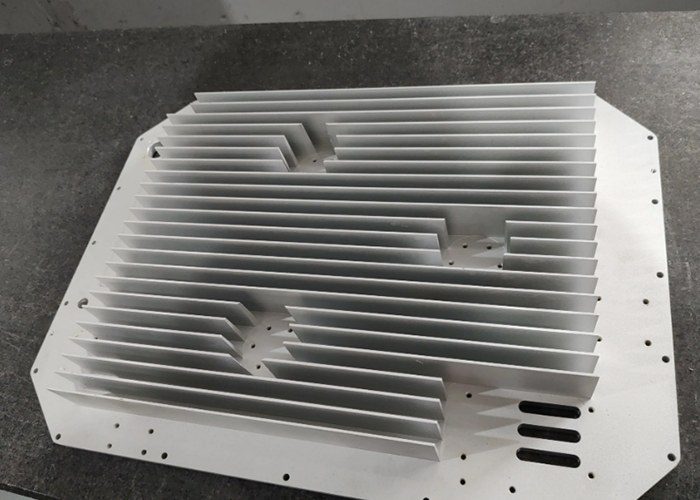
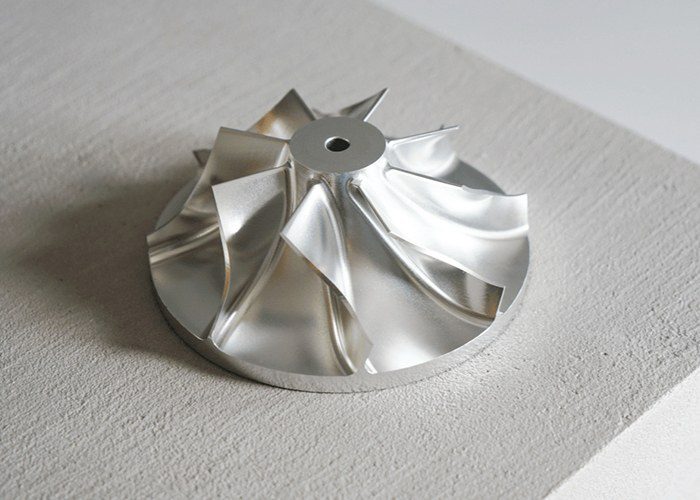
CNC machining equipment parts find applications across virtually every industrial sector. In aerospace, they form the backbone of mission-critical systems, from satellite brackets to jet engine blades. The automotive industry relies on CNC-machined components for engine parts, braking systems, steering components, fuel injectors, and transmission parts. In medical device manufacturing, CNC machining produces surgical instruments, orthopedic implants, dental components, and implantable products with the precision required for patient safety. The electronics industry depends on CNC-machined enclosures, heat sinks, and sensor housings where electrical interference and mechanical performance must be tightly controlled.
Industry Trends and Future Directions
The CNC machining industry continues to evolve rapidly. Valued at approximately $62.2 billion in 2025, the global CNC machine tools market is on track to hit $84.7 billion by 2032. Similarly, the precision turned product manufacturing market is expected to reach $172.31 billion by 2031. Several key trends are shaping the industry’s future.
AI-native machining is moving from experimental pilots to mainstream production, using real-time sensor feedback to automatically adjust feeds, speeds, and toolpaths in response to changing conditions. Digital twins—living digital ecosystems that mirror the entire machining process—are becoming the production backbone, enabling virtual commissioning and clash detection long before the first chip is cut. Hybrid manufacturing, which combines additive and subtractive processes on a single platform, is gaining traction in aerospace, energy, and medical sectors. Sustainability is also emerging as a core metric, with greater adoption of minimum quantity lubrication, dry cutting, and coolant recycling systems.
Conclusion
CNC machining equipment parts represent the convergence of mechanical engineering, electronics, and software—a testament to human ingenuity in pursuit of manufacturing excellence. The remarkable precision and productivity that define modern manufacturing are driven by every element of the system—from the rigid machine bed to the intelligent control system. As AI, digital twins, and hybrid technologies continue to reshape the industry, the importance of understanding and optimizing these essential components will only grow. For manufacturers, engineers, and machinists alike, mastery of CNC machining equipment parts remains fundamental to competing in an increasingly demanding global marketplace.