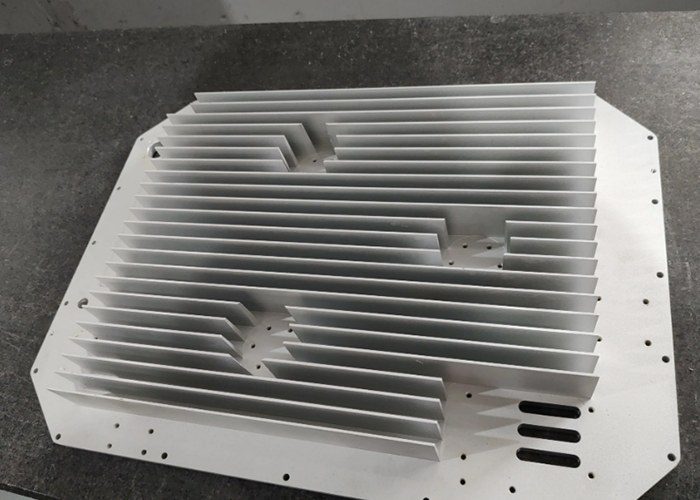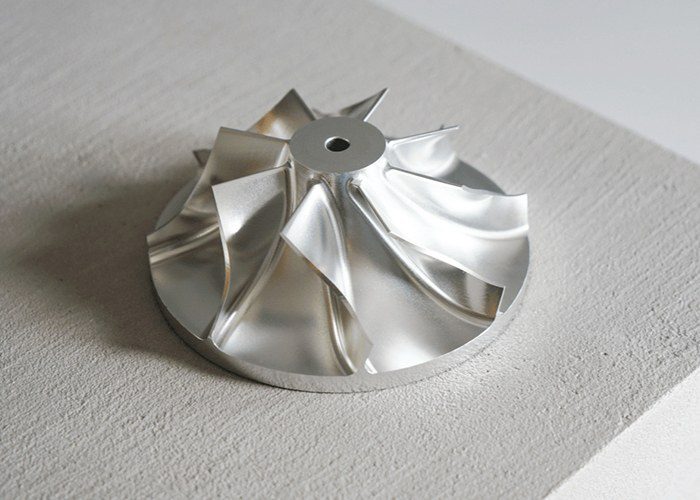
In an era where product innovation cycles are shrinking and quality expectations are rising, the ability to produce custom-made parts with speed, accuracy, and consistency has become a critical competitive advantage. Computer Numerical Control (CNC) machining has emerged as the cornerstone of this capability, transforming digital designs into physical components with micron-level precision. As industries from aerospace to medical devices demand increasingly complex geometries and tighter tolerances, custom CNC machining has evolved from a specialized service into an indispensable manufacturing solution.
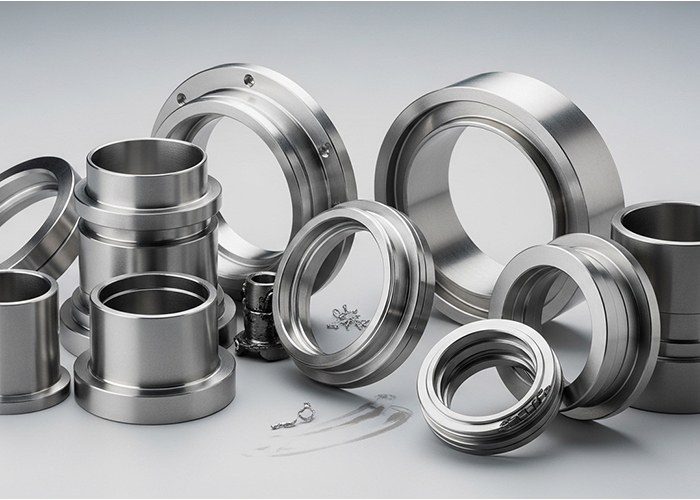
Understanding Custom CNC Machining
At its core, CNC machining is a subtractive manufacturing process where computer-guided tools carve, drill, and shape materials into precise components. Unlike manual machining, where every cut depends on human skill and judgment, CNC machining follows programmed digital instructions to execute each movement with exact repeatability. Guided by a digital blueprint, every angle and curve is executed with pinpoint accuracy, delivering flawless consistency whether we’re producing a single unit or a million.
The “custom” dimension of CNC machining means that parts are produced precisely to a client’s unique specifications—not just in dimensions and shapes, but also in material selection, surface finishes, and tolerances. This customization scales effortlessly, transitioning smoothly from rapid prototypes and low-volume batches to full-scale production on demand. The process typically begins with a Computer-Aided Design (CAD) model, which is translated into machine instructions through Computer-Aided Manufacturing (CAM) software. From there, CNC mills, lathes, routers, or grinders remove material from a solid block—often called a billet—to create the desired geometry.
The Precision Advantage
What sets custom CNC machining apart from other manufacturing methods is its extraordinary precision. CNC machines routinely achieve extremely tight tolerances, ensuring that each part meets exacting specifications. For industries ranging from aerospace to medical devices to automotive, a mere fraction of a millimeter can be the razor-thin line between seamless mechanical mating and costly assembly rejection. This level of accuracy is not just desirable—it is often non-negotiable for safety-critical applications.
Beyond precision, CNC machining excels at producing complex geometries that would be challenging or impossible to achieve through traditional manual methods. Multi-axis machines—particularly 5-axis systems—can machine parts from virtually any angle in a single setup, eliminating the cumulative errors that arise from multiple re-fixturings. This “complete-in-one-setup” capability dramatically boosts both accuracy and efficiency, particularly for deep-cavity work or parts with obstructed features.
The Technology Driving Customization
The landscape of CNC machining is being reshaped by rapid technological advances. Artificial intelligence is now powering real-time adjustments to tool paths, predictive maintenance for milling equipment, and intelligent quality control through vision inspection systems. Some manufacturers report that AI integration has reduced defect rates by over 30% and cut lead times for custom parts by 25%, even for complex components involving multi-axis machining.
Hybrid manufacturing—combining additive manufacturing (3D printing) with subtractive CNC machining—is another growing trend that enhances flexibility and reduces material waste. Digital twins and cloud-based control systems are further enhancing system intelligence and interoperability. These innovations are making custom CNC machining faster, more accessible, and more cost-effective than ever before.
Versatility Across Materials and Industries
One of the standout advantages of custom CNC machining is its remarkable material compatibility. The process works with an extensive range of materials, including aluminum alloys, stainless steel, titanium, copper, engineering plastics like PEEK and nylon, and advanced composites such as carbon fiber-reinforced polymers. Some service providers now offer more than 475 material options alongside a wide selection of surface treatments and finishing processes.
This material versatility translates into broad industrial applicability. In aerospace, CNC machining produces turbine blades, engine components, and lightweight structural parts where strength-to-weight ratio is paramount. The automotive industry relies on custom CNC parts for engine blocks, transmission components, and increasingly, electric vehicle battery enclosures. Leveraging CT scan data, CNC machining fabricates a range of medical devices, including surgical instruments, orthopedic implants, dental components, and custom patient-specific solutions. The technology also serves consumer electronics, defense, robotics, energy, and semiconductor industries.
Market Growth and Economic Significance
The scale of the custom CNC machining industry reflects its critical role in global manufacturing. The on-demand custom CNC machining service market was estimated at USD 2.865 billion in 2025 and is projected to grow at a compound annual growth rate (CAGR) of 12.90%. Broader custom machining services—encompassing a wider range of processes—were valued at USD 26.84 billion in 2025, with projections reaching USD 39.45 billion by 2032. The overall CNC machinery market exceeds USD 78 billion globally.
This growth is driven by increasing demand for high-precision components, the rise of smart factories, and the need for agile manufacturing that can respond quickly to changing market conditions. As product lifecycles compress and regulatory requirements intensify—particularly in medical and aerospace applications—the ability to translate engineering intent into repeatable, certified production has become a core competitive differentiator.
Conclusion
CNC machining custom made parts represents far more than a manufacturing process—it is a strategic enabler of innovation. By transforming digital designs into physical reality with unmatched precision, speed, and material flexibility, custom CNC machining empowers engineers and designers to push the boundaries of what is possible. Whether for a single prototype or a production run of thousands, this technology delivers the accuracy, consistency, and customization that modern industry demands. As AI, automation, and hybrid manufacturing continue to advance, the capabilities of custom CNC machining will only expand, solidifying its position as the backbone of precision manufacturing for decades to come.