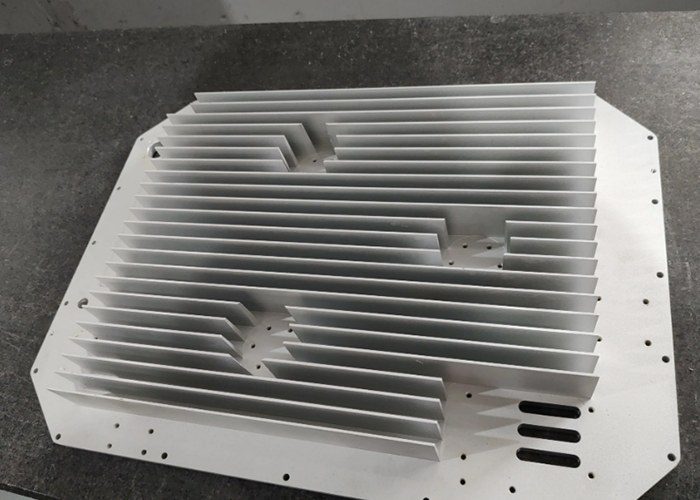
In the landscape of modern industrial production, few technologies have been as transformative as Computer Numerical Control (CNC) machining. What began as a rudimentary system of punched tape controlling simple milling machines has evolved into the sophisticated, digital backbone of global manufacturing. Today, CNC machining and manufacturing represent the pinnacle of precision, efficiency, and repeatability, serving as the critical link between digital design and physical reality. From the titanium alloys used in aerospace turbines to the biocompatible polymers in medical implants, CNC technology is the unseen artisan shaping the 21st century.
At its core, CNC machining is a subtractive manufacturing process. Unlike 3D printing, which adds material layer by layer, CNC machining starts with a solid block of material—known as the workpiece—and removes excess material to achieve a desired geometry. The “control” aspect lies in the software. A digital blueprint, typically a Computer-Aided Design (CAD) file, is converted into a series of precise instructions (G-code) that dictate the movement of cutting tools. These instructions govern coordinates, speed, feed rate, and tool changes with a level of accuracy that is unattainable by human hands alone.
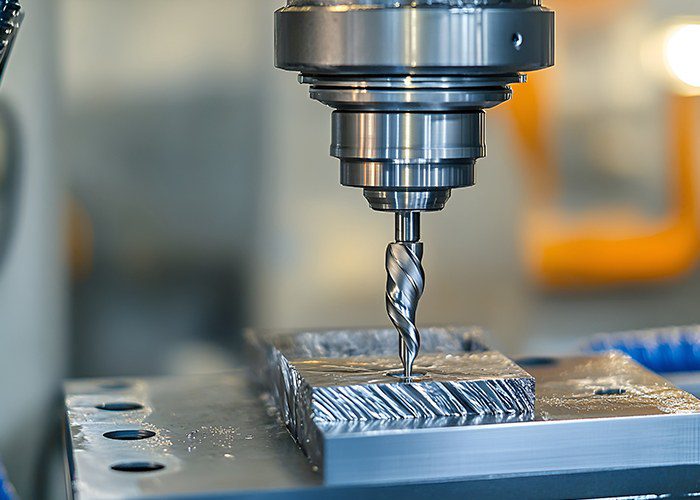
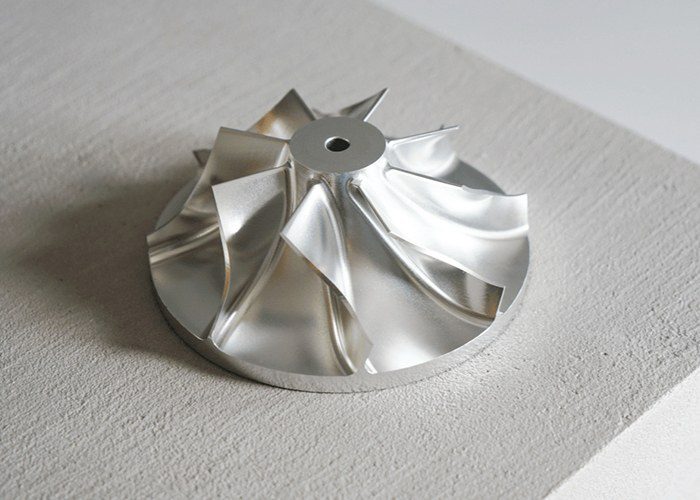
Modern CNC machinery encompasses a wide array of equipment, each suited for specific applications. CNC Mills are perhaps the most common, utilizing rotating cutting tools to remove material along multiple axes. While standard 3-axis mills operate on the X, Y, and Z planes, advanced 5-axis milling machines can rotate the bed or tool head to approach the workpiece from virtually any angle. This capability allows manufacturers to produce complex, organic shapes—such as impellers or turbine blades—in a single setup, drastically reducing error and cycle time. CNC Lathes operate on a different principle; they rotate the workpiece against a stationary cutting tool to create cylindrical or conical parts like shafts, fasteners, and custom bushings. Complementing these are CNC Routers, designed for softer materials like wood, plastics, and composites, and Electrical Discharge Machines (EDM), which use electrical sparks to erode hard metals into precise cavities that traditional cutting tools cannot reach.
The advantages of CNC machining over traditional manual machining or emerging additive processes are substantial. Foremost is precision. High-end CNC machines operate within tolerances of a few micrometers—thinner than a human hair. In industries like aerospace and medical devices, where a microscopic deviation can lead to catastrophic failure or patient harm, this accuracy is non-negotiable.
Secondly, CNC manufacturing excels in scalability and repeatability. Once a program is verified, a machine can produce the same part thousands of times with identical results. This consistency is the bedrock of mass production. If a manufacturer needs 10,000 identical brackets for an automotive assembly line, CNC automation ensures that bracket number 10,000 is physically indistinguishable from bracket number one.
Thirdly, there is material versatility. While additive manufacturing struggles with high-temperature metals or specific alloys, CNC machining thrives on them. It can handle everything from soft foams and aluminum to hardened tool steel, titanium, Inconel (a superalloy resistant to extreme heat), and engineering-grade plastics like PEEK (polyether ether ketone). This versatility makes it indispensable for prototyping and end-use production across disparate sectors.
Looking toward the future, the field of CNC machining is undergoing a rapid digital transformation, commonly referred to as the Fourth Industrial Revolution (Industry 4.0). Modern CNC machines are no longer isolated islands of automation; they are connected devices. Through the Industrial Internet of Things (IIoT), machines now communicate their status, tool wear, and energy consumption to central networks. This connectivity enables predictive maintenance—alerting operators to replace a spindle before it fails—rather than reacting to costly downtime after the fact.
Automation is also evolving beyond the machine itself. Robotic arms are increasingly integrated with CNC cells to handle loading and unloading of raw materials. This “lights-out manufacturing”—the ability to run a factory floor unattended overnight—represents the ultimate efficiency goal, allowing businesses to maximize machine utilization without increasing labor costs.
Perhaps the most significant synergy in modern manufacturing is the relationship between CNC machining and additive manufacturing (3D printing). While often framed as competitors, they are increasingly used as complements. A manufacturer might 3D print a near-net shape of a complex part to reduce material waste, then use a 5-axis CNC mill to add the high-tolerance surfaces, threaded holes, and fine finishes that printing alone cannot achieve. This hybrid approach combines the design freedom of additive with the structural integrity and precision of subtractive.
Sustainability is also becoming a central concern. Traditional machining has faced criticism for material waste, but modern advancements are mitigating this. High-Efficiency Milling (HEM) toolpaths optimize the angle of engagement between the tool and material, reducing energy consumption and extending tool life. Furthermore, sophisticated coolant systems and dry-machining techniques are minimizing the environmental impact of fluid disposal.
In conclusion, CNC machining and manufacturing remain the most reliable, precise, and versatile methods of producing high-quality parts in the modern era. While the buzz surrounding artificial intelligence and digital twins promises to make these machines smarter and more autonomous, the fundamental value remains the same: the ability to take a digital concept and transform it into a tangible, functional object with absolute fidelity. As materials become harder and designs become more complex, the role of the CNC machine—and the skilled programmers and machinists who operate them—will only grow in importance. It is a field that marries the physical grit of cutting metal with the digital precision of software, standing as a testament to human ingenuity in the age of automation.