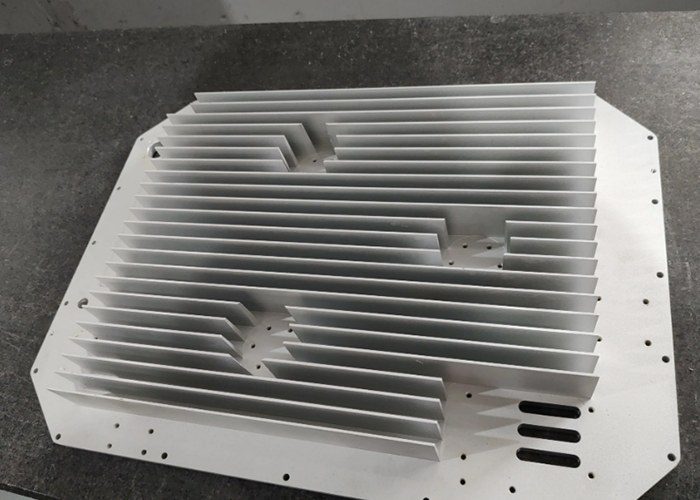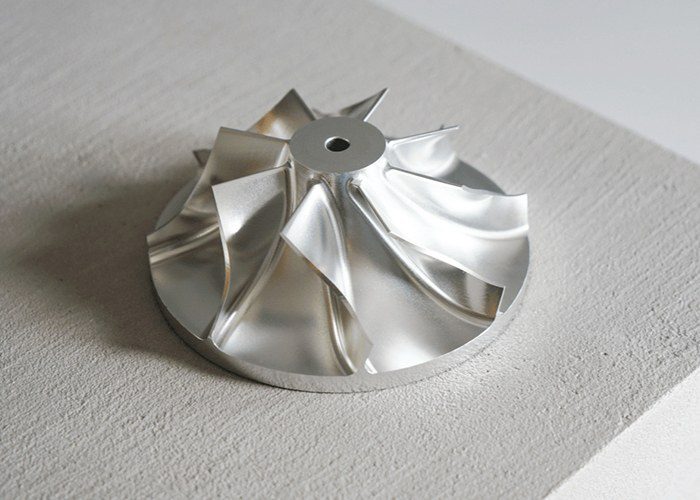
In the realm of aerospace engineering, there is no margin for error. The difference between a successful mission and catastrophic failure often comes down to microns—invisible deviations that can lead to fatigue, cracking, or failure under the extreme stresses of flight. At the heart of this pursuit of absolute perfection lies CNC Machining Aerospace Parts, a manufacturing discipline that serves as the backbone of the aviation and space exploration industries.
CNC (Computer Numerical Control) machining has evolved from a simple automated cutting process into a sophisticated ecosystem of multi-axis mills, lathes, and electrical discharge machines (EDM) capable of sculpting raw metal into complex structural components. For the aerospace sector, this technology is not merely a method of production; it is the primary enabler of modern flight.
The Material Challenge
One of the primary reasons aerospace machining is considered the pinnacle of the manufacturing industry is the materials involved. Unlike consumer goods that often utilize soft aluminum or plastic, aerospace components are typically forged from “exotic” alloys designed to withstand extreme temperatures, corrosion, and stress.
Common materials include Titanium alloys (such as Ti-6Al-4V), Inconel (nickel-chromium superalloys), and hardened stainless steels. These materials are notoriously “difficult to machine.” They exhibit poor thermal conductivity, meaning heat generated during cutting stays in the tool or the workpiece, leading to work hardening. CNC machining aerospace parts requires specialized tooling geometries, rigid machine structures, and advanced coolant delivery systems (such as high-pressure thru-spindle coolant) to manage the heat and prevent metallurgical damage to the part.
The Geometry of Complexity
Modern aircraft engines, landing gear, and structural airframes are designed using generative design and topology optimization. The goal is simple: remove every gram of weight that is not structurally necessary. This results in parts with complex organic geometries, deep pockets, thin walls, and intricate internal channels.
To achieve this, aerospace manufacturers rely heavily on 5-axis CNC machining. Unlike 3-axis machines, which approach the part from three linear directions, 5-axis machining allows the cutting tool or the workpiece to rotate on two additional axes simultaneously. This capability offers two critical advantages for aerospace:
- Reduced Fixturing: Complex parts that would require multiple setups on a 3-axis machine can often be completed in a single setup on a 5-axis machine. Fewer setups mean fewer opportunities for alignment errors (stack-up tolerance) and significantly reduced lead times.
- Undercut Accessibility: 5-axis technology allows tools to reach undercuts and complex contours necessary for aerodynamic efficiency and engine performance without compromising surface finish.
Surface Integrity and Certification
In aerospace, a part is not considered finished simply because it meets the dimensional specifications on a blueprint. Surface integrity is paramount. The machining process leaves a residual stress layer on the surface of the metal. If not controlled, this can lead to micro-cracks that propagate under the vibrational loads of a jet engine or the pressurization cycles of an airframe.
CNC programmers in the aerospace sector utilize advanced toolpath strategies, such as trochoidal milling and high-speed machining (HSM), to maintain constant tool engagement. This preserves the surface integrity of the material. Furthermore, every part produced typically undergoes rigorous non-destructive testing (NDT) post-machining, including fluorescent penetrant inspection (FPI) to reveal microscopic surface flaws, and coordinate measuring machine (CMM) verification to ensure every contour aligns with the digital twin model.
Automation and Lights-Out Manufacturing
The demand for new aircraft—both commercial and defense-related—continues to outpace supply. To meet this demand, aerospace CNC machine shops are increasingly adopting automation. Given that aerospace parts often have cycle times ranging from several hours to days, “lights-out manufacturing” (running automated machines unattended overnight) has become a competitive necessity.
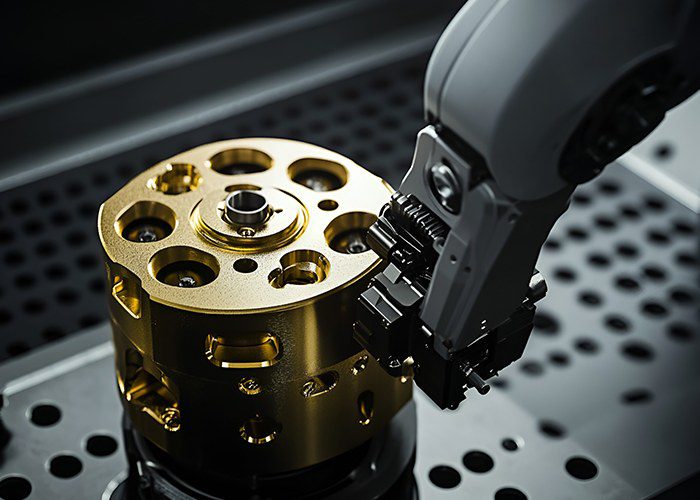
Robotic arms load raw billets into machine vises, while probes within the machine automatically verify the position of the part before cutting begins. If a tool wears out during a midnight operation, automated tool setters detect the breakage, retrieve a fresh tool from the magazine, and continue the operation. This level of automation ensures consistency; a human machinist might have fatigue-induced variability, but a robotic cell produces the thousandth part with the exact same precision as the first.
The Future: Hybrid Manufacturing
As we look toward the future of aerospace, the lines between additive manufacturing (3D printing) and CNC machining are blurring. While machining is subtractive, it is often combined with additive processes to create “near-net shape” blanks.
For high-value components like turbine blades or structural brackets, manufacturers are utilizing metal 3D printing to create a blank that is 95% close to the final shape, followed by precision CNC machining to achieve the critical tolerances and surface finishes that printing alone cannot provide. This hybrid approach reduces material waste—a crucial factor when working with titanium that costs hundreds of dollars per pound—and shortens supply chains for legacy parts that no longer have available castings.
Conclusion
CNC machining aerospace parts is more than a manufacturing process; it is a discipline that sits at the intersection of material science, metrology, and digital programming. The parts produced must survive environments that range from the cryogenic cold of space to the fiery heat of a jet engine’s combustion chamber.
As the aerospace industry pushes toward net-zero emissions, the need for lighter, more efficient airframes and engines becomes even more acute. This pressure translates directly to the CNC machining industry, demanding faster spindle speeds, greater accuracies, and more intelligent automation. Ultimately, every time a passenger looks out an airplane window at the wing gliding silently above the clouds, they are witnessing the enduring result of precision machining—where metal meets mathematics, and safety is the only acceptable outcome.