
The modern automobile is a marvel of engineering, comprising roughly 30,000 individual components that must work in flawless harmony. From the roar of a high-performance engine to the silent hum of an electric motor, the reliability, safety, and efficiency of a vehicle depend on the precision of its parts. At the heart of this manufacturing precision lies Computer Numerical Control (CNC) machining. CNC machined vehicle parts are not just components; they are the critical enablers of modern automotive performance, design, and innovation.
The Imperative of Precision: Form, Fit, and Function
In the automotive industry, the concept of “Form, Fit, and Function” (FFF) is paramount. A part must have the correct geometry (form) to interface perfectly with adjacent components (fit) in order to perform its intended job under extreme conditions (function). CNC machining is the technology that makes FFF a repeatable reality.
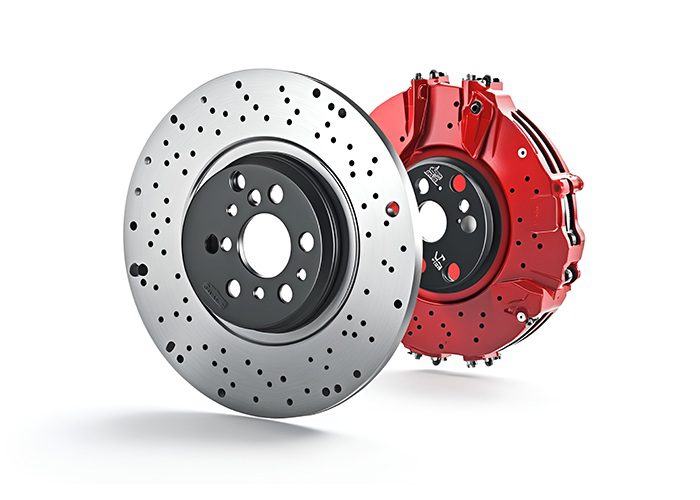
Unlike manual machining, which is susceptible to human error, CNC machining relies on digital blueprints from CAD (Computer-Aided Design) files. These instructions are translated into machine code (G-code) that directs tools with micron-level accuracy. Advanced CNC machines can consistently hold tolerances as tight as ±0.01 mm or even ±0.005 mm. This level of precision is non-negotiable for safety-critical items like brake calipers, steering knuckles, and suspension components, where even a minor deviation can lead to performance issues or catastrophic failure. For instance, the flatness of an engine cylinder head or the tooth profile of a transmission gear must be exact to ensure proper sealing, reduce friction, and withstand immense stress.
From Prototype to Production: Versatility in Volume
One of the greatest strengths of CNC machining is its scalability, serving critical roles in both product development and mass production.
During the prototyping phase, speed is essential. CNC machining allows designers to go from a digital concept to a physical part in a matter of hours or days, a process that would take weeks if hard tooling for molds were required. This rapid iteration allows engineers to test aerodynamic properties, perform strength analysis, and validate assembly processes long before committing to expensive production tooling.
Once a design is finalized, CNC machining seamlessly transitions to production. For high-volume runs of engine blocks or transmission casings, automated CNC machining centers with pallet systems and robotic loaders can run 24/7, ensuring that the 10,000th part is identical to the first. This consistency is vital for modern assembly lines, where parts must fit together perfectly without manual modification.
Mastering Materials: The Shift to Lightweighting and Electrification
The automotive industry is undergoing a massive transformation, driven by the push for fuel efficiency and the rise of electric vehicles (EVs). This has created a surge in demand for lightweight yet strong components, a challenge that CNC machining is uniquely equipped to handle.
CNC machines are material-agnostic, capable of processing everything from traditional cast iron and steel to lightweight aluminum alloys (like 6061 and 7075), high-strength titanium, and even advanced composites. For example, intricate aluminum battery trays and structural housings for EVs are often CNC machined to create complex geometries that maximize space for cells while providing critical protection. Similarly, suspension control arms and knuckles are being machined from billet aluminum to reduce unsprung weight, improving both handling and efficiency.
Handling Complexity: The Multi-Axis Advantage
Modern vehicle designs feature complex curves and deep cavities that are impossible to produce on traditional 3-axis equipment. This is where multi-axis CNC machining, particularly 5-axis machining, shines. By adding two rotary axes to the standard X, Y, and Z linear movements, the cutting tool can approach the workpiece from virtually any direction. This allows for the machining of complex surfaces—such as turbine housings for turbochargers, intricate intake manifolds, and ergonomic interior trim pieces—in a single setup. Reducing the number of setups not only speeds up production but also eliminates the compounding errors that occur when a part is reclamped, resulting in a more accurate final product.
Conclusion
From the engine bay to the boot lid, CNC machined parts are the unsung heroes of automotive quality and innovation. The technology provides the precision required for safety and performance, the flexibility needed for rapid design and customization, and the efficiency demanded for mass production. As the industry continues its shift toward electrification, autonomous driving, and lightweight design, the role of CNC machining will only grow, cementing its status as an indispensable pillar of automotive manufacturing. Whether it is a one-off custom modification for a racing enthusiast or a million-unit run of a critical EV battery component, CNC machining delivers the accuracy, reliability, and complexity that drives the modern world forward.


