In the vast ecosystem of modern manufacturing, few components are as ubiquitous yet overlooked as the machined metal pin. These cylindrical workhorses—simple in appearance yet profoundly essential—serve as the connective tissue of mechanical assemblies, enabling alignment, load transmission, positioning, and rotational motion across virtually every industry. From the engine block of an automobile to the surgical instruments in an operating room, CNC machined metal pins provide the precision and reliability upon which complex systems depend. This article explores the manufacturing processes, material considerations, applications, and quality standards that define these indispensable components.
The Manufacturing Process: From Solid Stock to Precision Component
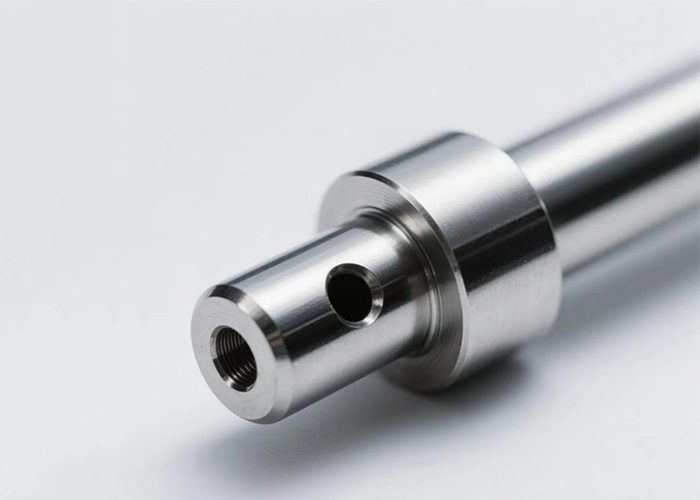
The production of CNC machined metal pins begins with solid metal bar stock—typically stainless steel, brass, aluminum, or alloy steel—which is fed into computer numerical control (CNC) turning centers or Swiss-type automatic lathes. Unlike stamping, which forms metal through high-pressure dies, CNC machining is a subtractive process that removes material with micron-level control, allowing for tighter tolerances, cleaner finishes, and superior repeatability.
The machining workflow follows a systematic sequence. Engineers first define the pin’s specifications through CAD modeling, determining dimensions, tolerances, and surface finish requirements. The CNC program then guides the cutting tools through a series of operations: turning forms the cylindrical body, milling adds flats or grooves, and drilling creates any necessary holes or undercuts. Swiss-type CNC machining is particularly advantageous for producing long, slender pins with complex features, as it supports the workpiece close to the cutting zone, minimizing deflection and enabling extraordinary precision.
Precision and Tolerances: The Hallmark of CNC Machining
The defining advantage of CNC machined pins lies in their dimensional accuracy. While stamped pins typically achieve tolerances of 0.05–0.1 mm, CNC turning can consistently hold tolerances as tight as ±0.005 mm to ±0.01 mm—roughly one-tenth the diameter of a human hair. For the most demanding applications, advanced CNC Swiss machining can achieve tolerances down to ±0.0001 inches (±0.0025 mm).
Surface finish is equally critical. The standard “as-machined” surface roughness averages Ra 3.2 μm, but precision-ground pins can achieve Ra ≤ 0.8 μm for applications requiring smooth electrical interfaces or low-friction assemblies. Secondary operations such as polishing, thread rolling, heat treatment, and precision grinding further enhance performance characteristics.
Material Selection: Matching Properties to Performance Requirements
The choice of material fundamentally determines a pin’s performance in service. Stainless steel (grades 304, 316, and 440) offers exceptional corrosion resistance and high tensile strength, making it ideal for harsh environments, medical devices, and aerospace applications. Brass combines excellent machinability with good electrical conductivity and corrosion resistance, making it a preferred choice for connector pins and electronic components. Aluminum provides lightweight strength for applications where weight reduction is paramount. Alloy and carbon steels deliver superior wear resistance for heavy-duty mechanical applications. For specialized needs, materials such as titanium, bronze, copper alloys, and even exotic metals like Inconel and Kovar are readily machinable.
Applications Across Industries
The versatility of CNC machined metal pins is reflected in their extraordinary range of applications. In the automotive industry, they serve as dowel pins for engine assembly, suspension components, door hinges, and transmission systems. The aerospace and defense sectors rely on precision pins for avionics, payload mounts, drone structural assemblies, and critical fastening systems. In medical device manufacturing, non-magnetic stainless steel pins find use in surgical instruments, diagnostic equipment, and implantable devices where biocompatibility is essential.
The electronics industry depends heavily on machined connector pins for PCBs, IC sockets, communication modules, and power charging systems. These pins must maintain consistent electrical contact while withstanding vibration, repeated mating cycles, and thermal expansion. Industrial machinery applications include hydraulic and pneumatic systems, valves, pumps, gearboxes, conveyor systems, and assembly fixtures.
Quality Assurance: Ensuring Consistency and Reliability
Given the critical roles these pins perform, rigorous quality control is non-negotiable. Manufacturers employ a multi-stage inspection protocol: incoming raw material verification, in-process inspection using coordinate measuring machines (CMMs), and 100% final dimensional and functional testing. First Article Inspection is commonly performed before serial production to confirm compliance with drawing and specification requirements. Many facilities maintain certifications including ISO 9001, AS9100 (aerospace), and ISO 13485 (medical devices), reflecting their commitment to quality.
Conclusion
Though small in stature, CNC machined metal pins are giants in their contribution to mechanical reliability and precision engineering. Their production exemplifies the marriage of advanced manufacturing technology, material science, and meticulous quality control. As industries continue to demand higher performance, smaller form factors, and greater reliability, the role of these precision components will only grow more vital. The CNC machined metal pin—unassuming, precise, and indispensable—remains a true backbone of modern manufacturing.