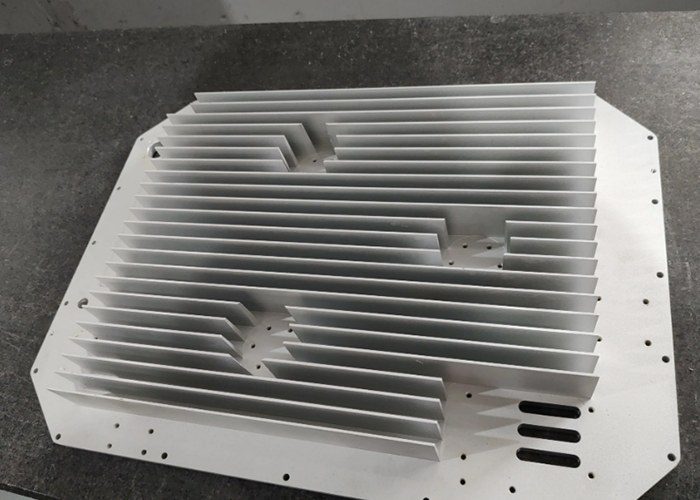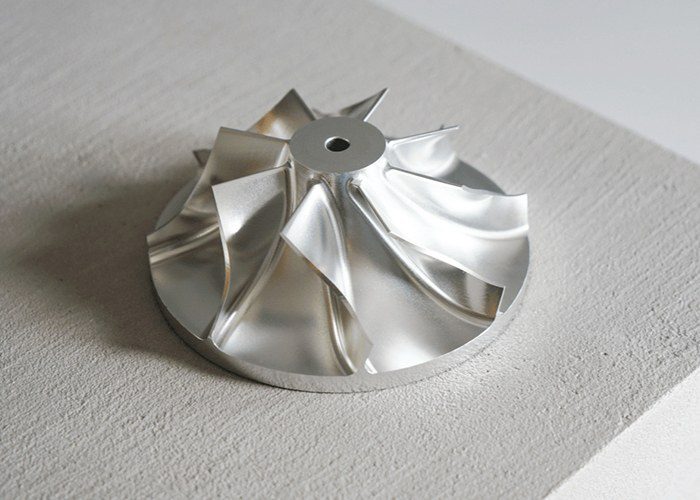
In the rapidly evolving landscape of global manufacturing, precision and adaptability are not merely advantages—they are necessities. Standard, off-the-shelf components often fall short when faced with the unique demands of specialized machinery, aerospace systems, medical devices, or automotive engineering. This is where CNC machined custom industrial parts emerge as a critical solution. By combining computer-controlled accuracy with material versatility, CNC machining allows engineers to transform digital designs into tangible, high-performance components with tolerances measured in microns. This article explores the technical nuances, material considerations, and economic benefits that make custom CNC parts indispensable for modern industry.
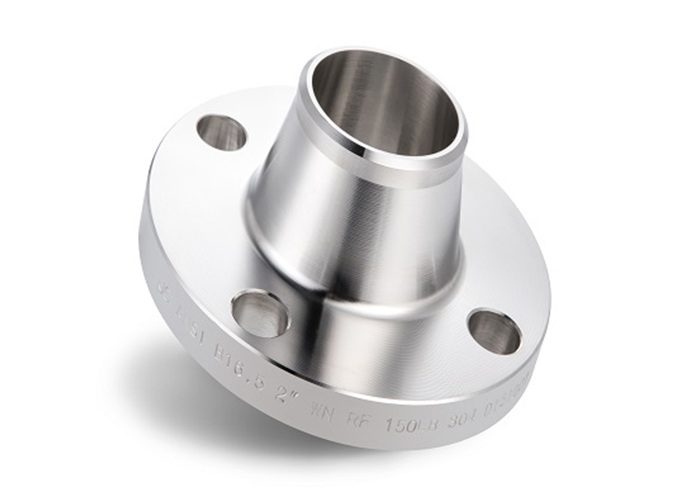
The Essence of Customization
At its core, CNC (Computer Numerical Control) machining is a subtractive manufacturing process. It begins with a solid block of material—metal, plastic, or composite—and uses automated cutting tools to remove excess material according to a 3D CAD model. The “custom” aspect elevates this process from simple production to tailored engineering. Unlike mass production, where parts are designed for generic fit, custom CNC parts are created to solve specific problems. For example, a hydraulic manifold for an offshore drilling rig might require unique port angles and thread sizes that no standard catalog offers. Similarly, a prototype for a next-generation drone may need a one-off aluminum chassis with complex internal channels for cooling. CNC machining delivers these geometries with repeatable precision, even in single-unit quantities.
Unmatched Material Flexibility
One of the greatest strengths of CNC machining is its ability to work with a vast array of engineering materials. For industrial applications, this freedom is invaluable. Machinists can cut hardened tool steels (like D2 or A2), stainless steels (304, 316), aerospace alloys (Inconel, Titanium Grade 5), and non-ferrous metals (7075 aluminum, brass, copper). Furthermore, advanced plastics such as PEEK, Delrin, Ultem, and nylon are routinely machined for lightweight, chemical-resistant, or electrically insulating parts. This breadth means that whether a component needs to withstand extreme heat, corrosive chemicals, or high cyclic loads, there is a machinable material ready to meet the challenge. Custom orders allow engineers to specify not just dimensions but also material certificates, heat treatment, and surface finishes—ensuring full compliance with industry standards like ASTM or ISO.
Precision That Defines Performance
The phrase “industrial parts” often conjures images of rugged, heavy-duty components. However, ruggedness does not preclude precision. Modern multi-axis CNC machines—including 3-axis, 4-axis, and 5-axis mills as well as CNC lathes and Swiss-type lathes—can hold tolerances as tight as ±0.005 mm (±0.0002 inches). For critical applications like fuel injection nozzles, surgical instrument joints, or robotics transmission gears, this level of accuracy dictates performance and safety. Custom machining also excels at producing complex geometries: undercuts, threaded holes, dovetails, and curved surfaces that would be impossible with stamping or casting. Moreover, CNC automation ensures that the first part and the hundredth part are identical, providing consistency essential for assembly lines and maintenance replacements.
Bridging Prototyping and Production
Another unique advantage of custom CNC machining is its scalability. For many industrial projects, the journey begins with a prototype. CNC is ideal for rapid prototyping because it requires no hard tooling or molds. Engineers can iterate a design, machine a revised version overnight, and test it the next day. Once the design is finalized, the same CNC program can produce low to medium volumes economically. There is no need for a costly die-casting mold or injection molding tool. For production runs ranging from 1 to 5,000 units, CNC machining often offers the fastest lead time and lowest total cost. This flexibility supports just-in-time manufacturing, enabling companies to reduce inventory while responding swiftly to market changes or equipment repair needs.
Surface Finishes and Secondary Operations
Custom industrial parts rarely exit the machine ready for final assembly. CNC machining pairs seamlessly with post-processing operations. Parts can be anodized (for aluminum), passivated (for stainless steel), plated (zinc, nickel, chrome), powder-coated, or heat-treated to enhance durability. Additional mechanical operations like grinding, honing, or lapping can achieve ultra-fine surface finishes down to Ra 0.1 μm. For brands seeking traceability, laser engraving serial numbers, barcodes, or logos directly onto the machined part is routine. These finishing touches are crucial for regulatory compliance, maintenance tracking, and overall product lifecycle management.
Cost-Effectiveness Debunking Myths
A common misconception is that custom CNC parts are always expensive. While the per-unit cost is higher than mass-cast components in volumes of 100,000+, the total cost of ownership often favors CNC. Consider downtime: when a critical machine fails due to a broken gear, waiting weeks for a replacement from a supplier can cost thousands of dollars per hour in lost production. Machining that gear locally in 24 hours for $500 is vastly cheaper than a $100 gear delivered in 30 days. Additionally, CNC eliminates warehousing costs; parts are made on demand. For complex assemblies, CNC can produce multi-component parts as a single, machined unit—reducing assembly time, fasteners, and potential failure points.
Quality Assurance and Traceability
Industrial buyers demand proof of quality. Reputable CNC shops operate under ISO 9001:2015 or AS9100D (aerospace) certifications. In-process inspections using coordinate measuring machines (CMM) and optical comparators ensure every critical dimension is verified. Custom parts come with inspection reports, material certifications, and, if required, first-article inspection (FAI) documentation. This traceability is essential for sectors like defense, medical implants, and oil and gas, where a single faulty part can have catastrophic consequences.
Conclusion
CNC machined custom industrial parts represent a convergence of flexibility, precision, and reliability. They empower engineers to break free from the limitations of standard catalogs, designing equipment that fits their exact spatial, mechanical, and environmental requirements. From one-off prototypes to thousand-unit production runs, from aluminum brackets to Inconel turbine blades, CNC machining delivers tangible value: reduced downtime, lower total costs, and superior performance. As industrial challenges grow more complex, the ability to machine custom components on-demand will remain a cornerstone of competitive manufacturing. Whether you are maintaining legacy machinery, developing a breakthrough product, or optimizing a production line, custom CNC parts are not just components—they are solutions cast in metal and plastic.