
In the symphony of modern automotive engineering, where performance, safety, and efficiency are the paramount movements, a silent conductor ensures every note is played to perfection: the CNC machining process. Computer Numerical Control (CNC) machined car parts represent the zenith of precision manufacturing, forming the critical, often unseen backbone of vehicles ranging from mass-market commuters to apex-performing hypercars. This is not merely a manufacturing method; it is the foundational language of reliability, innovation, and excellence in the automotive world.
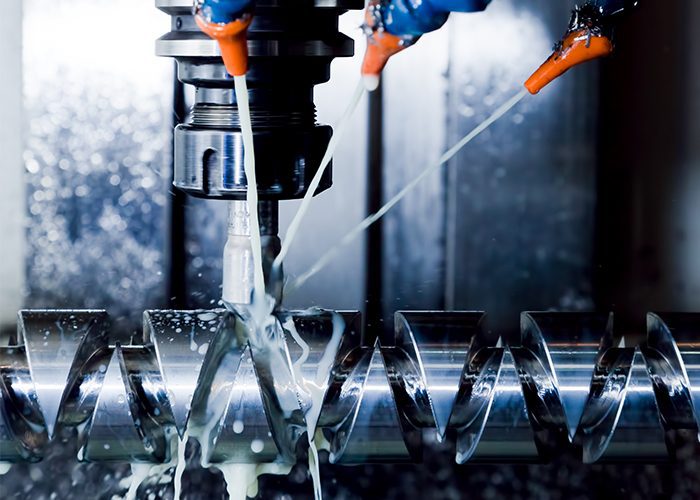
The essence of CNC machining lies in its subtractive process, where blocks of solid material—be it aluminum alloys, stainless steel, titanium, or high-strength composites—are sculpted into intricate components with microscopic accuracy. Guided by digital CAD (Computer-Aided Design) models, multi-axis machines execute programmed toolpaths with relentless consistency. This translates to tolerances measured in microns, surface finishes rivaling mirrors, and geometries so complex they defy conventional casting or forging. For automotive applications, this precision is non-negotiable. A cylinder head, a turbocharger housing, or a suspension knuckle cannot perform reliably if dimensions waver; CNC machining ensures they do not.
The advantages cascade through every stage of automotive design and operation. First is unmatched strength and material integrity. Unlike casting, which can introduce internal voids or inconsistencies, CNC parts are carved from wrought or billet materials with known, uniform grain structures. This results in superior fatigue resistance, crucial for components like uprights, gearbox casings, and steering linkages that endure constant, violent stress. The ability to machine from high-performance alloys like 7075 aluminum or 4140 steel allows engineers to achieve extraordinary strength-to-weight ratios, directly contributing to vehicle agility and fuel efficiency.
Second is the revolution in prototyping and complexity. The automotive development cycle thrives on iteration. CNC machining allows for the rapid production of functional prototypes from the exact intended material, enabling rigorous testing and design validation long before costly production tooling is committed. Furthermore, it liberates designers from the constraints of manufacturability that plague other processes. Internal channels for fluid cooling, lightweighting pockets that retain structural rigidity, and integrated mounting features can all be machined as a single, monolithic part. This reduces assembly points, minimizes potential failure zones, and optimizes packaging within the tight confines of an engine bay or chassis.
Third is the critical role in low-volume and high-performance sectors. For motorsport, classic car restoration, and luxury limited editions, traditional high-pressure die-casting or stamping is economically unviable. CNC machining is the enabler of customization and exclusivity. It allows for the creation of bespoke intake manifolds, lightweight sequential gearshift drums, or replica parts for vintage models where original tooling no longer exists. Each part is a direct digital translation of the engineer’s intent, with no compromise.
The applications are as diverse as the vehicle itself. In the powertrain, CNC-machined parts include:
- Engine Blocks and Cylinder Heads: Where precise coolant and oil galleries, combustion chamber contours, and valve seat angles are paramount for efficiency and power.
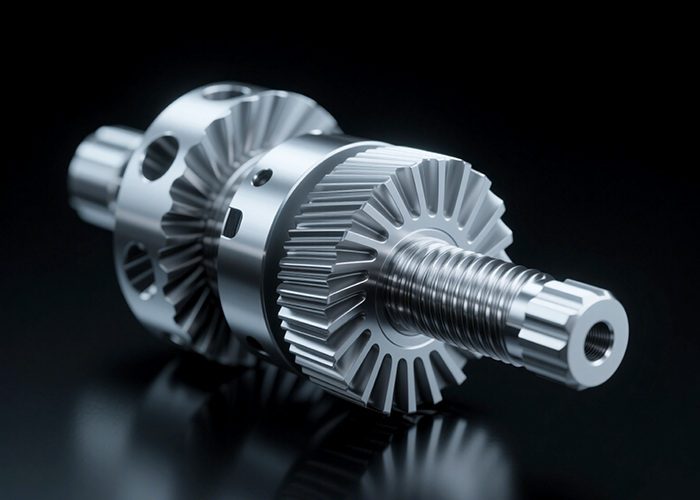
- Transmission Components: Gears, shafts, and differential housings requiring perfect meshing and alignment for seamless power delivery.
- Turbocharger Systems: Complex compressor wheels and housings that must withstand extreme temperatures and rotational speeds.
In chassis and suspension:
- Control Arms and Knuckles: Machined from billet aluminum for optimal stiffness and weight savings, directly influencing handling precision.
- Brake System Components: Such as monobloc calipers, where a single machined piece offers greater rigidity and fluid integrity than multi-part assemblies.
- Steering Components: Ensuring exact response and feedback for the driver.
Even in vehicle electrification, CNC machining is indispensable. It produces precise thermal management plates for battery packs, intricate housings for electric motor stators, and robust connectors for high-voltage systems.
Looking forward, the synergy between CNC machining and advanced technologies like additive manufacturing (3D printing) is forging new frontiers. Hybrid approaches, where near-net-shape parts are 3D-printed and then finish-machined to critical tolerances by CNC, are pushing the boundaries of what’s possible in lightweight, consolidated components.
In conclusion, CNC machined car parts are far more than just metal shaped by computers. They are the physical manifestation of automotive ambition—where theoretical design meets unflinching reality. They provide the structural honesty, the performance certainty, and the innovative freedom that modern vehicles demand. In an industry accelerating toward autonomy, electrification, and ever-greater efficiency, CNC machining remains the steadfast, precise craft ensuring that every component, hidden or visible, performs its role flawlessly. It is the quiet assurance of quality in every turn of the wheel and press of the accelerator, the uncompromising standard that keeps the automotive world moving forward with confidence.


