
In an era defined by rapid prototyping, lean manufacturing, and highly specialized product design, the demand for precision and flexibility has never been greater. Off-the-shelf components often fall short when engineers and designers push the boundaries of what is possible. This is where CNC Custom Parts step into the spotlight. Computer Numerical Control (CNC) machining has revolutionized the way we create bespoke components, offering a perfect blend of accuracy, repeatability, and material versatility. From aerospace turbines to medical implants and automotive drivetrains, custom CNC parts are the silent workhorses driving innovation across every industrial sector.
What Exactly Are CNC Custom Parts?
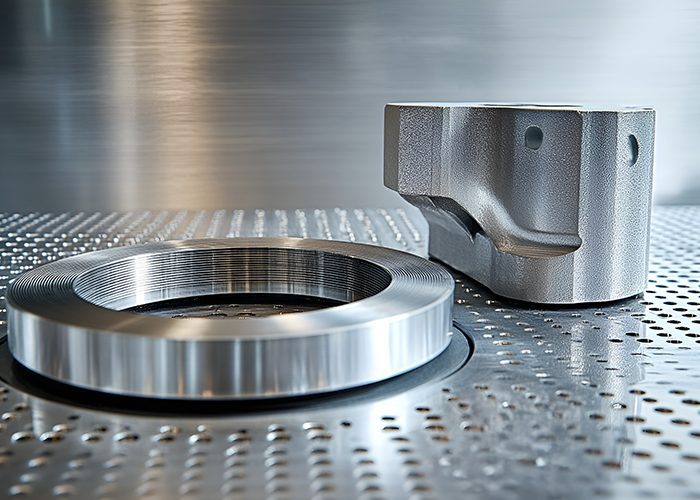
CNC custom parts are components manufactured using automated, computer-controlled machine tools, designed to meet specific client requirements rather than generic industry standards. Unlike mass-produced parts that come from molds or standardized blanks, a custom CNC part is born from a digital blueprint—typically a CAD (Computer-Aided Design) file. This file dictates every movement of the cutting tool, whether it’s a mill, lathe, router, or plasma cutter. The “custom” aspect refers to geometry, tolerances, surface finish, or material selection that is unique to a particular application. In essence, if a part is not available on a shelf and requires a unique design, CNC machining is often the most efficient way to bring it to life.
The Unmatched Advantages of Going Custom
Why choose CNC custom parts over standard components or other manufacturing methods like 3D printing or injection molding? The answer lies in several key advantages.
1. Extreme Precision and Tight Tolerances
CNC machines operate with microscopic accuracy. Standard machining tolerances range from ±0.005 inches to as tight as ±0.0001 inches for high-end equipment. For industries like aerospace or defense, where a fraction of a millimeter can mean the difference between success and catastrophic failure, this level of precision is non-negotiable. Custom CNC parts can be manufactured to exact specifications repeatedly, thousands of times, without deviation.
2. Unrestricted Geometric Complexity
Modern multi-axis CNC machines (5-axis or even 6-axis) can produce shapes that were once considered impossible. Undercuts, deep cavities, complex curves, and intricate internal channels can all be machined from a solid block of material. This freedom allows engineers to optimize parts for weight reduction, fluid dynamics, or structural integrity without worrying about the limitations of traditional tooling.
3. Superior Material Selection
Unlike 3D printing, which is often limited to specific polymers or expensive metal powders, CNC machining works with virtually any solid, engineering-grade material. You can choose from:
- Metals: Aluminum 6061/7075, stainless steel (303, 304, 316), brass, copper, titanium, Inconel, and tool steels.
- Plastics: ABS, Delrin (Acetal), Nylon, PEEK, polycarbonate, and Teflon.
- Composites and Foams.
This versatility is crucial for custom parts that must withstand extreme heat, corrosive environments, or high mechanical loads.
4. Mechanical Integrity
Because CNC custom parts are subtractively machined from a solid billet, they exhibit superior structural integrity compared to additively manufactured or cast parts. There are no layer lines, voids, or internal porosity. The material grain structure remains continuous, resulting in parts that can endure high stress, fatigue, and impact.
5. No Minimum Order Quantities (MOQ)
This is perhaps the most significant advantage for prototyping and low-volume production. Injection molding requires expensive molds that only become cost-effective at tens of thousands of units. CNC machining, however, has minimal setup costs. Whether you need one prototype or 500 bridge-production units, custom CNC parts are economically viable.
The Typical Workflow: From Digital Model to Physical Part
Creating a custom CNC part follows a structured path:
- Design (CAD): The engineer creates a 3D solid model using software like SolidWorks, Fusion 360, or AutoCAD.
- CAM Programming: The CAD file is imported into CAM software, where a machinist defines toolpaths, spindle speeds, feed rates, and tool changes. The output is G-code, the machine’s native language.
- Material Setup: A raw stock of the chosen material is clamped onto the machine bed or into a chuck.
- Machining: The CNC machine executes the G-code, removing material via milling, turning, drilling, or grinding. Modern machines use coolant to manage heat and flush away chips.
- Inspection & QC: The finished part is measured using precision tools like calipers, micrometers, CMM (Coordinate Measuring Machines), or optical comparators to ensure it meets the specified tolerances.
- Post-Processing: Depending on requirements, parts may undergo deburring, anodizing, plating, heat treatment, or powder coating.
Industries That Rely on CNC Custom Parts
The application range is staggering:
- Aerospace: Turbine blades, structural brackets, landing gear components (typically from titanium or Inconel).
- Medical: Surgical guides, orthopedic implants, custom prosthetics, and dental abutments (often from stainless steel or PEEK).
- Automotive & Motorsports: One-off engine blocks, custom suspension arms, gearbox housings, and turbocharger wheels.
- Electronics: Heat sinks, enclosures for RF devices, and connector housings.
- Robotics & Automation: Custom end effectors, joints, and chassis plates.
Challenges and Considerations
While powerful, CNC custom parts are not without trade-offs. The primary drawback is material waste, as subtractive machining can remove up to 80-90% of the original stock, especially for complex geometries. Additionally, complex parts require skilled programmers and longer machining times, which can increase per-unit cost compared to mass casting. However, for custom, low-volume, or high-precision needs, these costs are almost always justified.
The Future: Smart Machining and Hybrid Processes
The evolution of CNC custom parts is moving toward “lights-out manufacturing”—fully automated facilities where robots load materials and machines run 24/7. Additionally, hybrid machines that combine CNC subtractive machining with additive (laser metal deposition) are emerging, allowing parts to be built near-net-shape and then finished with precision.
Conclusion
CNC custom parts are far more than metal or plastic shapes; they are the physical manifestation of human ingenuity. They empower inventors to prototype without bankrupting budgets, allow surgeons to perform life-saving procedures with patient-specific tools, and enable engineers to shave grams off a satellite destined for orbit. In a world that celebrates mass production, the true competitive advantage often lies in the bespoke, the tailored, and the precise. Whether you need a single, complex prototype or five hundred flawless production units, CNC machining remains the gold standard for turning digital dreams into tangible reality.


