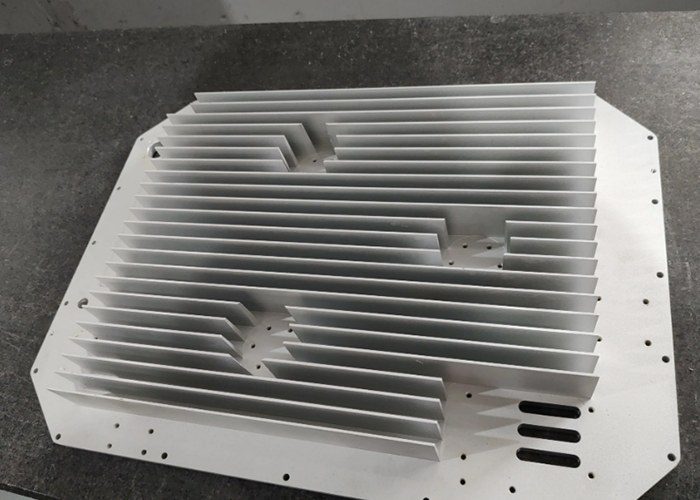
In the competitive landscape of modern manufacturing, the ability to produce complex parts with exacting precision often separates industry leaders from the rest. 5 Axis Milling Service has emerged as the gold standard for companies seeking to push the boundaries of design while maintaining efficiency and quality. Unlike traditional machining methods that require multiple setups and extended lead times, 5-axis technology enables manufacturers to create intricate components in a single operation, revolutionizing how industries approach product development.
Understanding 5-Axis Technology
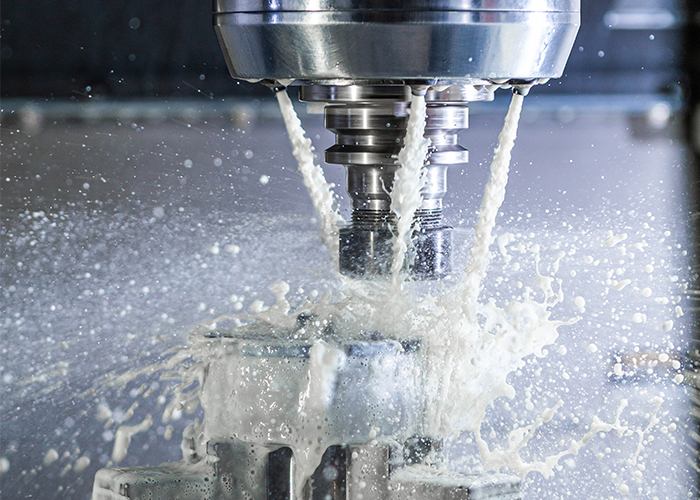
To appreciate the value of 5-axis milling service, it is essential to understand what the “five axes” actually represent. Traditional 3-axis machines operate along three linear axes: X (left-right), Y (forward-backward), and Z (up-down). A 5-axis CNC machine adds two rotational axes—typically referred to as A (rotation around the X-axis) and B (rotation around the Y-axis). This configuration allows the cutting tool or workpiece to tilt and rotate simultaneously, providing access to nearly any angle on the part.
There are two primary configurations for 5-axis machining: trunnion-style machines, where the workpiece rotates on two axes, and swivel-head machines, where the cutting head articulates. Both approaches achieve the same goal: the ability to machine complex geometries without manually repositioning the part.
The Strategic Advantages
Single-Setup Precision
The most significant benefit of 5 axis milling service is the ability to complete multi-surface machining in a single setup. When parts are moved between fixtures on conventional machines, each transfer introduces potential alignment errors. A component requiring machining on five or six sides might need four or five separate setups on a 3-axis machine, each with cumulative tolerance stack-up. With 5-axis technology, the part is clamped once, and all operations occur under a single reference point, dramatically improving dimensional accuracy.
Access to Complex Geometries
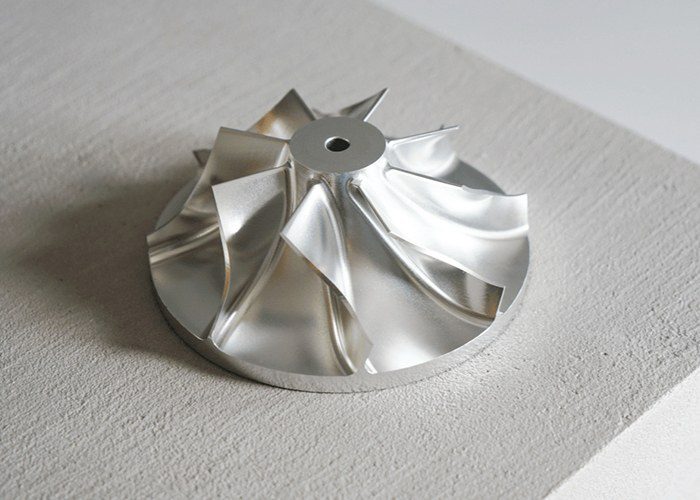
Industries such as aerospace and medical device manufacturing routinely require parts with features that are simply impossible to produce on 3-axis equipment. Turbine blades with twisted airfoils, impellers with curved vanes, and orthopedic implants with organic contours all demand the freedom of movement that only 5-axis machining provides. The cutting tool can approach the workpiece from optimal angles, reaching undercuts and deep cavities that would otherwise require specialized tooling or multiple operations.
Shorter Lead Times and Reduced Costs
While the hourly rate for 5-axis equipment may be higher than conventional machines, the overall project cost often decreases substantially. A part requiring eight hours of machining across multiple setups on a 3-axis machine might be completed in just three hours on a 5-axis system. This reduction in cycle time, combined with eliminated fixture costs and reduced labor, makes 5 axis milling service economically attractive even for complex components.
Superior Surface Finishes
The ability to tilt the cutting tool maintains optimal cutting angles and allows the use of shorter, more rigid tools. Shorter tools reduce vibration and deflection, resulting in smoother surface finishes and eliminating visible tool marks. For industries where aesthetics matter—such as consumer electronics or automotive components—this capability proves invaluable.
Materials and Applications
5 axis milling service accommodates an extensive range of materials. Aluminum alloys (6061, 7075), stainless steels (304, 316), titanium grades, and superalloys like Inconel are commonly machined for demanding applications. Engineering plastics including PEEK, ABS, and polycarbonate offer lightweight alternatives, while composites such as carbon fiber reinforced polymers provide exceptional strength-to-weight ratios.
Aerospace applications dominate the 5-axis landscape, with components ranging from structural bulkheads to complex impellers and blisks. The ability to machine monolithic parts from solid billet eliminates fastener requirements and improves structural integrity.
Medical device manufacturing relies on 5-axis precision for implants, surgical instruments, and prosthetics. The technology enables patient-specific implants with organic geometries that improve clinical outcomes.
Automotive and motorsports applications include engine components, transmission housings, and custom performance parts. The technology supports both prototyping and low-volume production for specialized vehicles.
Selecting a Service Provider
When evaluating a 5 axis milling service partner, several factors warrant consideration. Experience and expertise matter tremendously, as 5-axis programming requires specialized knowledge beyond conventional machining. Seek out providers with a proven track record in your industry.
Equipment capabilities vary significantly between machines. Verify work envelope sizes, spindle speeds, and achievable tolerances. Quality providers should maintain standard tolerances of ±0.005mm for metals and employ coordinate measuring machines (CMM) for verification.
Quality certifications such as ISO 9001:2015 or AS9100D indicate commitment to consistent processes. For regulated industries, these certifications may be mandatory.
Conclusion
5 axis milling service represents more than incremental improvement over conventional machining—it enables entirely new categories of products while streamlining production of existing designs. By consolidating operations, improving accuracy, and expanding geometric possibilities, this technology has become indispensable across aerospace, medical, automotive, and industrial sectors. As manufacturing continues toward greater complexity and tighter tolerances, 5-axis capability increasingly separates competitive suppliers from those struggling to keep pace. For companies facing challenging part geometries or demanding quality requirements, exploring 5 axis milling service may unlock solutions previously considered impossible.