Introduction
In the vast landscape of modern manufacturing, few processes have proven as indispensable as precision CNC turning. Computer Numerical Control (CNC) turning is a subtractive manufacturing technique that uses rotating workpieces and stationary cutting tools to create cylindrical parts with exceptional accuracy. Over the past few decades, this technology has evolved from simple manual lathe operations into a highly automated, digitally controlled process capable of producing components with micron-level tolerances. From automotive shafts and aerospace fittings to medical implants and electronics housings, precision CNC turning is the silent engine driving countless industries. This article explores the fundamentals, advantages, applications, and future trends of precision CNC turning.
How Precision CNC Turning Works
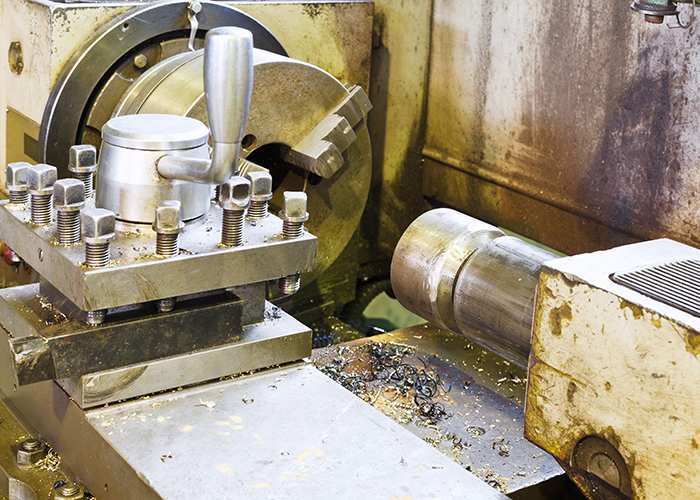
At its core, CNC turning is performed on a lathe – a machine that spins a cylindrical workpiece at high speeds while a stationary cutting tool removes material to shape the part. In a precision CNC turning center, every movement is controlled by a computer program written in G-code, which dictates spindle speed, tool position, feed rate, and coolant flow. The workpiece is securely clamped in a chuck, and the turret (holding multiple tools) indexes automatically to apply the required cutting, drilling, boring, or threading operations. Modern CNC lathes often include live tooling and Y-axis capabilities, enabling milling, off-center drilling, and even hexagon or polygon turning in a single setup. This “done-in-one” approach eliminates errors from multiple fixturings, significantly enhancing precision.
Key Advantages Over Conventional Methods
Precision CNC turning offers several distinct advantages that have made it a cornerstone of advanced manufacturing:
- Unmatched Accuracy and Repeatability: Typical CNC lathes achieve tolerances of ±0.005 mm (5 microns) or better. Once a program is verified, the machine will produce thousands of identical parts with negligible variation – a feat impossible with manual operation.
- Complex Geometry Capability: With multi-axis turning centers (e.g., 5-axis or 9-axis machines), manufacturers can create intricate contours, eccentric diameters, internal splines, and deep bores that would require multiple machines conventionally.
- High Production Efficiency: CNC turning runs unattended 24/7. Bar feeders automatically load raw stock, and part catchers remove finished components. Cycle times are optimized through high spindle speeds (up to 10,000 RPM or more) and rapid traverse rates.
- Reduced Human Error: The process eliminates inconsistencies caused by operator fatigue, judgment variation, or skill differences. Quality control is built into the machine via in-process probing and adaptive control systems.
- Material Versatility: Precision CNC turning works with virtually any machinable material – from aluminum, brass, and stainless steel to exotic alloys like Inconel, titanium, and Monel, as well as engineering plastics such as PEEK and Delrin.
Real-World Applications
The ubiquity of precision-turned parts is evident across industries:
- Aerospace: Turbine engine components, hydraulic fittings, landing gear pins, and fuel system nozzles require extreme reliability. CNC turning produces these from heat-resistant superalloys with surface finishes better than 0.4 µm Ra.
- Automotive: Transmission shafts, brake rotors, steering rack components, and fuel injector bodies are mass-produced via high-volume CNC turning with quick-change tooling.
- Medical: Bone screws, surgical shavers, implantable posts, and dental abutments demand biocompatible finishes and micro-tolerances. Swiss-type CNC lathes excel at these small, complex parts.
- Electronics: Connector pins, heat sink bosses, and smartphone camera rings rely on precision turning for consistent electrical and mechanical performance.
- Defense & Oil & Gas: Valve stems, firing pins, and downhole drilling tools are machined from hardened steel or corrosion-resistant alloys.
The Role of Automation and Industry 4.0
Modern precision CNC turning has embraced the Industry 4.0 paradigm. Smart lathes are equipped with sensors that monitor tool wear, vibration, spindle load, and thermal growth in real time. Data is fed back to the controller, which automatically adjusts feed rates or alerts operators before a tool fails. Collaborative robots (cobots) now load and unload turning centers, and automated guided vehicles (AGVs) transport bins of finished parts to inspection stations. Digital twins – virtual replicas of the turning process – allow programmers to simulate and optimize machining before any metal is cut, reducing setup time by up to 70%.
Challenges and Considerations
Despite its advantages, precision CNC turning is not without challenges. Initial capital investment for a high-end CNC lathe with live tooling can exceed $200,000, not including tooling and software. Skilled programmers and machinists remain in high demand, as writing efficient G-code and selecting optimal cutting parameters requires deep knowledge of materials, tool geometry, and machine dynamics. Additionally, tight tolerances demand rigorous metrology – often using CMM (coordinate measuring machines) or laser scanners – which adds cost and time. Finally, environmental concerns regarding coolant mist and metal chips have led to the adoption of minimum quantity lubrication (MQL) and chip compaction systems.
Future Trends
The future of precision CNC turning is oriented toward even greater intelligence and sustainability. Machine learning algorithms will soon predict tool life with pinpoint accuracy, enabling just-in-time tool changes. Hybrid machines that combine additive manufacturing (laser metal deposition) with CNC turning are emerging, allowing repair of expensive components or production of bimetallic parts. Moreover, energy-efficient servo drives and regenerative braking systems are reducing power consumption. As 5G connectivity becomes widespread, remote monitoring and cloud-based optimization will allow turning centers to be operated from anywhere in the world.
Conclusion
Precision CNC turning has revolutionized how we create cylindrical components, offering a marriage of speed, accuracy, and complexity that manual methods cannot match. From life-saving medical implants to jet engines soaring at 35,000 feet, the silent, precise rotation of a CNC lathe shapes our modern world. As the technology continues to evolve with automation, data integration, and sustainable practices, its role as a manufacturing backbone will only grow stronger. For any industry demanding reliability at microscopic scales, precision CNC turning remains an irreplaceable solution.