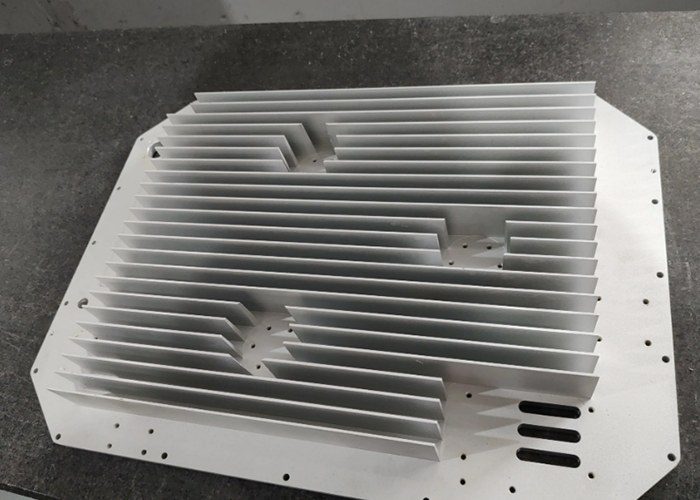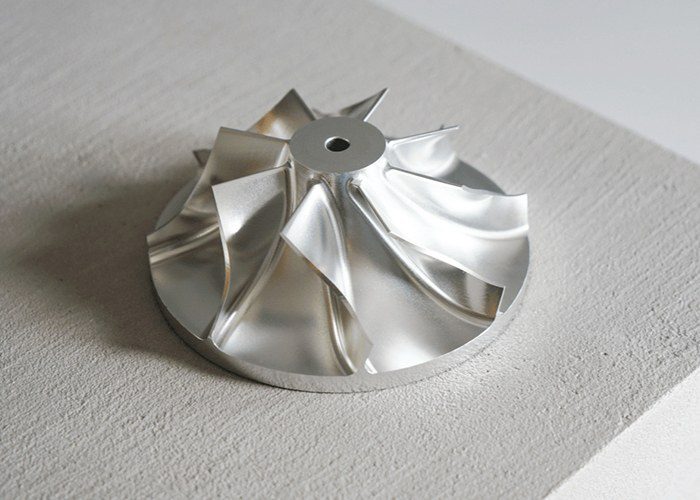
For decades, the hardware industry has been dominated by a simple, powerful formula: mass production. From door hinges and server racks to automotive components and consumer electronics, the logic was immutable—standardization lowered costs, ensured quality control, and enabled global scalability. However, the digital age has quietly shattered this monolithic approach. Today, the concept of the Customized Hardware Product is moving from a niche, high-cost luxury to a strategic necessity across industries. This shift is not merely about aesthetics; it represents a fundamental re-engineering of how we solve physical problems, from factory floors to surgical suites.
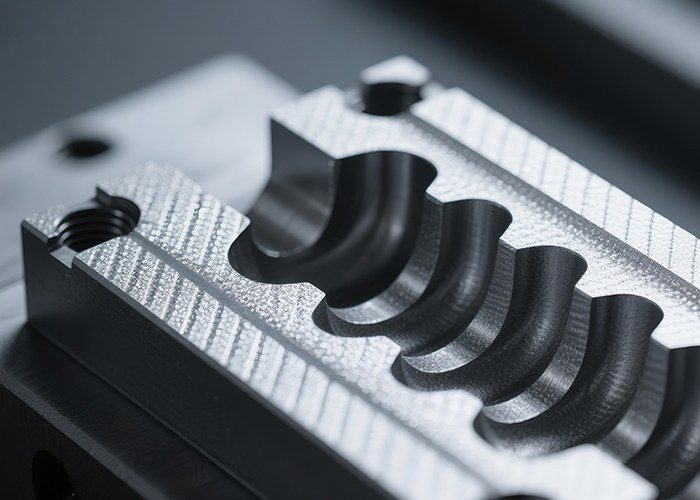
The most immediate driver for customized hardware is the failure of “one-size-fits-all” in complex environments. Consider a modern data center. Standard server racks are efficient, but a company deploying specialized AI accelerators or liquid-cooling systems finds that generic cages waste space, impede airflow, and create thermal inefficiencies. A customized hardware solution—a rack precisely milled to accommodate non-standard GPU widths and integrated cooling channels—can increase computing density by 40% while reducing energy consumption. Similarly, in medical technology, a generic prosthetic limb provides basic function, but a customized titanium implant, designed from a patient’s own CT scan, restores natural movement and eliminates long-term skeletal stress. In these cases, customization isn’t a luxury; it is the difference between adequacy and optimal performance.
The technological enablers of this revolution are additive manufacturing (3D printing) and advanced CNC (Computer Numerical Control) machining, coupled with powerful simulation software. Gone are the days when a “custom” part required expensive molds, long lead times, and minimum order quantities of thousands. Today, an engineer can design a bracket or a housing in CAD software, run finite element analysis to test stress points, and send the file directly to a local fabrication shop. Within 48 hours, a single, perfect iteration can be machined from a solid block of aluminum or printed in carbon-fiber-reinforced nylon. This agility transforms the hardware development lifecycle: prototyping becomes continuous, testing becomes iterative, and the final product is a direct expression of specific user requirements rather than a compromise dictated by a catalog.
From a business perspective, the value proposition of customized hardware products is multifaceted. For the end-user, the primary benefit is functional precision. A custom tool handle that matches an assembly line worker’s hand reduces repetitive strain injuries. A bespoke mounting plate for a solar panel array on an irregular roof maximizes energy capture. For the manufacturer or supplier, offering customization creates a powerful competitive moat. A company that can deliver tailored enclosures, brackets, or mechanisms alongside its core service builds stickier customer relationships. The client cannot simply switch to a commodity supplier because the solution is uniquely theirs.
However, this path is not without significant challenges. The first is cost structure. While 3D printing has lowered the barrier for prototypes, per-unit costs for customized hardware remain higher than mass-produced equivalents. Economies of scale do not magically disappear; they simply shift from production to design. Each custom piece requires engineering hours, file preparation, and often manual post-processing. The second challenge is supply chain fragmentation. A mass producer buys 10,000 identical screws from a single source. A provider of customized hardware must manage a fluid inventory of raw materials (various alloys, polymers, composites) and maintain flexible fabrication capacity. This demands sophisticated digital inventory management and a highly skilled workforce that can transition between jobs seamlessly.
Quality assurance also becomes more complex. In mass production, you test the first unit and the hundredth, assuming uniformity. In a customized workflow, each product is, by definition, different. Therefore, quality control must shift from statistical sampling to inline inspection—using cameras, laser scanners, and even AI to validate each unique geometry against its digital blueprint. This requires an investment in metrology that small custom shops often struggle to afford.
Looking forward, the trajectory is clear: we are moving toward a hybrid model of “mass customization.” Forward-thinking hardware companies are not abandoning scale but are modularizing their products. A high-end bicycle manufacturer, for example, might produce standard frames but offer customized linkage assemblies based on a rider’s weight and flexibility. A server manufacturer might offer a base chassis with a library of customizable front panels, internal brackets, and cable routing guides. This approach captures the efficiency of standardized core components while delivering the functional specificity of custom peripherals.
Furthermore, the rise of generative design software—where algorithms explore thousands of design permutations to meet given constraints—will democratize customization. Soon, a small business owner or even a savvy hobbyist will be able to input load requirements, material preferences, and cost limits, and the AI will generate an optimized, ready-to-make hardware file. The role of the hardware engineer will evolve from drafting individual parts to curating and validating algorithmic outputs.
In conclusion, the customized hardware product represents a maturation of industrial capability. We have moved from an age of scarcity, where standardization was a necessity, into an age of abundance, where digital tools make specificity affordable. The future of hardware is not a single screw that fits every hole, but a universe of components, each perfectly adapted to its moment and purpose. The companies that will thrive are those that learn to treat every product as a potential prototype for the next, and every customer’s problem as a blueprint waiting to be printed. Customization is no longer the exception; it is the new standard of intelligent design.