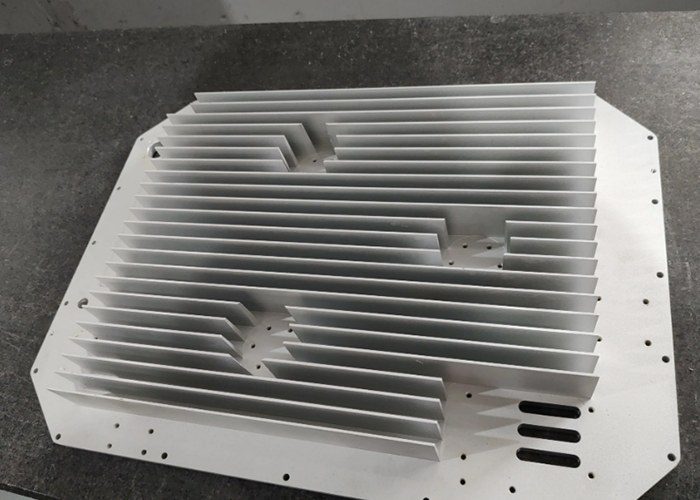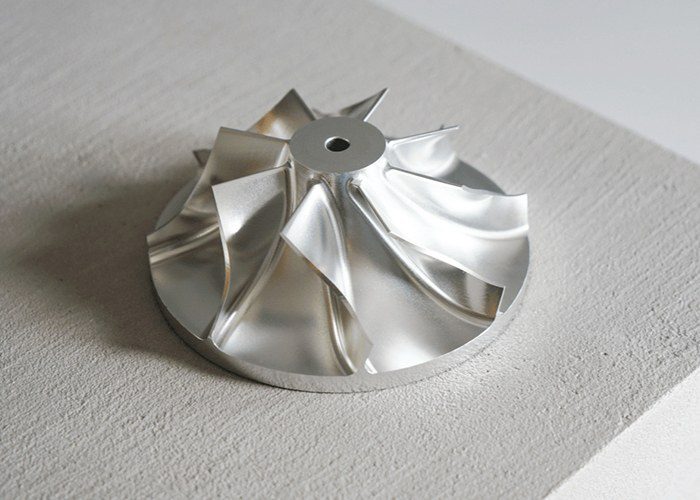
In the relentless pursuit of manufacturing excellence, few technologies have proven as transformative as Computer Numerical Control (CNC) machining. At the heart of this revolution lie CNC metal parts—precision-engineered components that serve as the unsung heroes of countless industries. From the titanium alloy turbine blades in jet engines to the stainless steel surgical tools used in operating rooms, these parts embody the pinnacle of modern subtractive manufacturing. This article explores the intricacies, advantages, applications, and future trajectory of CNC metal parts.
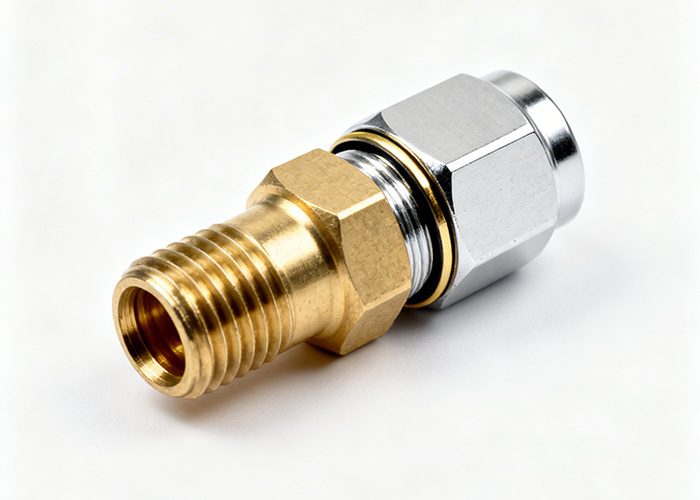
What Are CNC Metal Parts?
CNC metal parts are components produced by removing material from a solid metal block (workpiece) using automated cutting tools controlled by pre-programmed computer code. Unlike manual machining, where an operator guides tools by hand, CNC machining follows a digital blueprint (CAD model) converted into G-code—a language that dictates every movement, speed, and tool change with micron-level precision. The process encompasses milling, turning (lathe), drilling, grinding, and electrical discharge machining (EDM), among others. Common metals used include aluminum (6061, 7075), steel (stainless, tool steel), brass, copper, titanium, Inconel, and magnesium, each chosen for specific mechanical or chemical properties.
Why CNC? The Unmatched Advantages
- Precision and Repeatability: CNC machines achieve tolerances as tight as ±0.005 mm (0.0002 inches). Once a program is proven, the machine can produce thousands of identical parts with virtually no variation—a critical requirement for aerospace and medical implants.
- Complex Geometries: Intricate 3D shapes, internal cavities, undercuts, and threads that would be impossible or extremely time‑consuming manually become routine. 5‑axis CNC machines can approach a part from virtually any angle, reducing setup changes and improving accuracy.
- Material Versatility: From soft aluminum to hardened tool steel (up to 60 HRC) and superalloys like Inconel, CNC machining handles a vast spectrum. This flexibility makes it ideal for prototyping and low‑to‑medium volume production where injection molding would be cost‑prohibitive.
- Automation and Efficiency: Modern CNC setups integrate automatic tool changers, pallet systems, and robotic loaders. Lights‑out manufacturing (running unattended overnight) boosts productivity while reducing labor costs.
- Surface Finish and Consistency: Post‑machining operations (anodizing, passivation, plating) adhere better to uniformly machined surfaces. CNC produces consistent roughness (Ra 0.8 µm or better) without manual polishing.
Key Industries Relying on CNC Metal Parts
- Aerospace: Structural brackets, landing gear components, fuel system bodies, and turbine disks demand heat‑resistant superalloys (e.g., Inconel 718) and titanium for strength‑to‑weight ratios. Any failure is catastrophic, so zero‑defect policies rule.
- Medical: Orthopedic implants (hip/knee replacements), surgical guides, dental abutments, and endoscopic tools are machined from biocompatible metals like titanium‑6Al‑4V and 316L stainless steel. Sterilization and surface integrity are non‑negotiable.
- Automotive: Transmission housings, brake calipers, engine blocks (in high‑performance applications), and suspension components. While casting and forging dominate high‑volume parts, CNC is essential for prototypes, race cars, and aftermarket customizations.
- Electronics: Heat sinks (aluminum or copper), connector pins, smartphone camera frames, and shielding enclosures. Miniaturization requires micro‑machining with tools as small as 0.1 mm diameter.
- Defense & Firearms: Receivers, bolts, suppressors, and sight mounting systems. Mil‑spec tolerances and materials like 4140 chrome‑moly steel or 7075‑T6 aluminum are standard.
- Oil & Gas: Valve bodies, drill tooling, and pipeline fittings from duplex stainless steel or Hastelloy to withstand high pressure and corrosion.
The Manufacturing Workflow
Creating a CNC metal part is a multi‑stage process:
- Design (CAD): Engineer models the part in SolidWorks, Fusion 360, or CATIA.
- CAM Programming: Software generates toolpaths, selects cutting tools, and simulates machining to detect collisions.
- Material Preparation: Raw stock (bar, plate, or near‑net forging) is cut to size.
- Setup: Workholding (vise, chuck, fixture) is secured on the machine table; tools are loaded into the magazine.
- Machining: The program runs; chips fly; coolant flushes away heat and debris.
- Inspection: CMM (coordinate measuring machine) or manual gauges verify dimensions.
- Secondary Operations: Deburring, heat treatment, surface finishing (anodizing, bead blasting, powder coating, or electropolishing).
- Cleaning & Packaging: Parts are ultrasonically cleaned and protected against corrosion.
Quality Control and Challenges
Maintaining quality requires rigorous in‑process checks. Factors like tool wear, thermal expansion, vibration (chatter), and residual stresses can degrade accuracy. Advanced shops employ adaptive machining (real‑time feedback from probes) and tool‑wear monitoring. One persistent challenge is balancing cost: high‑speed machining of aluminum is cheap, but cutting hardened steel or Inconel reduces tool life and increases cycle time. Another issue is internal stress relief—asymmetric material removal can warp thin‑walled parts, necessitating roughing, stress‑relieving, and finishing passes.
Surface Finishing Options
Raw machined parts often undergo finishing for aesthetics, corrosion resistance, or wear protection:
- Anodizing (for aluminum): Type II (dyed decorative) or Type III (hard, wear‑resistant).
- Passivation (stainless steel): Removes free iron to prevent rust.
- Electroless Nickel Plating: Uniform hardness and lubricity.
- Powder Coating: Thick, durable color finish.
- Bead Blasting / Brushing: Matte or satin textures.
The Future: Trends in CNC Metal Parts
As Industry 4.0 unfolds, CNC machining is evolving:
- Hybrid Manufacturing: Combining additive (metal 3D printing) with subtractive CNC to create near‑net shapes and then finish them—saving material and time.
- AI‑Driven Optimization: Machine learning algorithms analyze vibration, load, and temperature to recommend feed/speed adjustments, reducing cycle times by 15‑30%.
- Digital Twins: Virtual replicas of the entire machining process allow offline programming and collision detection without risking a real machine.
- Sustainable Machining: Minimum quantity lubrication (MQL) replaces flood coolant; dry machining for certain alloys; recycling metal chips.
- Micro‑CNC: Growing demand for miniature parts (medical implants, MEMS connectors) drives machines with 0.1 µm resolution.
Conclusion
CNC metal parts are far more than just “shaped metal.” They represent the fusion of digital precision and physical material science—a symbiosis that enables everything from your smartphone’s internal frame to a Mars rover’s wheels. While 3D printing captures headlines, CNC machining remains the workhorse of high‑accuracy, reliable metal components. Its ability to produce complex, strong, and finely finished parts from almost any metal ensures that, decades from now, the quiet whir of a CNC spindle will still be the soundtrack of advanced manufacturing. Whether you are an engineer specifying a prototype or a procurement manager sourcing production quantities, understanding the capabilities and nuances of CNC metal parts is essential to turning your designs into reality.