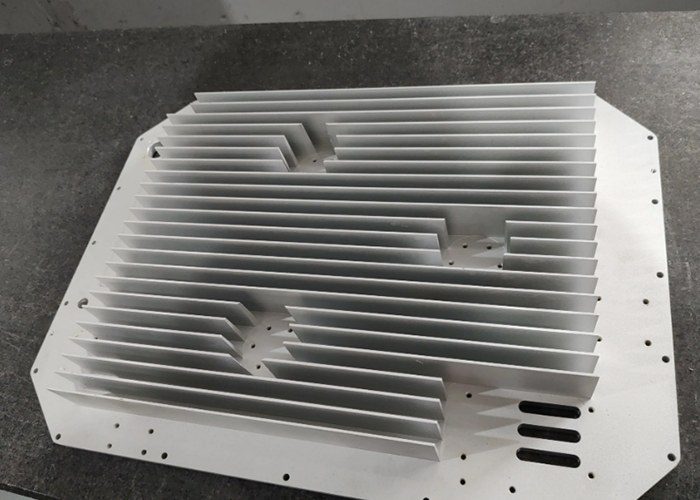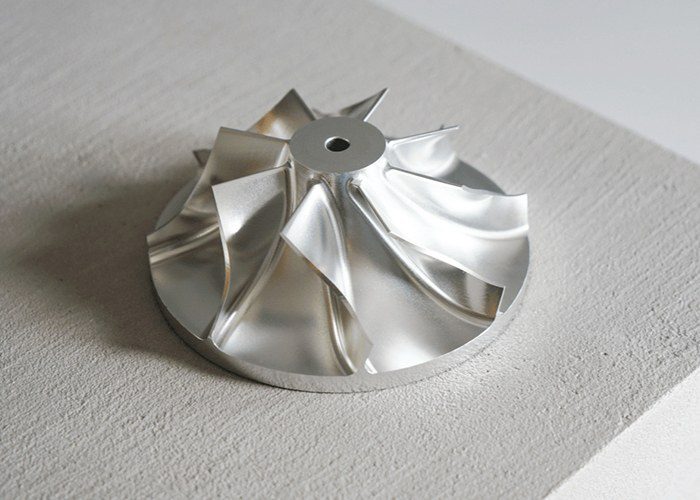
In an era defined by mass production and interchangeable components, the demand for “one-size-fits-all” solutions remains dominant. However, beneath the surface of this industrial standard lies a quiet revolution: the rise of customized metal parts. Although off-the-shelf components provide speed and cost savings, they often force engineers to sacrifice design, efficiency, or durability. Customized metal parts, on the other hand, are not merely replacements; they are strategic enablers. From aerospace turbines to surgical implants and bespoke automotive exhausts, these tailor-made components represent the intersection of precision engineering, material science, and specific functional needs. They are the unsung heroes that allow machines to perform better, last longer, and fit into spaces that generic parts cannot.
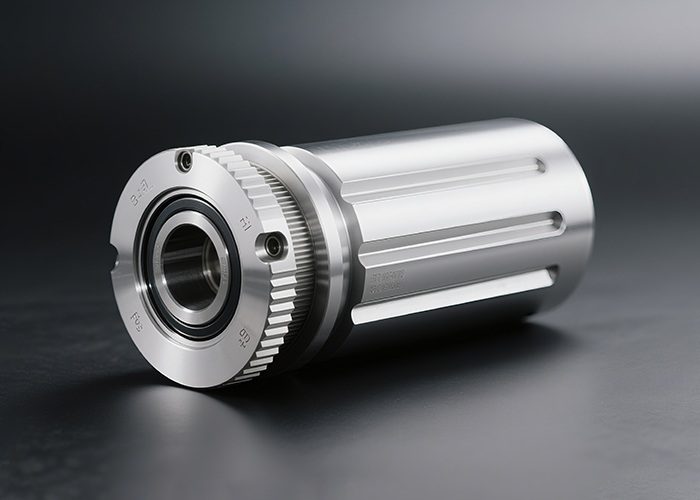
Why Customization Matters
The fundamental advantage of customized metal parts lies in their ability to solve unique problems. Every industry faces distinct challenges: extreme temperatures, corrosive environments, tight spatial constraints, or specific load-bearing requirements. A standard bolt or bracket might physically fit, but it may fail under unusual stress or degrade prematurely in a chemical plant. Customization shifts the paradigm from “adapting the design to the part” to “crafting the part for the design.” This approach eliminates unnecessary weight, reduces assembly steps, and enhances overall system reliability. For instance, a custom-machined aluminum housing for a drone can integrate cooling fins, mounting points, and aerodynamic contours into a single piece, replacing a multi-component assembly that was heavier and less efficient.
The Technological Backbone: From Drawing to Debut
The journey from concept to finished metal component has been transformed by digital manufacturing technologies. Gone are the days when custom parts required expensive hard tooling and long lead times. Today, three core processes dominate the landscape:
- CNC Machining (Subtractive Manufacturing): Computer Numerical Control (CNC) milling and turning remain the gold standard for high-precision custom metal parts. Using solid blocks of metal—aluminum, stainless steel, titanium, brass, or exotic alloys like Inconel—CNC machines carve out complex geometries with tolerances as tight as ±0.005 mm. This process is ideal for prototypes and medium-to-high volume production runs, offering excellent surface finishes and material properties.
- Metal Additive Manufacturing (3D Printing): For parts with internal lattices, organic shapes, or extreme complexity, metal 3D printing (e.g., Direct Metal Laser Sintering) is revolutionary. It builds components layer by layer from metal powder, creating structures impossible with traditional machining. While still costlier per unit, it excels in low-volume, high-value applications such as custom orthopedic implants or lightweight aerospace brackets.
- Sheet Metal Fabrication & Casting: For larger, less intricate parts, laser cutting, bending, and investment casting offer economical routes to customization. These methods are particularly suited for enclosures, brackets, and structural frames.
Material Selection: The Heart of Performance
Customization extends beyond geometry to material choice. Off-the-shelf parts are typically limited to common grades like mild steel or 6061 aluminum. Customization allows engineers to specify exactly the right alloy for the environment. For marine applications, duplex stainless steel or naval brass provides superior corrosion resistance. For high-temperature furnace components, Inconel or Hastelloy withstands creep and oxidation. For lightweight structural parts, 7075-T6 aluminum offers strength comparable to some steels at a third of the weight. Even surface finishes—anodizing, passivation, powder coating, or electroless nickel plating—can be tailored to enhance wear resistance, conductivity, or aesthetic appeal.
Real-World Applications Across Industries
The impact of custom metal parts is tangible across sectors:
- Medical: Patient-specific titanium bone plates and spinal cages, machined to match a CT scan, improve surgical outcomes and reduce recovery times.
- Aerospace: Custom engine mounts, fuel system fittings, and avionics chassis that save grams of weight—which translates to thousands of dollars in fuel savings over an aircraft’s life.
- Automotive (Motorsport): Bespoke suspension components, turbocharger housings, and brake calipers that are engineered for maximum stiffness and minimum unsprung mass.
- Industrial Machinery: Replacement gears, worn shafts, or specialized tooling for legacy equipment no longer supported by original manufacturers. Custom parts can extend the life of million-dollar machines by decades.
- Robotics & Automation: End-of-arm tooling (EOAT), custom grippers, and sensor mounts that allow robots to perform unique pick-and-place tasks.
Navigating the Challenges and Future Trends
Despite its advantages, custom metal parts are not a panacea. The primary barriers are cost and lead time. A single CNC-machined prototype can cost 10–20 times more than a stamped off-the-shelf alternative. Additionally, design for manufacturability (DFM) requires expertise; a poorly designed custom part may be impossible or exorbitantly expensive to produce. However, as digital fabrication tools become more accessible and on-demand manufacturing platforms proliferate, these barriers are eroding. The future points toward “mass customization”—AI-driven design optimization combined with automated quoting and just-in-time production, making custom metal parts viable even for small businesses and hobbyists.
Conclusion
Customized metal parts are far more than a luxury for engineers with large budgets. They are a fundamental tool for innovation, enabling designs that push the boundaries of performance, efficiency, and longevity. Whether it is a one-off prototype to test a radical concept or a run of 10,000 optimized brackets for an electric vehicle, the ability to specify exactly the metal, shape, and finish of a component unlocks solutions that off-the-shelf parts can never provide. In a world where differentiation often determines success, custom metal parts give designers and manufacturers the precision edge they need to build tomorrow’s machines, today.