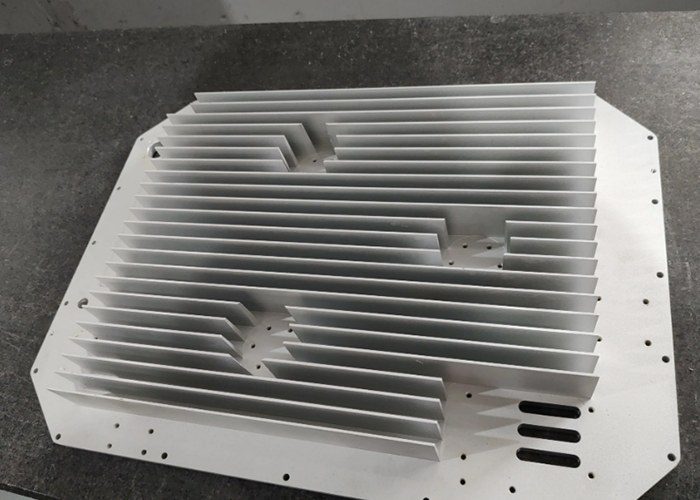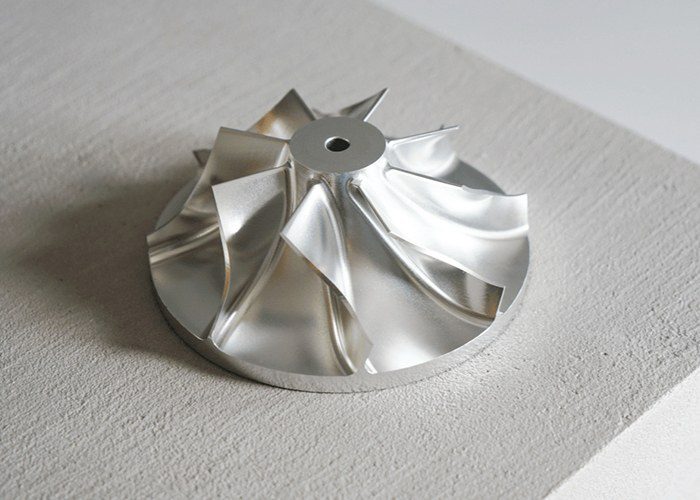
In an era dominated by mass production and standardized components, the demand for uniqueness and precision has paradoxically never been higher. Whether it is a prototype for a medical implant, a specialized bracket for an aerospace experiment, or a bespoke automotive part, the “one-size-fits-all” approach often falls short. Enter Customized CNC Milling—a manufacturing process that merges the brute force of automated machinery with the finesse of tailored design.
Customized CNC (Computer Numerical Control) milling is not merely about cutting metal; it is about translating a unique digital vision into a physical reality. Unlike conventional milling, which often relies on generic pre-set parameters, customized milling focuses on single-unit or small-batch production where every contour, thread, and tolerance is specified by the client. This article explores the mechanics, advantages, and transformative potential of this specialized service.
The Anatomy of Customization
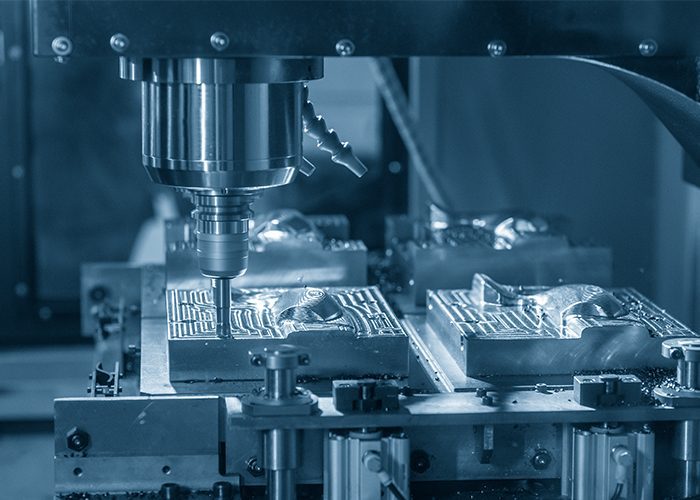
At its core, CNC milling involves a rotating cylindrical cutting tool that moves along multiple axes to remove material from a workpiece. Standard milling produces identical parts by the thousands. Customized milling, however, begins with a different question: “What do you need that doesn’t exist?”
The process starts with a CAD (Computer-Aided Design) file. In a custom scenario, this file is unique—perhaps reverse-engineered from an obsolete part or designed from scratch to solve a specific engineering problem. The machinist then uses CAM (Computer-Aided Manufacturing) software to generate a unique toolpath. This is where the “customization” becomes tangible. The programmer decides which end mills, drills, or fly cutters to use, how fast to spin them, and what trajectory to follow. For complex custom parts, 5-axis milling machines are often employed, allowing the tool to approach the workpiece from virtually any direction without manually repositioning the part.
The Advantages of Going Custom
Why choose customized CNC milling over 3D printing or manual machining? The answer lies in three distinct advantages: material integrity, precision, and scalability.
First, regarding materials, CNC milling is unmatched in its versatility. While additive manufacturing struggles with certain high-performance alloys, customized milling can effortlessly shape titanium, Inconel, hardened steel, brass, and engineering plastics like PEEK or Delrin. If a custom part needs to withstand extreme heat or stress, milling is likely the only viable option.
Second, precision is the hallmark of CNC milling. Standard tolerances for customized jobs often fall between ±0.005 inches and ±0.0005 inches. For industries like oil and gas or medical devices, where a 0.001-inch deviation could cause a seal to fail or a bone plate to loosen, this level of accuracy is non-negotiable. Customized milling delivers tight GD&T tolerances unattainable with generic processes.
Third, for low-volume production (1 to 100 units), customized milling is surprisingly cost-effective. While the setup cost might be higher than 3D printing, the per-unit cost drops significantly if you need ten identical custom parts. Moreover, the surface finish of a milled part is superior to most printed parts, often eliminating the need for secondary polishing operations.
Navigating the Challenges
Despite its power, customized CNC milling is not a magic bullet. The primary barrier is complexity. Designing a part for milling requires adhering to “design for manufacturability” (DFM) rules. Internal sharp corners, for example, are impossible because milling tools are round. A good custom machining service will collaborate with the client to modify designs—adding fillets or redesigning deep cavities—without sacrificing functionality.
Cost is another factor. Because every toolpath is unique, programming time can be significant. A simple custom bracket might take an hour to program; an intricate impeller for a turbocharger could take a full day. Clients must balance the need for uniqueness against the budget for engineering hours.
Real-World Applications
The scope of customized CNC milling is breathtaking. In the medical field, surgeons rely on custom-milled drill guides and spinal cages tailored to a specific patient’s anatomy based on CT scans. In motorsports, engineers mill custom suspension components to shave off grams while maintaining structural rigidity. Even in consumer goods, watchmakers use micro-CNC milling to produce limited-edition watch dials with textures that cannot be stamped or cast.
One compelling case is the restoration of vintage machinery. When a gear breaks in a 1920s lathe, you cannot buy a replacement. Customized CNC milling allows a machinist to scan the broken gear, recreate its odd-tooth profile in CAD, and mill a perfect replica from a solid block of bronze—preserving history through technology.
The Future of Bespoke Manufacturing
As technology evolves, customized CNC milling is becoming more accessible. Cloud-based CNC platforms now allow clients to upload a CAD file and receive an instant quote for a custom part. Meanwhile, hybrid machines that combine milling with additive manufacturing are emerging, allowing for the creation of parts with complex internal lattices that are then precision-milled on the exterior.
Furthermore, AI-driven toolpath optimization is reducing programming time, making small-batch customization more economical. The old dichotomy of “custom but expensive” versus “cheap but mass-produced” is fading. We are entering an era of agile manufacturing, where a custom aluminum housing or a specialized fixture can be milled and shipped within 48 hours.
Conclusion
Customized CNC milling stands as a testament to human ingenuity in the age of automation. It rejects the notion that precision manufacturing must be anonymous and uniform. Whether you are an engineer prototyping a disruptive technology, a hobbyist restoring a classic car, or a medical professional saving a life with a custom implant, this process offers a bridge between the digital design and the physical world.
It requires skill, patience, and a willingness to embrace complexity. But the reward is unparalleled: a component that fits perfectly, performs flawlessly, and exists nowhere else on earth. In the grand workshop of modern industry, customized CNC milling is the craftsman’s scalpel—precise, adaptable, and indispensable.