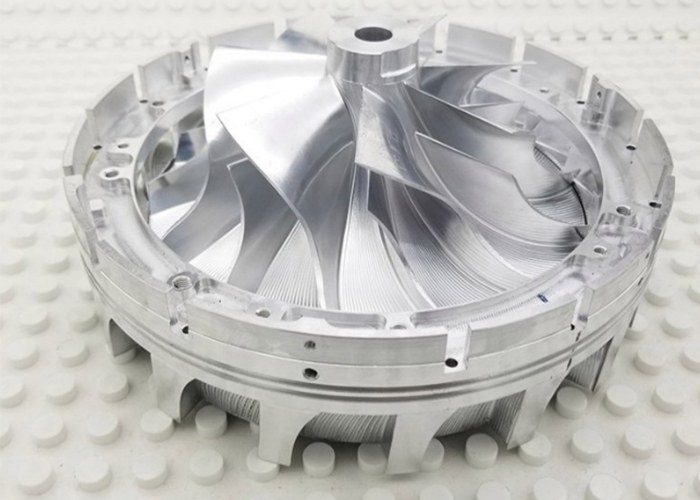
The global aircraft machined components market, valued at USD 28.12 billion in 2024, is projected to reach USD 43.71 billion by 2032, driven by rising air travel demand and the continuous push for lighter, more fuel-efficient aircraft . Behind every commercial jet and defense platform lies a vast supply chain of precision-machined components—brackets, housings, shafts, and structural fittings—that must withstand extreme conditions while meeting tolerances measured in microns. This is the world of CNC machining for aircraft parts, where the margin for error is essentially zero.

Why Aerospace Demands More from CNC Machining
Aerospace components are not like commercial parts. They operate in environments of extreme temperature variation, constant vibration, and fatigue-inducing stress cycles. A single defective bracket can ground a fleet or delay a launch . This consequence of failure drives every aspect of aerospace CNC machining, from material selection to inspection protocols.
The materials themselves present formidable challenges. Aluminum alloys like 7075 and 2024 are favored for structural brackets and airframe components due to their high strength-to-weight ratio . Titanium alloys, particularly Ti-6Al-4V, dominate engine mounts and critical structural applications where corrosion resistance and strength at elevated temperatures are essential . For the hottest sections of turbine engines, nickel-based superalloys such as Inconel 718 are specified, despite their notorious difficulty in machining .
These materials exhibit poor thermal conductivity, meaning cutting heat transfers into the tool rather than the chip. They also work-harden rapidly, requiring careful control of cutting parameters to avoid surface damage that could initiate fatigue cracks . Successfully machining them demands not just capable machines, but deep process knowledge.
The Multi-Axis Advantage
Complex aerospace geometries—curved surfaces, deep cavities, multi-angle holes—are where multi-axis CNC machining proves indispensable. Five-axis machining allows complex, contoured parts to be produced in a single setup, reducing repositioning errors and improving dimensional consistency . For components like turbine blades with twisting, variable cross-sections, the ability to continuously orient the cutting tool relative to the workpiece surface is not a luxury but a necessity.
Consider the tolerances involved. A turbine blade may have a profile tolerance of just 0.04 mm, with leading and trailing edges requiring even tighter control at 0.02 mm . The blade’s edge thickness can measure only 0.1 mm. Achieving these specifications requires machine tools with exceptional dynamic stiffness and thermal stability. Modern five-axis machining centers address this through active cooling systems that maintain temperature fluctuations within 1.2°C over 24 hours of continuous operation, and vibration damping designs that reduce chatter during heavy cutting .
AS9100D and the Documentation Imperative
In aerospace manufacturing, the part is only half the deliverable. The other half is the paper trail.
AS9100D serves as the baseline quality management standard, building on ISO 9001 with requirements specific to flight hardware. It mandates risk management throughout production, configuration control for drawings and specifications, counterfeit parts prevention, and full material traceability . A shop without current AS9100D certification is not set up for aerospace work—period.
Material traceability means every finished part can be traced back to the specific heat lot of raw material from which it was machined. Mill certificates must be on file, heat lot tracking maintained through production, and lot separation enforced on the shop floor . If a material issue surfaces years later, the manufacturer must be able to identify every affected part.
First Article Inspection (FAI) per AS9102 is another non-negotiable. Before production begins, the first production-representative part is thoroughly inspected against the drawing, specifications, and process plan. This is not a formality—it is a validation that the manufacturing process is capable of producing conforming parts .
For special processes like heat treating, welding, and chemical processing, NADCAP accreditation is often required. These are operations where the quality of the result cannot be fully verified by post-process inspection alone. A wrong heat treat temperature can weaken metal without visible indication; only process control and accreditation ensure reliability .
From Prototype to Production
Aerospace programs rarely begin with mass production. Development cycles typically start with prototypes, test articles, and qualification units before moving to full-rate manufacturing. Small-batch CNC machining accommodates this reality, allowing manufacturers to produce limited quantities for design verification and functional testing without investing in hard tooling .
This flexibility extends to design changes. When test results reveal the need for modification—thicker walls, different hole patterns, revised corner radii—CNC machining adapts through programming changes rather than new fixtures or molds. The same five-axis machine that produced the original design can produce the revised one, often within days.
The market reflects this demand. Aerospace CNC machining services represent a growing segment, driven by increasing aircraft production rates and the constant need for spare parts to sustain existing fleets . As commercial aviation expands and defense budgets modernize aging fleets, the demand for precision-machined components will only intensify.
The Bottom Line
CNC machining aircraft parts is a discipline defined by extremes—extreme materials, extreme tolerances, extreme consequences of failure. It requires machine tools with the rigidity and thermal stability to hold microns, quality systems with the rigor to document every step, and process knowledge to machine alloys that seem designed to resist cutting. The companies that succeed in this space understand that the cheapest quote is often the most expensive, because rework, scrap, and failed audits cost far more than getting it right the first time .