
In the world of aerospace engineering, there is no room for error. A single flawed component can mean the difference between a successful mission and a catastrophic failure. Whether it is a commercial airliner carrying hundreds of passengers, a fighter jet executing high-G maneuvers, or a satellite orbiting the Earth, every part must perform flawlessly under extreme conditions. This is why CNC machined aerospace parts have become the backbone of modern aviation and space exploration.
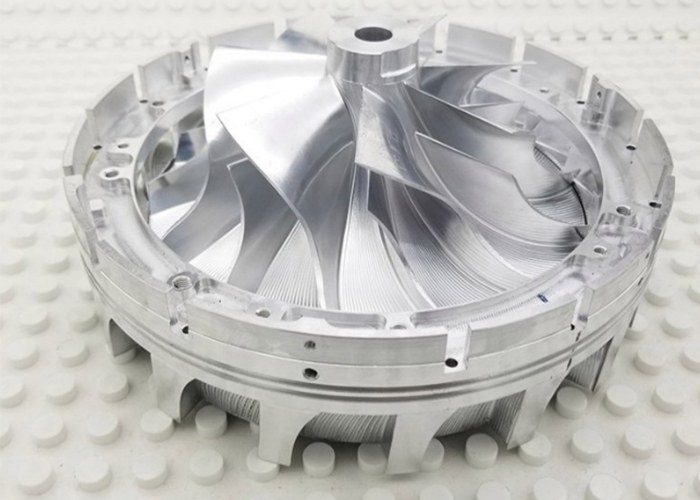
Computer Numerical Control (CNC) machining is a subtractive manufacturing process in which pre-programmed computer software dictates the movement of factory tools and machinery. For aerospace applications, this technology offers an unmatched combination of precision, repeatability, and material versatility. As the industry pushes toward lighter, stronger, and more fuel-efficient aircraft, the role of CNC machining has never been more critical.
The Demands of Aerospace Manufacturing
Aerospace components operate in environments that most machinery never encounters. They must withstand extreme temperatures, from the freezing cold of high altitudes to the blistering heat of engine combustion. They face intense vibration, high pressure, and corrosive chemicals. At the same time, they must be as lightweight as possible to improve fuel efficiency and payload capacity.
These conflicting demands—strength versus weight, durability versus precision—require manufacturing processes that can handle complex geometries and exotic materials. CNC machining excels here. Unlike casting or forging, which often require secondary operations and can introduce internal defects, CNC machining produces parts with tight tolerances, excellent surface finishes, and consistent quality.
Materials Matter
One of the primary reasons CNC machining is indispensable in aerospace is its ability to work with high-performance materials. Common aerospace materials include:
- Titanium alloys: Known for their exceptional strength-to-weight ratio and corrosion resistance, titanium alloys are used in airframes, engine components, and fasteners. However, titanium is notoriously difficult to machine, requiring specialized tooling and careful heat management.
- Aluminum alloys: Lightweight and easy to machine, aluminum is used for structural components, fuselage panels, and wings. High-strength alloys like 7075 and 2024 are common in aerospace applications.
- Inconel and nickel alloys: These superalloys retain their strength at high temperatures, making them ideal for jet engine turbine blades and exhaust systems.
- Stainless steel: Used in hydraulic systems, fuel lines, and structural brackets, stainless steel offers a balance of strength and corrosion resistance.
- Composites: While not metals, carbon-fiber reinforced polymers (CFRP) are increasingly machined using CNC equipment for drilling and trimming operations.
Each material presents unique challenges. Titanium, for example, conducts heat poorly, causing heat to concentrate at the cutting edge and leading to rapid tool wear. Inconel work-hardens quickly, requiring slow speeds and high coolant pressure. Successful aerospace CNC machining demands not only the right machines but also deep metallurgical knowledge and optimized cutting strategies.
Tolerances and Quality Control
In aerospace, tolerances are measured in microns. A typical CNC machined aerospace part might have tolerances of ±0.001 inches (0.025 mm) or tighter. For critical engine components, tolerances can be even more stringent. Achieving such precision requires:
- Advanced multi-axis CNC machines: 5-axis machining centers allow complex parts to be produced in a single setup, reducing errors caused by repositioning.
- High-speed spindles: These enable fine surface finishes and efficient material removal.
- In-process inspection: Probing systems and laser scanners verify dimensions during machining, catching deviations before they become defects.
- Final quality assurance: Coordinate Measuring Machines (CMMs), optical comparators, and non-destructive testing (NDT) methods like X-ray and dye penetrant inspection ensure every part meets specifications.
Traceability is another critical factor. Every aerospace part must be traceable back to its raw material batch, and every machining operation must be documented. This level of record-keeping is essential for safety audits and accident investigations.
Applications Across the Aerospace Spectrum
CNC machined aerospace parts are found in virtually every system of an aircraft or spacecraft:
- Engine components: Turbine blades, compressor disks, combustion chambers, and fuel nozzles.
- Airframe structures: Wing ribs, spars, fuselage frames, and landing gear components.
- Avionics and control systems: Housings, brackets, and heat sinks for electronic equipment.
- Hydraulic and pneumatic systems: Manifolds, valves, and actuators.
- Spacecraft: Structural panels, propulsion system parts, and satellite components.
In each case, the ability to produce complex, lightweight, and durable parts quickly and consistently is what makes CNC machining the preferred method.
The Future of CNC Machining in Aerospace
The aerospace industry is evolving rapidly. Trends such as electric propulsion, urban air mobility, and reusable rockets are creating new demands for manufacturing. CNC machining is adapting in several key ways:
- Automation and robotics: Lights-out machining, where factories run unattended overnight, is becoming more common. Robotic loading and unloading systems keep spindles running 24/7.
- Additive manufacturing integration: Many aerospace companies now combine 3D printing with CNC machining. A part might be printed near-net shape and then CNC machined to final tolerances, saving material and time.
- Digital twins and simulation: Virtual models of machining processes help predict tool wear, optimize cutting paths, and reduce trial-and-error.
- Sustainable machining: Minimum quantity lubrication (MQL), cryogenic cooling, and energy-efficient machine tools are reducing the environmental footprint of aerospace manufacturing.
Conclusion
CNC machined aerospace parts are more than just components—they are the product of precision engineering, advanced materials science, and rigorous quality control. From the turbine blades that power jet engines to the structural frames that hold an aircraft together, CNC machining enables the performance, safety, and efficiency that modern aviation demands.
As aerospace technology advances, so too will CNC machining. The pursuit of lighter, stronger, and more reliable parts will continue to drive innovation in multi-axis machining, automation, and digital manufacturing. For engineers and manufacturers, the sky is no longer the limit—it is just the beginning.


