In today’s fast-paced manufacturing landscape, the ability to produce large quantities of precision components quickly, consistently, and cost-effectively is a competitive advantage that separates industry leaders from the rest. High volume CNC turning service has emerged as the cornerstone of this capability, enabling manufacturers across automotive, aerospace, medical, and industrial sectors to scale production without compromising on quality. This article explores what high volume CNC turning entails, its key advantages, and why it has become indispensable for modern mass production.
What Is High Volume CNC Turning?
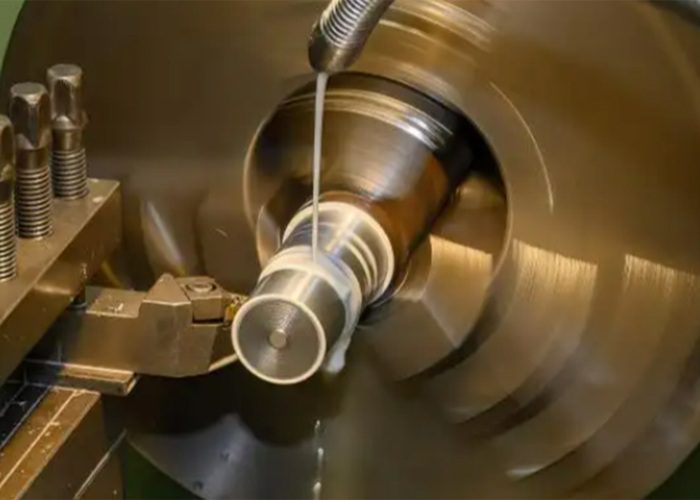
High volume CNC turning refers to the production of large quantities of precision parts—typically ranging from thousands to tens of thousands of units—using Computer Numerical Control (CNC) turning processes. Unlike prototyping or low-volume runs that prioritize design flexibility, high volume CNC turning focuses on repeatability, process stability, and throughput. Once a design is validated, production workflows are optimized to ensure consistent part quality across every batch while minimizing setup time, machining variability, and inspection overhead.
CNC turning excels in high-volume manufacturing, leveraging both the uniform cylindrical nature of the components and the consistency of repeatable machining cycles. This repetition allows manufacturers to fine-tune every aspect of the process—from tool paths to cutting parameters—to achieve maximum efficiency. Typical components produced through high volume CNC turning include shafts, pins, bushings, fasteners, valve fittings, and other rotationally symmetric parts.
The Technology Behind High Volume Production
Modern CNC turning centers are engineered specifically for the demands of high-volume production. Machines such as the Mazak QRX-50MSY, for instance, are designed to provide rapid, versatile performance for small, intricate parts in a compact footprint. These advanced turning centers combine milling capability, a second turning spindle, and Y-axis functionality, enabling complex parts to be completed in a single setup.
The modular design of contemporary CNC turning equipment keeps machine costs down while maximizing return on investment. With main and second spindles delivering maximum speeds of 6,000 rpm and turrets featuring up to 24 tool positions, these machines can achieve remarkably short cycle times. Many facilities now operate their CNC turning centers 24 hours a day, with some achieving “lights-out” manufacturing—unattended production overnight and on weekends.
Key Advantages of High Volume CNC Turning
Unmatched Precision and Consistency
One of the most compelling advantages of high volume CNC turning is its ability to maintain exceptionally tight tolerances across massive production runs. Modern CNC turning services routinely achieve tolerances as tight as ±0.005mm, ensuring perfect fit and assembly in demanding applications. This level of precision is critical in industries where component failure is not an option—aerospace, defense, and medical devices, to name a few.
CNC turning ensures consistent geometric precision across repeat runs, making it ideal for high-volume production. When diameters, bores, and threads must stay aligned relative to a single axis across thousands of parts, CNC turning provides a natural advantage. This process stability makes it a reliable foundation for high-volume machining, where even small inconsistencies can compound into significant production problems.
Cost Efficiency at Scale
As production volume increases, the cost per part in CNC turning decreases significantly. CNC lathes are widely used for high-volume production due to their speed, consistency, and cost efficiency. Shorter cycle times directly reduce machine costs per component, while longer tool life minimizes tool changes and associated costs. Additionally, the ability to run machines unattended—particularly with bar feeders and robotic tending systems—reduces labor costs and enables continuous production.
Material Versatility
High volume CNC turning services work with an extensive range of materials, including aluminum, stainless steel, brass, copper, titanium, nickel alloys, and various engineering plastics. This versatility allows manufacturers to select the optimal material for each application without being constrained by process limitations. The ability to machine both metals and plastics makes CNC turning suitable for everything from heavy-duty industrial components to lightweight medical devices.
Applications Across Industries
The versatility of high volume CNC turning makes it indispensable across multiple sectors:
Automotive Industry: From transmission gear shafts and engine valve lifters to brake system pistons and steering components, CNC turning produces the critical rotating parts that keep vehicles moving. Shafts alone accounted for 37.11% of the metal-precision turned product manufacturing market in 2025.
Aerospace Sector: Aerospace components demand the highest levels of precision and reliability. CNC turning services produce fittings, connectors, and structural components that must withstand extreme conditions while maintaining exacting tolerances.
Medical Devices: Surgical instruments, implants, and diagnostic equipment parts require biocompatible materials and impeccable surface finishes—both of which are achievable through high precision CNC turning.
Industrial Equipment: Pumps, valves, hydraulic components, and countless other industrial parts rely on high volume CNC turning for consistent quality and reliable performance.
Quality Control in High Volume Production
Maintaining quality across thousands or tens of thousands of parts requires sophisticated inspection and quality control systems. Leading high volume CNC turning service providers employ advanced in-house quality control powered by precision measuring systems such as Keyence IM-Series, coordinate measuring machines (CMMs), and optical comparators.
Many providers offer full PPAP documentation, First Article Inspection (FAIR), and 100% inspection services for critical components. Real-time process monitoring tracks cutting speed, feed rate, tool wear, and vibration levels during operations, enabling immediate adjustments for optimal dimensional accuracy. This comprehensive approach to quality assurance ensures that every part leaving the facility meets or exceeds customer specifications.
Automation and the Future of High Volume Turning
High-volume CNC turning is fast evolving toward complete automation. Robotic machine tending—the automated loading and unloading of CNC machines—is becoming standard practice in high-volume production environments. These systems enable continuous, high-speed operation, significantly reducing cycle times and maximizing output.
Smart factory integrations, including IoT connectivity, AI-powered process optimization, cloud-based CNC software, and real-time data analytics, are further enhancing the efficiency and reliability of high volume turning operations. These technologies enable predictive maintenance, reduce downtime between machining cycles, and ensure consistent quality across every batch.
Conclusion
High volume CNC turning service represents the convergence of precision, efficiency, and scalability in modern manufacturing. By leveraging advanced CNC technology, sophisticated automation, and rigorous quality control processes, these services enable industries to produce the critical components that power our world—from the cars we drive to the medical devices that save lives. As manufacturing demands continue to grow and tolerances become ever tighter, the importance of high volume CNC turning will only increase, cementing its position as an indispensable capability in the global production ecosystem.