
Custom metalworking is the backbone of modern manufacturing, forging raw materials into the specialized components that drive our world. From the intricate chassis of a Formula 1 car to the durable casing of a medical MRI machine, custom metal fabrication is the silent engine behind countless industries. As we move through 2026, this sector is undergoing a profound transformation, driven by technological advancements, shifting global supply chains, and an insatiable demand for personalization.
Defining the Scope of Custom Fabrication
Custom metal working, often used interchangeably with custom fabrication, refers to the process of cutting, bending, welding, and assembling metal to create unique products based on specific client designs. Unlike mass production, which churns out thousands of identical items, custom working focuses on “one-off” projects or small-batch runs tailored to precise engineering specifications. This can range from simple brackets and enclosures to complex structural frameworks for aerospace and energy application.
According to recent market analysis, the global metal fabrication market, which encompasses custom services, is projected to experience steady growth. Following a valuation of $225.5 billion in 2025, the market is expected to reach $234 billion in 2026, reflecting a compound annual growth rate (CAGR) of 3.7%. This growth is fueled by increased activity in construction, renewable energy projects, and the ever-expanding automotive sector, particularly the rise of electric vehicles (EVs).
The Technological Revolution in the Workshop
The image of a metalworker with a welding mask and angle grinder is becoming a relic of the past. Today’s custom metal fabrication shops are high-tech environments where digital design meets automated production.
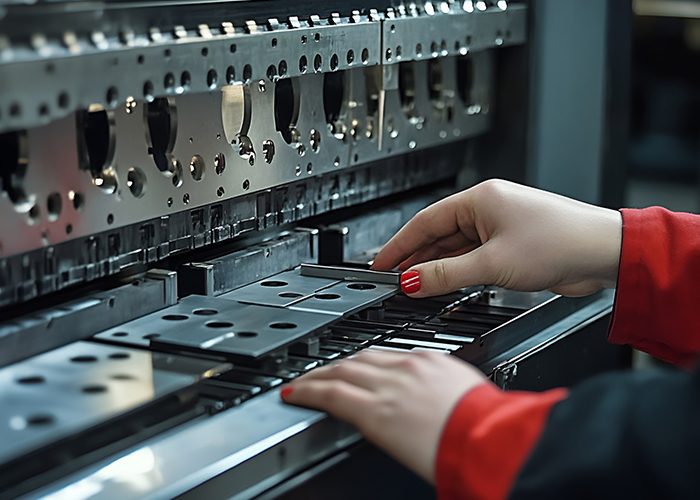
Central to this revolution is the fusion of advanced laser cutting and CNC machining. Facilities like Buffalo Ridge Metalworks in South Dakota utilize fully automated laser cutters—ranging from 3,000 to 10,000 watts—to streamline production. These machines handle raw materials with minimal manual input, cutting and sorting pieces with a precision that human hands simply cannot match. Following the cut, automated press brakes and robotic bending cells shape the metal to exact specifications, ensuring consistency across complex geometries.
Furthermore, technologies like Digital Sheet Forming (DSF) are gaining traction. This allows manufacturers to form metal directly from digital design files without the need for expensive dies or presses, drastically reducing lead times and costs for prototype development.
Key Application Areas and Industry Demographics
The demand for custom metal work is not monolithic; it varies significantly across different sectors. The industry serves a diverse client base, each with unique requirements regarding materials, tolerances, and certifications.
- Automotive and Transportation: This sector remains a dominant consumer, particularly for engine components, chassis parts, and safety structures. The shift toward electric vehicles (EVs) requires custom battery housings and lightweight structural supports, often machined from aluminum or high-strength steel to balance weight and safety.
- Aerospace and Defense: Here, the stakes are at their highest. Custom metal working involves forging critical load-bearing structures from exotic alloys like titanium and Inconel. The focus is on absolute reliability, material traceability, and rigorous certification, with components often destined for jet engines or satellite frames.
- Architectural and Artistic Expression: Beyond heavy industry, custom fabrication serves the world of art and design. Companies like Intertechnika in Budapest collaborate with artists to create stunning installations. Using laser cutting and bending, they transform raw metal into intricate sculptures and dynamic architectural features, proving that the technology is as much a tool for creativity as it is for utility.
- Energy and Heavy Machinery: Components for wind turbines, oil rigs, and mining equipment demand exceptional durability. Custom fabricators in this space focus on fatigue resistance and the ability to handle high-load environments, often working with extremely thick plates and large-scale welding projects.
The Shift Toward Digital Integration and Smart Manufacturing
One of the most significant trends shaping the industry is the move toward “Industry 4.0.” Companies are no longer just fabricating parts; they are managing data. For instance, Chinese steel giant Nanjing Iron & Steel (NISCO) has embraced digitalization to offer what they call “customized steel on demand.” By integrating IoT and big data, they analyze customer usage patterns and production progress in real-time. If a customized order is at risk of delay, the system automatically triggers a “green channel” to prioritize it, ensuring just-in-time delivery.
This digital thread connects the fabricator directly to the client. From initial CAD designs to final quality control videos stored on the blockchain, every step of the process is transparent and verifiable, reducing waste and building trust.
Challenges and the Road Ahead
Despite the technological optimism, the custom metal working industry faces significant headwinds. Fluctuating raw material prices and energy costs continue to squeeze profit margins. Additionally, the industry is grappling with a skills gap; while automation handles repetitive tasks, there is still a critical need for skilled engineers and technicians who can program the robots and interpret complex client needs.
Moreover, global trade policies and tariffs are reshaping supply chains. To mitigate risks, many fabricators are shifting from pure export models to establishing localized production hubs in regions like Southeast Asia, Eastern Europe, and Mexico.
Looking forward, the integration of artificial intelligence (AI) for predictive maintenance and quality control, combined with the expansion of additive manufacturing (3D printing) for metal parts, will continue to push the boundaries of what is possible. Custom metal working is evolving from a trade into a high-precision digital service, proving that even in an age of bits and bytes, the strength of steel—shaped to perfection—remains indispensable.


