
In a world increasingly defined by mass production and off-the-shelf solutions, the phrase “one size fits all” rarely holds true—especially in engineering. While standard mechanical components like bolts, bearings, and shafts are the staples of countless assemblies, they often fall short when faced with unique operational challenges, spatial constraints, or extreme performance requirements. This gap is where custom mechanical parts come into their own. These purpose-engineered components are not merely alternatives to standard inventory; they are the enablers of innovation, efficiency, and specialization across virtually every industrial sector.
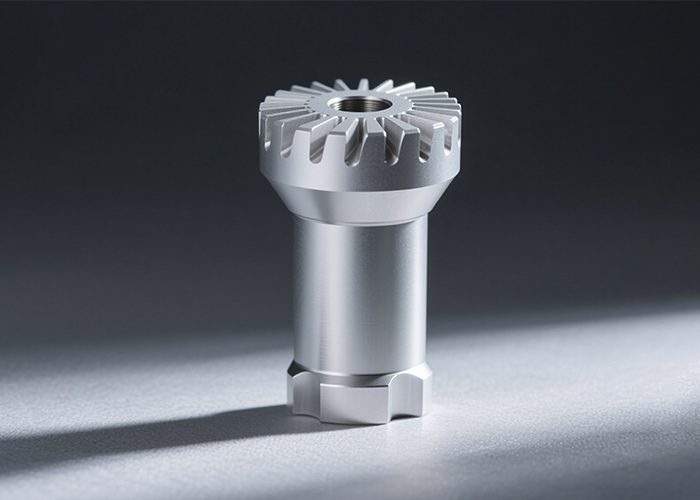
At its core, a custom mechanical part is any component designed and manufactured to precise specifications that are not readily available from standard supplier catalogs. The need for such parts arises from a fundamental reality: machines, structures, and systems are unique. A robotic arm for precision surgery operates under different loads and tolerances than a mining excavator’s hydraulic system. A high-speed aerospace actuator cannot rely on the same grade of fastener as an agricultural tractor. Customization bridges this divide by tailoring geometry, material, surface finish, and mechanical properties to a specific application’s demands.
The Unmatched Advantages of Going Custom
Why would an engineer choose the path of custom fabrication over readily available standard parts? The answer lies in three core advantages: optimization, problem-solving, and long-term value.
First, optimization allows designers to shed unnecessary weight, reduce friction, or enhance load distribution exactly where it matters. For instance, a custom shaft with integrated keyways and threaded ends can replace an assembly of multiple standard parts, reducing assembly time and potential failure points. Second, custom parts solve what we call “geometry problems.” Perhaps a repair requires a gear with a non-standard number of teeth to fit an existing vintage machine, or a new prototype demands a housing that fits into an irregular cavity. Only custom manufacturing can address such constraints. Finally, while the upfront cost of a custom part is typically higher than a standard equivalent, the long-term value—through improved efficiency, reduced maintenance, and extended lifespan—often outweighs the initial investment.
A Universe of Manufacturing Technologies
The creation of custom mechanical parts has been revolutionized by the convergence of traditional machining and digital fabrication. The most common methods include:
- CNC Machining (Milling, Turning, and EDM): Computer Numerical Control (CNC) remains the gold standard for producing high-precision metal and plastic parts with tight tolerances (±0.005 mm is common). From complex 5-axis milled impellers to turned bushings, CNC offers unmatched accuracy and repeatability.
- Additive Manufacturing (3D Printing): Technologies like Selective Laser Sintering (SLS) or Direct Metal Laser Sintering (DMLS) have opened new horizons. They enable the creation of internal lattice structures, conformal cooling channels within molds, and parts that cannot be produced using subtractive methods. For low-volume or prototype runs, 3D printing is often faster and more cost-effective.
- Investment Casting and Powder Metallurgy: For medium to high volumes, investment casting provides near-net-shape metal parts with excellent surface finish, while powder metallurgy is ideal for gears and structural components requiring precise porosity control.
- Sheet Metal Fabrication: For brackets, enclosures, and frames, laser cutting, punching, and bending provide economical custom solutions, especially in stainless steel or aluminum.
The Palette of Materials: More Than Just Steel
Material selection is arguably the most critical decision in custom part design. While standard parts are typically made from common grades like 1018 steel or 6061 aluminum, custom components can leverage specialized alloys and composites. Examples include: hardened tool steels (e.g., D2 or O1) for cutting edges and punches; superalloys like Inconel or Hastelloy for high-temperature turbine components; engineering plastics such as PEEK, PTFE, or Delrin for lightweight, self-lubricating parts in chemical or medical environments; and composites (carbon fiber or fiberglass) for high strength-to-weight ratio applications like drone frames or racing components.
Navigating the Design and Quality Minefield
Designing custom mechanical parts is not without challenges. The primary pitfalls involve tolerances, stress concentrations, and manufacturability. A common mistake is specifying unnecessarily tight tolerances across an entire part, which can exponentially increase machining time and cost. The golden rule is to apply tight limits only to critical features (e.g., bearing seats or locating pins) and use looser standards elsewhere.
Quality assurance for custom parts is a multi-layered process. It begins with detailed engineering drawings that follow standards like ASME Y14.5 for Geometric Dimensioning and Tolerancing (GD&T). During and after production, inspection methods such as coordinate measuring machines (CMM), optical comparators, and surface roughness testers verify dimensions. For safety-critical applications (aerospace, medical implants), additional non-destructive testing (NDT) like X-ray or dye penetrant inspection is employed to detect internal flaws.
Real-World Impact: Industry Applications
The reach of custom mechanical parts spans every engineering discipline. In medical technology, patient-matched surgical guides and custom titanium spinal implants are produced using CT data. In automotive motorsports, teams rely on custom forged pistons, billet camshafts, and carbon-fiber aerodynamic elements to shave milliseconds off lap times. The aerospace industry demands custom brackets, engine mounts, and landing gear components that can endure extreme temperature swings and vibration while minimizing weight. Even in consumer electronics, the tiny, complex hinge mechanisms in foldable phones or the internal frames of high-end laptops are almost invariably custom-designed parts, invisible to the user but essential to functionality.
The Future: Digital Threads and On-Demand Production
Looking ahead, the custom mechanical parts industry is being reshaped by digitalization. Cloud-based quoting platforms, AI-driven design optimization (generative design), and distributed networks of CNC and 3D printing providers are making custom parts easier than ever to source. The concept of the “digital inventory” is also gaining ground: instead of stocking decades of spare parts in a warehouse, companies store 3D models and manufacture the part on-site only when needed, reducing carrying costs and obsolescence.
In conclusion, custom mechanical parts are far more than a fallback when standard options fail. They are a strategic tool for engineers seeking performance, reliability, and innovation. Whether it is a single prototype for a new medical device or a production run of 10,000 optimized gearbox housings, the ability to design and manufacture parts exactly to need is a competitive advantage that will only grow as manufacturing technology becomes more agile and accessible. The next time you see a remarkable piece of machinery—a surgical robot, a Formula 1 car, or a wind turbine—remember that many of its most critical components are likely unique, custom-crafted solutions, built for one purpose: to work perfectly.


