
In the vast ecosystem of modern manufacturing, few processes are as foundational—or as transformative—as CNC turning. From the engines that power commercial aircraft to the miniature components inside life-saving medical devices, CNC turning hardware parts are everywhere, often hidden but always essential. This computer-controlled machining process has evolved far beyond the manual lathes of the past, becoming a cornerstone of precision engineering that enables industries to produce complex, high-performance components with astonishing accuracy and consistency.
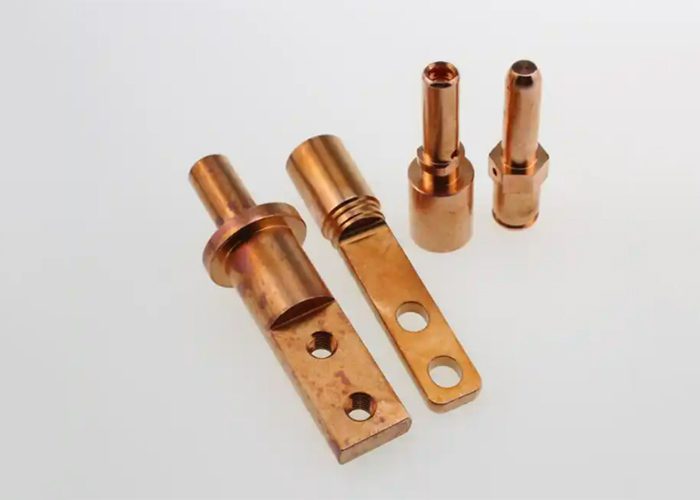
What Is CNC Turning?
At its core, CNC turning is a subtractive manufacturing process in which a rotating workpiece is shaped by a stationary cutting tool under computer numerical control. The workpiece is held securely in a chuck or collet and spun at high speed while the cutting tool, mounted on a computer-controlled turret, moves across the surface to remove material and create the desired shape. This seemingly simple principle—rotation combined with precision cutting—produces components with rotational symmetry, including shafts, bushings, threaded fittings, pulleys, and countless other cylindrical parts.
Unlike milling, where the cutting tool rotates and the workpiece remains stationary, in turning it is the workpiece itself that spins. This fundamental difference makes CNC turning uniquely suited for producing parts where concentricity, roundness, and dimensional balance are critical.
The Precision Advantage
What truly sets CNC turning apart is its ability to achieve extraordinary levels of precision. Modern CNC turning centers can maintain dimensional tolerances measured in microns—often within ±0.005mm or tighter. This level of accuracy is simply unattainable with manual machining, where operator skill and human error inevitably introduce variability.
The precision comes from the system’s automated nature. Once a part is designed in CAD software and translated into G-Code through CAM programming, the CNC machine follows those digital instructions with unwavering fidelity. Spindle speed, feed rate, cutting depth, and tool movement are all precisely coordinated, eliminating the inconsistencies that plague manual operations. The result is not just one perfect part, but thousands—or millions—of identical parts, each meeting the same exacting specifications.
Versatility in Materials and Geometry
CNC turning hardware parts are manufactured from an exceptionally wide range of materials. Metals commonly used include stainless steel, carbon steel, aluminum, brass, copper, titanium, and various superalloys such as Inconel and Monel. Engineering plastics such as Delrin, PEEK, nylon, and PTFE are also routinely turned. This material flexibility allows manufacturers to select the optimal material for each application—whether that means the lightweight strength of aluminum for aerospace components, the corrosion resistance of stainless steel for medical devices, or the heat tolerance of superalloys for power generation equipment.
Geometrically, CNC turning is far more versatile than simple cylindrical turning might suggest. Modern CNC lathes and turning centers can perform multiple operations in a single setup, including facing, threading, boring, drilling, grooving, and taper turning. With live tooling capabilities and multi-axis configurations, these machines can even produce off-axis features—holes, flats, and slots—that would traditionally require a separate milling operation. This functionality delivers substantial cost savings by streamlining production, eliminating handling errors, and reducing overall manufacturing expenditures.
Critical Applications Across Industries
CNC turning hardware underpins operations across nearly every branch of modern industry. In aerospace, turned components such as engine shafts, housings, landing gear parts, and instrumentation fittings must withstand extreme temperatures, pressures, and stresses while maintaining absolute reliability. The stakes could not be higher—a single failed component can have catastrophic consequences, which is why the aerospace industry demands the micron-level precision that only CNC turning can consistently deliver.
In the automotive industry, CNC turning produces pistons, crankshafts, camshafts, transmission gears, and chassis components. As vehicles become more sophisticated—with electric drivetrains, advanced safety systems, and autonomous driving capabilities—the demand for precisely engineered turned parts continues to grow.
The medical device sector relies on CNC turning for surgical instruments, implantable components, and diagnostic equipment parts. These applications require not only extreme precision but also biocompatible materials and impeccable surface finishes.
Beyond these headline industries, CNC turning hardware parts are essential in electronics, industrial automation, defense, oil and gas, and food processing equipment. Wherever there are machines that rotate, transmit power, or require precise cylindrical interfaces, CNC turning is almost certainly involved.
The Economic and Market Landscape
The scale of the precision turned parts industry reflects its fundamental importance. The global market for Metal Precision Turned Product Manufacturing was estimated at US$82.1 billion in 2025 and is projected to reach US$123.4 billion by 2032, growing at a compound annual rate of 6.0%. The U.S. market alone is valued at approximately US$25.4 billion, while China—the world’s second-largest economy—is forecast to grow at an impressive 9.7% CAGR over the same period.
Several converging trends are propelling this growth, namely rising CNC turning adoption, intensifying precision requirements, growing multi-axis machine utilization, and a notable broadening of the precision-turned parts sector. in automotive and aerospace applications. The push toward automation and Industry 4.0 technologies is also accelerating the adoption of advanced CNC turning equipment.
The Future of CNC Turning
Looking ahead, CNC turning hardware parts manufacturing is being transformed by several powerful trends. Artificial intelligence and machine learning are enabling real-time adaptive control, predictive maintenance, and process optimization. Smart factories equipped with IoT sensors can monitor spindle vibration, tool wear, and temperature changes, automatically adjusting parameters to maintain optimal machining conditions. Generative AI is being used to optimize part designs for weight reduction and material efficiency.
Automation is another major frontier. Advanced turning centers now feature bar feeders, robotic part handling, in-process measurement systems, and adaptive control algorithms that enable unattended, “lights-out” operations. This not only boosts productivity but also ensures consistent quality across high-volume production runs.
The rise of micro-turning capabilities is opening new opportunities in microfluidics, wearable electronics, and miniaturized sensors. Meanwhile, developments in cutting tool materials—including advanced ceramics, diamond tooling, and coated inserts—are pushing the boundaries of what can be achieved in terms of surface finish and machining speed.
Conclusion
CNC turning hardware parts represent far more than simple metal components. They are the precision-engineered building blocks upon which modern industry depends—from the cars we drive and the planes we fly, to the medical devices that save lives and the electronics that connect our world. The process that creates them has evolved from manual craftsmanship to computer-controlled precision, and it continues to advance with each new development in automation, materials science, and digital manufacturing. As industries demand ever-greater precision, complexity, and efficiency, CNC turning will remain at the heart of hardware manufacturing—a technology as essential today as it has ever been, and more capable than ever before.


